CGI vs AI: what beverage brands must disclose in 2026
A plain-language explainer on digital twin renders, AI-generated bottle shots, and what changes for marketing teams under 2026 disclosure rules.

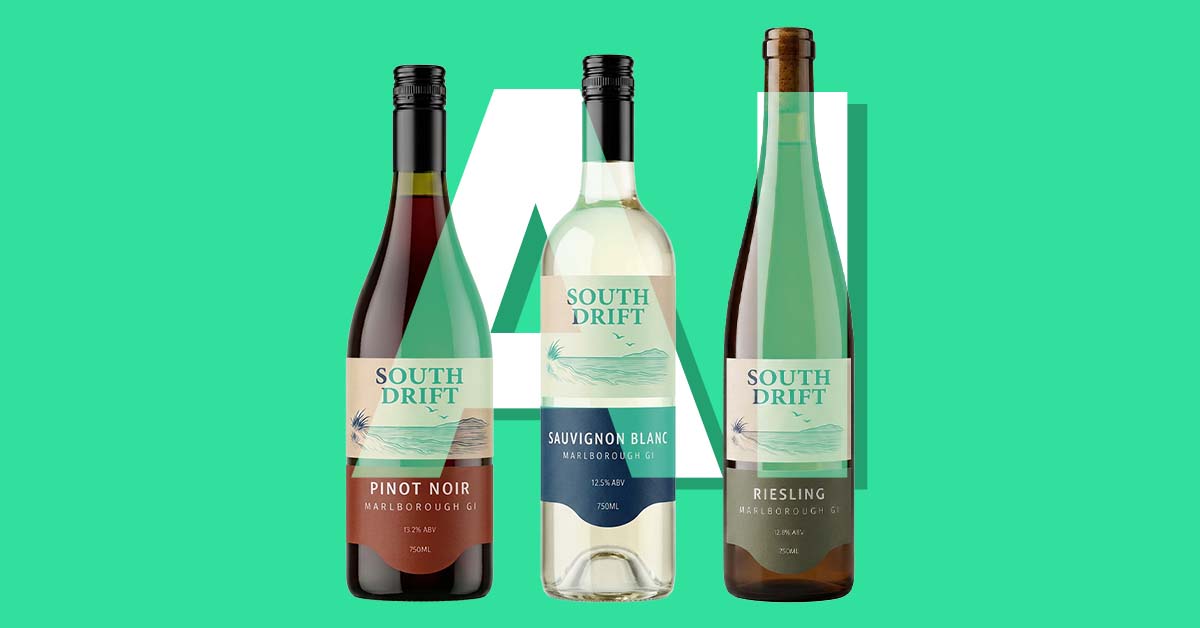
When a wine brand posts a bottle shot to Instagram, almost no one stops to ask how it was made. The label looks right. The bottle looks real.
The image does its job, which is to sell a wine.
But there is a growing question behind that image. Was it photographed? Was it rendered from a 3D model?
Was it generated by an AI from a text prompt? The answer now changes what brands have to tell their customers in 2026.
The short version: it matters more than it did a year ago, and the gap is widening fast. The European Union's AI Act transparency rules take effect on August 2, 2026. New York's synthetic performer disclosure law takes effect on June 9, 2026.
The UK, Australia, and Canada are each taking different paths. Some are codifying disclosure rules. Others are relying on existing consumer-protection law to handle misleading AI imagery.
The result is a patchwork that beverage brands selling across borders have to read carefully.
For beverage brands, the takeaway is not panic. It is precision.
Knowing the difference between CGI imagery and AI-generated imagery is now part of the marketing job, because regulators have started to distinguish between them, and because consumers are starting to ask.
Here is the explainer, written for marketing teams, brand owners, and anyone at a beverage company who has been told "we can just use AI for the bottle shot."
This article is not legal advice. It cites primary sources for every regulatory claim so you can verify them, and it links to the relevant laws so your legal team can take it from there.
The two things people call "AI imagery"
The term "AI" is doing a lot of work in 2026. When a brand marketer says "we used AI for our bottle shot," they could mean two very different processes.
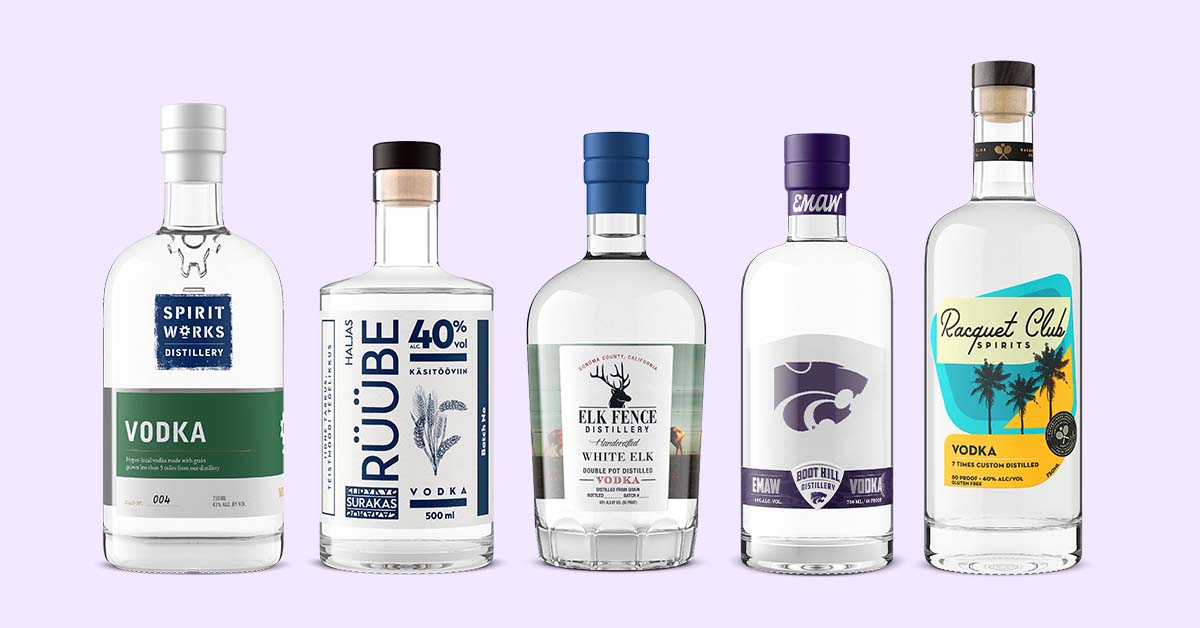
Process one: CGI from a verified 3D model. A trained artist builds a digital twin of the actual bottle. The model includes the exact glass mold, the cork or closure, the label artwork (from the print-ready file), and any specialty finishes.
The image is rendered from this model. AI may be used in parts of the pipeline (denoising, upscaling, texture generation), but the output is anchored to a real, verified product.
Process two: AI-generated imagery from a text prompt. A generative model receives a description ("a Burgundy-style wine bottle with a red label on a dark background") and synthesizes pixels that approximate that description.

There is no underlying 3D model of the actual product. The label is not the print-ready file. The bottle shape is an approximation.
The output may look plausible, but it is not anchored to a verified product.
Both can be photorealistic. Only one is a faithful representation of the actual product.
This is the distinction that matters legally and ethically, and it is the distinction the 2026 regulatory wave has started to formalize.
How CGI actually works
In a CGI pipeline, the first step is geometry. The artist builds (or pulls from a library) a 3D model of the exact container, with dimensions matching the glass supplier's spec sheet.
For a 750ml Burgundy bottle from a specific mold, the model matches the mold.
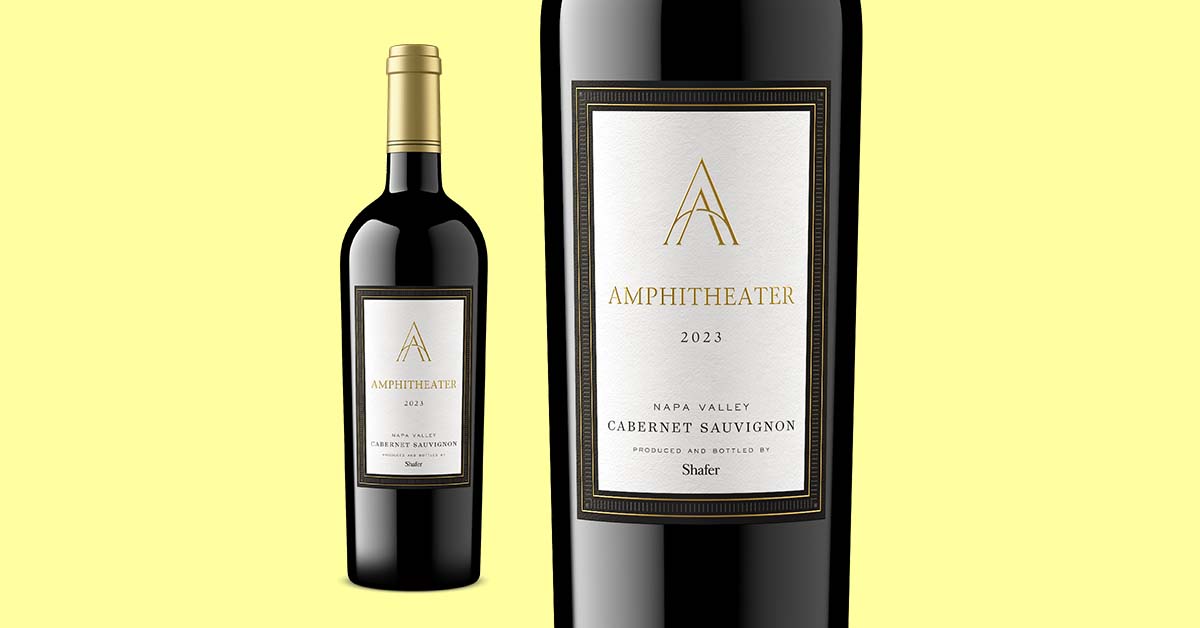
Next is the label. The label artwork comes from the print-ready file the brand sent to its printer. The same file, not an approximation.
The artwork is then mapped onto the 3D bottle in the exact position and orientation the physical label would occupy.
Then the closure: the actual cork length, the actual capsule color, the actual foil finish. Same for any embossing, debossing, or specialty varnish.
Finally, the rendering. Lights are placed in the virtual scene, the camera angle is set, and the software calculates how light interacts with the materials.
The output is an image of the actual product, lit and posed for the situation the brand needs.
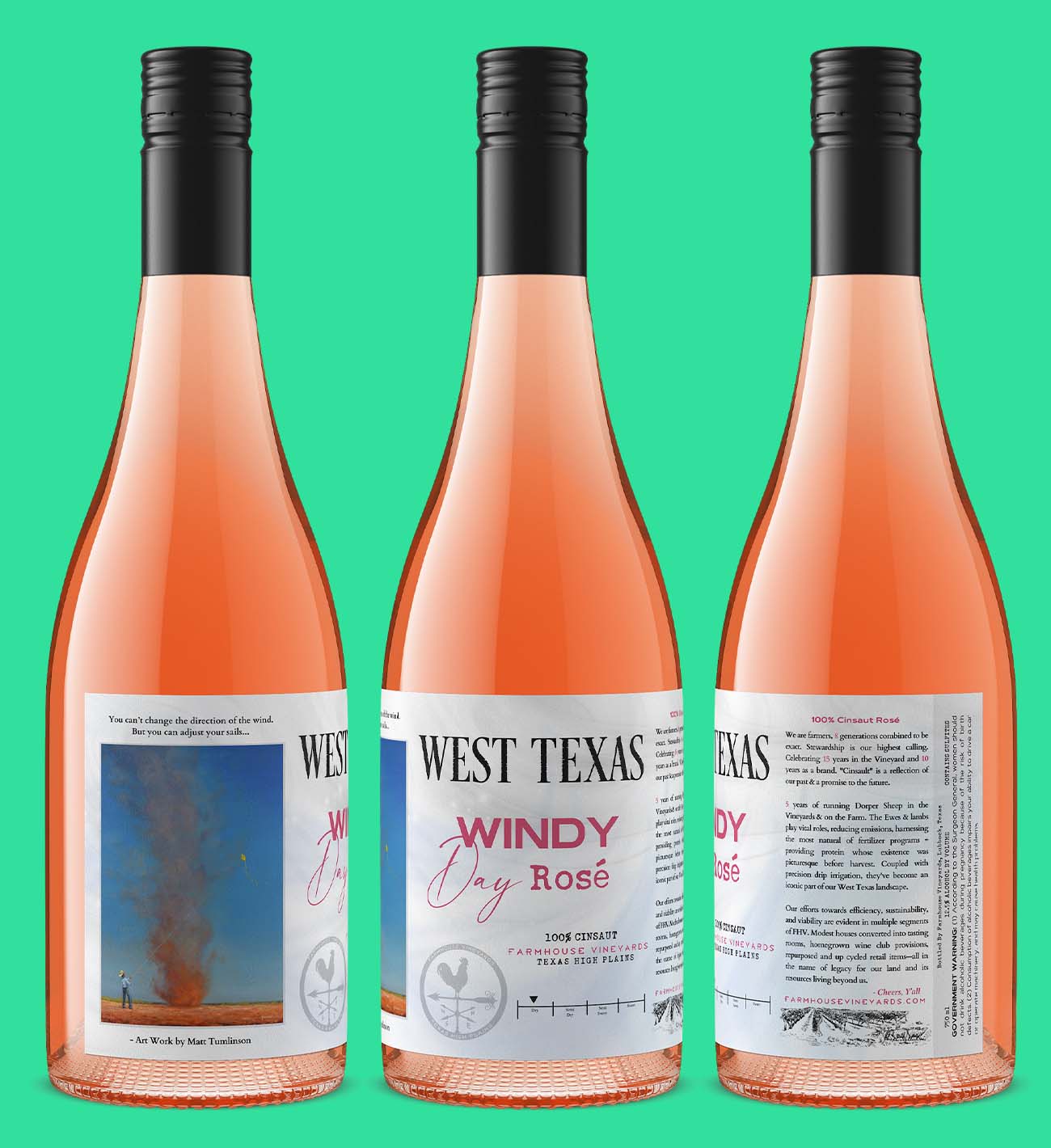
This is what Outshinery does. We call the resulting asset a digital twin because it is a one-to-one representation of the physical product, not an artistic interpretation of it.
How generative AI works
Generative AI image models work very differently. They are trained on millions of existing images, learning statistical relationships between pixels, text descriptions, and visual concepts.
The model does not "know" what your bottle looks like. It knows what bottles tend to look like.

When you give the model a prompt like "a Cabernet Sauvignon wine bottle with a gold foil capsule on a marble surface," it generates pixels that match its statistical understanding of those words. The output is an approximation that draws on patterns from training data.
If your actual bottle has a specific punt depth, a custom closure, an embossed crest, or a specialty foil, the AI does not know that. It will produce a bottle that looks generally correct but is not your bottle.
For a tasting-room mood image or a lifestyle shot where the bottle is not the subject, this can be acceptable. For a product image that represents the actual SKU to a consumer, distributor, or retailer, it is not.
The label artwork in the generated image is not your label. The bottle shape is not your bottle. The image makes a claim about a product that the underlying model cannot back up.
This is where the legal and consumer-trust questions start.
Why the distinction matters
There are three reasons the CGI versus AI distinction has become important in 2026.
Accuracy. A bottle shot is a representation of a real product.

When a consumer sees the image on a DTC site, an Amazon listing, or a Commerce7 storefront, they reasonably assume the image is the product. CGI from a verified 3D model preserves that assumption. AI-generated imagery, by definition, breaks it.
Consumer protection. Existing advertising law in the US and elsewhere already prohibits materially misleading product imagery, regardless of how the image was made.
An AI-generated bottle shot that misrepresents the actual label, the closure type, or the bottle shape can run into that body of law before any AI-specific rule applies.
Emerging disclosure rules. This is the part that changed in 2026.
Several jurisdictions have now passed or are enforcing rules that specifically target AI-generated content. The rules differ by region and by content type, but the direction is consistent: synthetic content increasingly needs to be labeled as synthetic.
For beverage brands, the practical question is not whether AI imagery is "legal." Generative AI is widely available and brands use it every day.
The practical question is whether undisclosed AI imagery exposes the brand to enforcement risk in a given jurisdiction or channel.
2026 disclosure landscape at a glance
This is a fast-moving area, so the snapshot below is current as of May 2026. Every claim links to primary sources for verification.
European Union
The EU AI Act's transparency obligations under Article 50 become applicable on August 2, 2026.
Deployers of AI systems that generate or manipulate image, audio, or video content constituting a "deep fake" must disclose that the content has been artificially generated or manipulated.
The AI Act defines "deep fake" as AI-generated or manipulated content that resembles existing persons, objects, places, entities, or events and would falsely appear to a person to be authentic or truthful. Limited exceptions apply to artistic, creative, satirical, or fictional works.
The European Commission published a second draft of its Code of Practice on AI-generated content on March 3, 2026, with stakeholder consultation closing March 30.
For beverage brands operating in or marketing into the EU, this is the most consequential rule on the calendar.
United Kingdom
The UK has taken a deliberately different path from the EU since Brexit. There is no UK equivalent of the AI Act, and the country has positioned itself as a pro-innovation jurisdiction with sector-by-sector regulation rather than a single AI law.
For advertising specifically, the Committee of Advertising Practice (CAP) issued guidance in 2025 making the existing UK Advertising Codes apply to AI-generated content the same way they apply to anything else.
CAP's practical test for advertisers using AI: would the audience be misled if the use of AI is not disclosed? Where the answer is yes, disclosure is expected.
Further CAP guidance and Advertising Standards Authority enforcement on AI in advertising is anticipated during 2026.
Ofcom, the UK's broader communications regulator, has been explicit that its regulation is technology-neutral and that it does not plan to introduce AI-specific rules.
For UK beverage brands, the practical compliance question is the same one CAP poses: would a consumer feel misled if they knew how the image was made?
Australia
Australia spent 2024 and 2025 considering a mandatory AI guardrails regime, then changed course. In December 2025 the federal government released a National AI Plan that pulled back from mandatory rules and instead leans on existing laws (the Australian Consumer Law, the Privacy Act, sector regulators) plus a Voluntary AI Safety Standard with ten guardrails.
Transparency about AI-generated content is one of those voluntary guardrails. It is not a binding rule.
The binding rules that do touch AI image disclosure sit elsewhere. The Australian Consumer Law prohibits misleading or deceptive conduct in trade or commerce. The ACCC has flagged "AI-washing" (misleading claims about AI capabilities or AI involvement) as an enforcement priority.
Recent amendments to the Privacy Act (APP 1.7 to 1.9) require disclosure when computer programs use personal information to make decisions that significantly affect individuals. Compliance is required by December 10, 2026.
For beverage brands, AI-generated product imagery in Australia is not covered by a dedicated disclosure rule today, but it is squarely within the misleading-conduct framework regulators already enforce.
Canada
Canada's first comprehensive AI bill, the Artificial Intelligence and Data Act (AIDA) contained in Bill C-27, died on the order paper when Parliament was prorogued in January 2025.
In June 2025, the federal AI minister confirmed AIDA will not return in its previous form. A reframed federal AI framework is expected, but the timeline is uncertain.
In the meantime, provinces have started moving on their own. Ontario's Bill 194 (Strengthening Cyber Security and Building Trust in the Public Sector Act) covers AI in public-sector contexts. Quebec's Law 25 contains automated-decision disclosure obligations that touch some AI uses.
For beverage brands marketing in Canada, there is currently no comprehensive federal AI image disclosure rule. The Competition Act's prohibition on materially misleading representations applies to product imagery the same way it applied before generative AI existed.
New York
Governor Hochul signed Senate Bill 8420-A on December 11, 2025. The law takes effect on June 9, 2026, and is the first US state law to mandate disclosure for AI-generated images in advertising.
The current scope is narrow. It requires conspicuous disclosure when an advertisement features a "synthetic performer," defined as a digitally created asset using generative AI that creates the impression of a human performer not identifiable as a real person.
Penalties are $1,000 for a first violation and $5,000 for subsequent violations.
The law primarily affects ads that use synthetic humans, not bottle shots in isolation. However, lifestyle and campaign imagery that depicts synthetic people pouring or holding a brand's product would be in scope.
California
California has been the most active US state on AI disclosure, but the situation is fluid.
AB 2355, in effect since September 2024, requires disclosure on AI-generated political advertising distributed by political committees. It does not apply to commercial product advertising.
Two related election-deepfake laws, AB 2655 and AB 2839, have been blocked in federal court. AB 2655 was preliminarily enjoined on January 3, 2025, then overturned on the merits on August 20, 2025 on Section 230 preemption grounds. AB 2839 was permanently blocked on August 29, 2025, with the court ruling it amounted to viewpoint discrimination.
California is appealing both rulings to the Ninth Circuit in Kohls v. Bonta, with the opening brief filed January 12, 2026 and appellees' answer filed March 11, 2026.
The takeaway: California's election-specific AI rules are contested. Commercial advertising rules at the state level remain a watch-this-space area.
Federal level (US)
No omnibus federal AI image disclosure law has been enacted as of May 2026.
The Federal Trade Commission's existing deceptive advertising authority covers materially misleading product imagery regardless of how it was produced.
The pattern across jurisdictions
Synthetic imagery that resembles real people, real products, or real events is moving toward mandatory disclosure.
Generic or stylized synthetic imagery sits in a less defined area.
CGI rendered from a verified product model sits on the most defensible ground, because it is not a synthesis of an approximation. It is a render of the actual product.

What this means for beverage marketing teams
This is a practical checklist, not legal advice. Use it to ask better questions of your legal counsel and your imagery vendors.
For every image in your active marketing library, you should be able to answer:
- How was this image produced? Photograph, CGI from a verified 3D model, AI-generated from a prompt, or hybrid (one technique with AI assistance in part of the pipeline).
- What does the source asset represent? Is it tied to the actual product (a real bottle shoot, a verified 3D model with the print-ready label) or is it an approximation (an AI synthesis based on a description)?
- Where is this image running? EU consumer advertising, US ecommerce listings, social media in NY, political content (relevant only if your brand has crossed into advocacy), DTC site, distributor catalog.
- What does our vendor agreement say? Reputable imagery vendors should be able to state, in writing, the production process for any deliverable, including whether generative AI was used in any pipeline stage.
- If we use AI-generated imagery, do we disclose it? Even where disclosure is not strictly required, brand owners increasingly choose to disclose for consumer-trust reasons. Some retailer marketplaces (Walmart, Amazon, regional grocers) have started to add their own AI-content disclosure fields for product listings, ahead of any regulation.
Two practical operating principles emerge from this.
First, separate your marketing imagery into product imagery (the bottle, the can, the SKU itself) and lifestyle imagery (the bottle in a scene).
The compliance bar is highest for product imagery, where a consumer can reasonably expect the image to represent the actual product they are buying. Lifestyle imagery has more latitude, though the EU AI Act deep-fake definition still applies if the image could falsely appear to be authentic.
Second, when in doubt, treat undisclosed AI-generated product imagery as a higher-risk choice than CGI from a verified model.
The cost difference between the two has narrowed significantly in 2026. The compliance gap between them has widened.
The transparent-by-default option
Beverage brands working with Outshinery sit on the lower-risk end of the spectrum, by design. Every image we produce starts from a verified 3D model of the actual product. The bottle mold is the bottle mold. The label artwork is the print-ready file the brand sent us. The closure, the foil, the embossing, the deboss, the varnish: all match the physical product.
The render is a representation of the actual SKU, not an approximation.
This is the digital twin approach. It is one of the reasons regulated beverage categories (wine, spirits, cannabis, RTDs) and large enterprise accounts chose Outshinery in the first place.
When your image has to be defensible to a distributor, a retailer compliance team, or a regulator, the underlying production process matters as much as the final pixel quality.
Two products, two paths.
Outshinery Studio is the premium, human-crafted path. A trained 3D artist builds your bottle from scratch, working from the supplier spec, the print-ready label artwork, and the actual closure detail.
Studio handles complex packaging, hero shots, lifestyle compositions, vintage updates, and enterprise volume. There is a specialist behind every image.
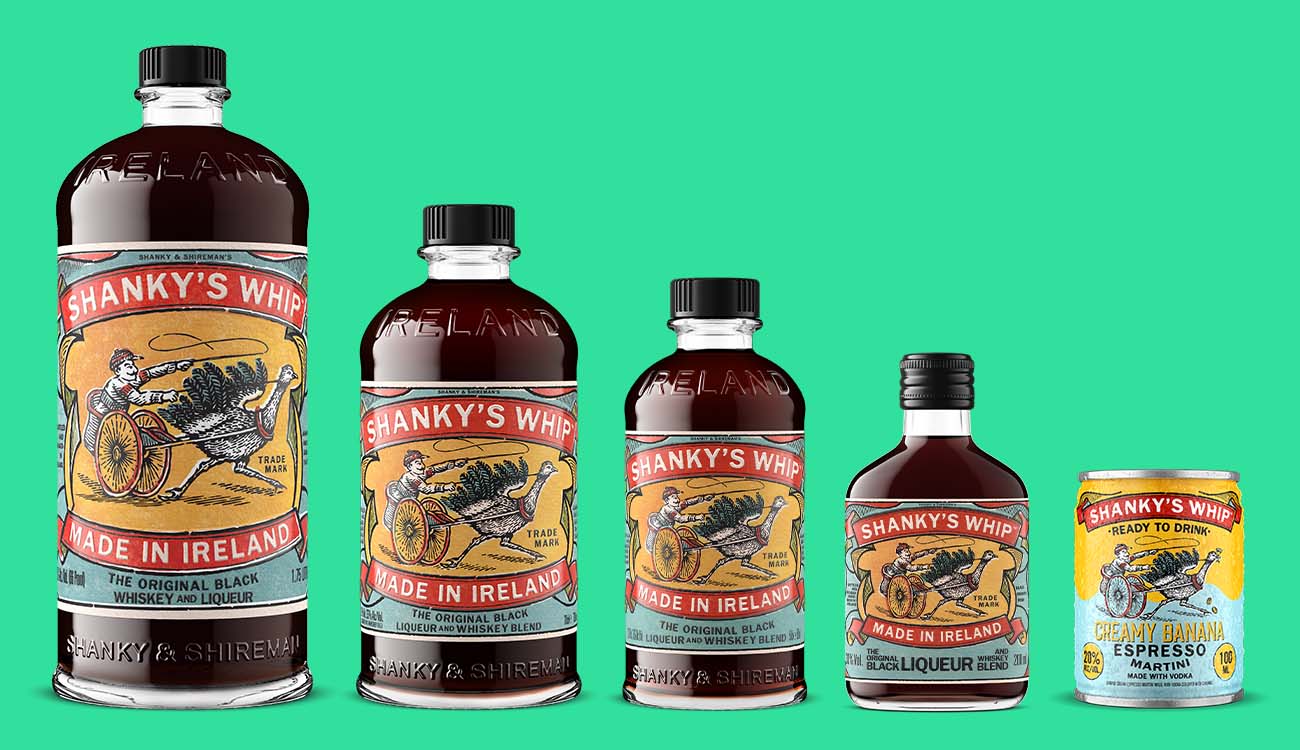
Outshinery Lite is the self-serve path for standard wine bottles. Upload your label, pick a container shape and closure from our library, get a photorealistic bottle shot in under an hour.
The same digital twin principle applies. The library is built from verified glass molds, not approximations.
Both produce results that are visually indistinguishable from traditional photography. Neither requires a physical bottle, a photoshoot, or shipping samples to a studio.
In a 2026 disclosure environment, both produce imagery that is straightforwardly explainable: this is a render of the actual product, built from verified specifications.
That explainability is what changes when AI-generated imagery enters the workflow without disclosure. The image becomes harder to defend if a distributor, retailer, or regulator asks how it was made.
Frequently asked questions
Is CGI the same as AI?
No. CGI (computer-generated imagery) is a 3D rendering process that starts from a model of an actual object and uses software to simulate how light interacts with that model.
Generative AI is a separate technology that synthesizes pixels from a text or image prompt, based on patterns learned from a training dataset.
Some modern CGI pipelines use AI for specific stages (denoising, upscaling, texture generation), but the output is still anchored to the verified 3D model. Generative AI imagery, by contrast, is not anchored to a verified product.
Do I have to disclose AI images in advertising?
It depends on the jurisdiction, the channel, and the content.
The EU AI Act's transparency obligations under Article 50 become applicable on August 2, 2026, and require deployers to disclose AI-generated deep-fake imagery. New York's synthetic performer disclosure law takes effect June 9, 2026, and requires disclosure when an advertisement features an AI-generated human performer.
The UK, Australia, and Canada do not have dedicated AI image disclosure laws today. They apply existing consumer-protection and misleading-conduct frameworks (CAP Code in the UK, Australian Consumer Law and ACCC enforcement, Canadian Competition Act) to AI imagery that would mislead a reasonable consumer.
California has commercial advertising rules in some areas (political content), but related election-deepfake laws have been blocked in federal court.
This article does not constitute legal advice. Brand owners should consult counsel for jurisdiction-specific guidance.
Are Outshinery renders AI-generated images?
The EU AI Act defines "deep fake" as AI-generated or manipulated content that resembles existing persons, objects, places, entities, or events and would falsely appear to a person to be authentic or truthful.
Outshinery's digital twin renders are not approximations of a product. They are renderings of a verified 3D model of the actual product, built from the supplier's spec sheet and the brand's print-ready label files.
We work with brand owners and their counsel where specific jurisdictional questions arise. For most brands, a digital twin render of an actual SKU is a faithful representation of the product, not a synthetic substitute for it.
What about AI bottle shot tools from a prompt?
Tools that generate bottle imagery from text prompts produce approximations, not representations of a verified product.
The output may look photorealistic but is not anchored to the actual bottle mold, the actual label artwork, or the actual closure.
For lifestyle or mood imagery this can be acceptable. For product imagery used in ecommerce, on distributor portals, or on regulated channels, it raises both accuracy and disclosure questions. The 2026 disclosure landscape is moving toward labeling synthetic product imagery, not away from it.
What should beverage brands do right now?
Three practical steps for the next ninety days.
First, inventory your current marketing imagery and identify which images are photographic, which are CGI from verified models, and which are AI-generated approximations.
Second, ask every imagery vendor in writing for a statement of their production process, including any use of generative AI.
Third, talk to your legal counsel about your active markets and channels. The EU AI Act, the NY synthetic performer law, and state-level activity in California and elsewhere all have different scopes. A brand with active EU distribution has different compliance obligations than a brand selling only on US DTC.