Outshinery VS
AI imagines a wine bottle. We render yours.
Your actual label on your actual bottle, rendered from your print file by trained 3D artists.
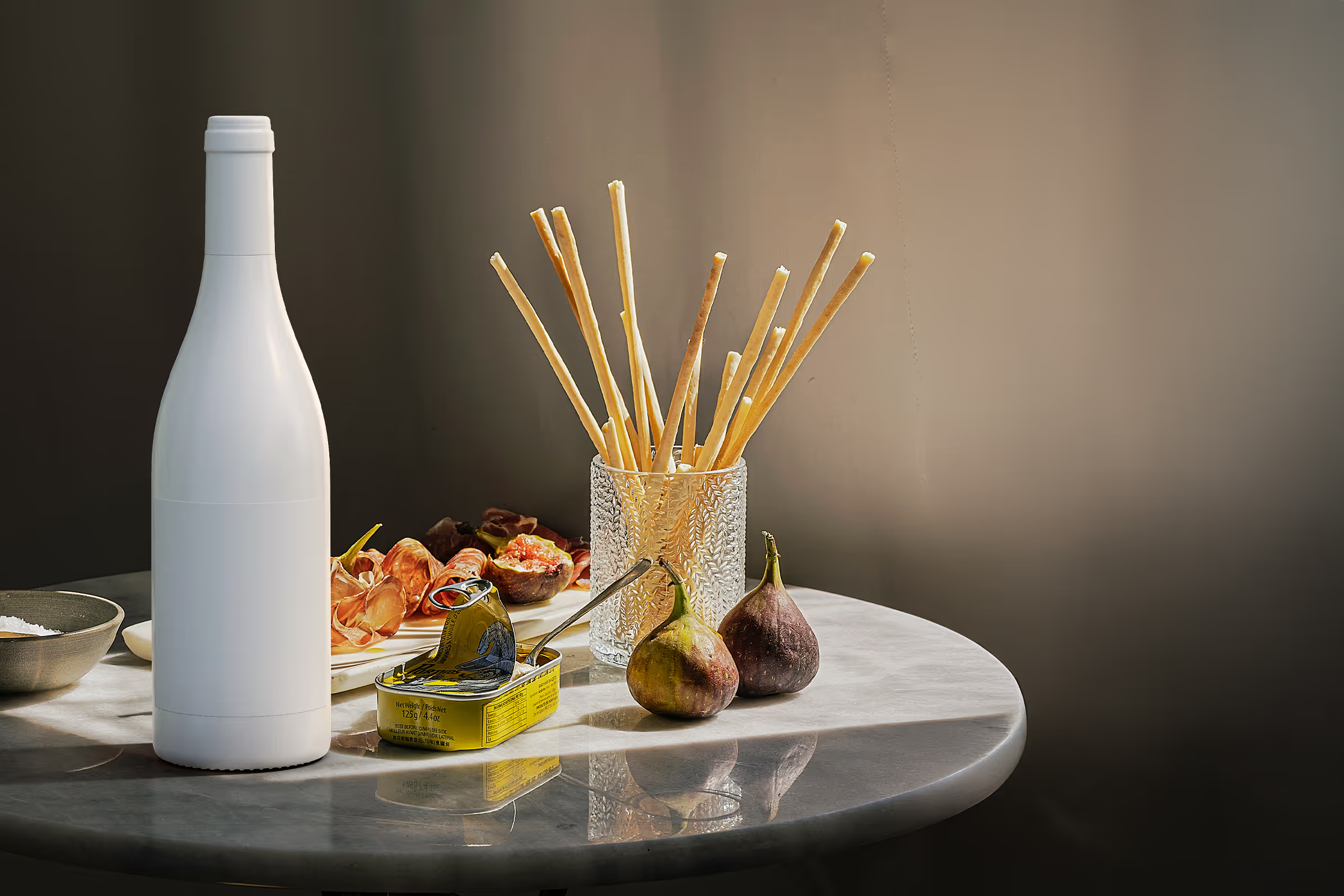
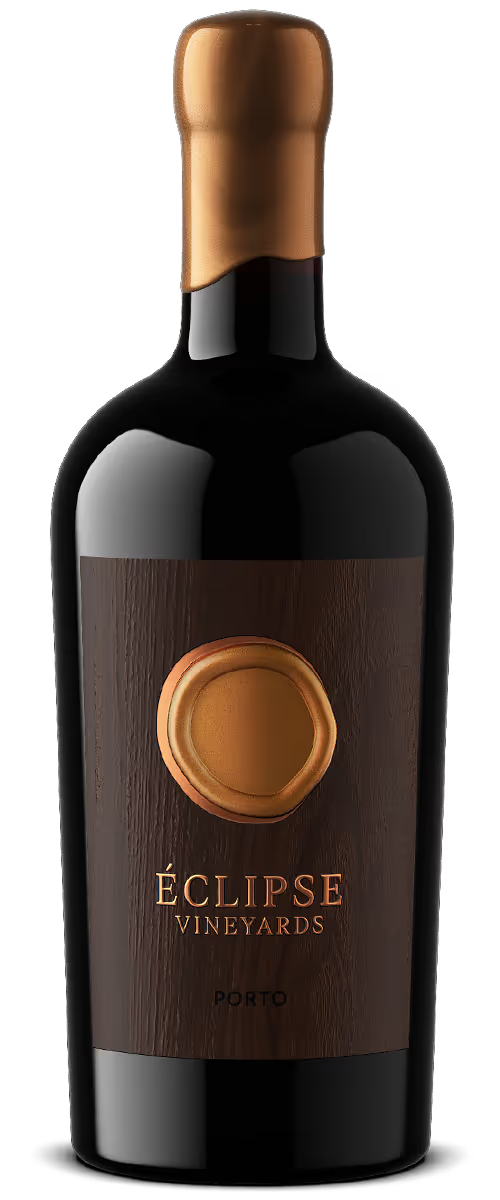
The picture is your actual product. Your label, your mold, your closure, your foil, your embossing, all loaded from your files, not redrawn from a description.
What you get back is an asset, not an approximation. The bottle on the page is the bottle in the box. The buyer clicks. The buyer receives. The picture matched the product.
Outshinery’s 3D artists have rendered wine, beer, spirits, RTD, cider, and cannabis packaging since 2016. They know that a Sancerre lives in a Burgundy bottle, that a WAK screwcap is not the same as a natural cork, and that the way Cabernet sits in the glass is not the way Pinot does. That craft is in the renders, not in a prompt.
Generative models are trained on the visible internet. They do not specifically know wine, and they have never produced a bottle for your brand before. What they generate is a statistical average of what they have seen labeled “wine bottle.” It is not your bottle.
We work from the same print-ready file your label printer is working from. Your real typography, your real legal copy, your barcode, your embossing or foil placement, all exactly where they live on your physical bottle. Your label is loaded as a file, not redrawn from a description.
A generative model cannot load your real label. It produces something that looks close to your label most of the time, but the lettering drifts, the legal copy is invented, and your logo is approximated. Vintage numbers are usually close. Vineyard names, ABV, appellation, and sub-region edits compound the failure rate, because each new generation regenerates the whole image, not just the part you wanted to change.
Same lighting setup, same angle conventions, same quality bar, across every image in your library. When a vintage changes, the model stays intact and only what changed gets updated. Across 15 SKUs over 3 vintages, the result is one brand, not 45 versions of one bottle.
Every generation is slightly different, even with seeds and consistency features. Across a portfolio over multiple vintages, the visual drift becomes obvious. Your shelf stops looking like one brand and starts looking like a collection of bottles that resemble each other.
Foil, embossing, debossing, spot UV, wax dipping, hot stamping. We render the finishes that exist on your bottle, lit the way they would catch light on a retail shelf or a DTC product page.
Specialty finishes are where generative AI fails most visibly. A model can produce something that looks like foil. It cannot place metallic ink where your printer placed it, and it cannot create embossing that aligns with the artwork your designer built.
A vintage update is an edit to a persistent digital twin, not a new generation. Same lighting, same physics, same label file. Only what changed gets changed. Vintage year, ABV, vineyard name, appellation, sub-region, closure, capsule color, liquid color, all editable, all without disturbing anything else on the image.
A “vintage update” in a generative tool is a brand-new image generated from scratch, made to look like the old one. The vintage swap might be acceptable. But the lettering drifts. The foil flattens. The embossing softens. Larger edits (vineyard, appellation, ABV, label restructure) compound that drift. Across a year of updates, your portfolio stops looking like one library.
When you already have an accurate bottle shot, a custom lifestyle image composites it into a scene built by a trained 3D artist. The bottle is placed, not regenerated, so your label, foil, and finish stay exactly as rendered. Shadows, reflections, and the direction of light match the scene, so it reads as one photograph, not two images stacked.
Most generative tools re-render the bottle when they drop it into a scene, so the label and finish you already paid to get right drift again. Integration is the tell: contact shadows, reflections, and lighting direction often look pasted in. And a scene with people or a real-looking place can trigger AI disclosure rules (California and EU, both August 2, 2026).
Outshinery renders are CGI from a verified 3D model of your real product. They are not AI-generated content under New York’s synthetic performer law (effective June 9, 2026), California’s AI Transparency Act (effective August 2, 2026), or the EU AI Act’s transparency rules (effective August 2, 2026). No watermarks, no AI labels required.
An AI-generated bottle shot synthesizes pixels from a prompt. Several jurisdictions now distinguish AI-generated content from product photography and CGI. Where AI imagery involves people or implies a real product, disclosure requirements are growing. The compliance burden sits with the brand, not the tool.
Your bottle shot should be immortal. One render, paid for once. Every angle, every vintage, every season after that draws from the same model.
Start with a free first image

“Spectacular image, wonderful work. You guys nailed the reflective characteristics of the foil and line artwork on the label. Highlights are awesome. Ordering images now.


Foil, embossing, deboss, and wax are rendered from your print file and the real bottle mold. Generative AI approximates these finishes from training data, which is why their labels drift and their foil reads flat.

“The results are fantastic. Every little detail we specify is captured - bottle shapes, wine colour, light sources, reflections, punt style, fill line. Then the mastery of the label and closure applications with every nuance incorporated - stock, texture, lighting, embossing/debossing, foils, varnishes - to create the most fabulous photo-realistic images that far surpass what we spent years photographing at great expense, then laboriously retouching.

Outshinery renders the bottle from the supplier’s mold spec. Generative AI models do not know your supplier, your mold, or which printer is producing your foil. The detail your buyer notices is the detail an AI tool cannot guarantee.

“I literally told the Outshinery team that wineries are crazy if they don't send every single bottle shot to Outshinery. Truly... process is easy and the bottle shots are exactly the same EVERY. SINGLE. TIME. No variation from vintage to vintage, no angle variation, etc. These shots look great side by side, year after year. I can't imagine why anyone would use traditional photography for bottle shots ever again.

Generative AI is stochastic. Even with the same prompt and seed, it cannot guarantee identical output across vintages. Outshinery’s 3D system can, and does. Your portfolio holds together year after year, image after image.

“Outshinery solved the cost and hassle of sending out bottles for shots. We can even get images before we have the wine bottled.

Outshinery only needs your label file and your bottle spec. Generative AI does not need anything specific, which is precisely the problem. A pre-release image of a bottle that is not yours has no value to a distributor or a pre-sale campaign.

“I come from a fine arts photography background, so I am not easy to please when it comes to images. You guys are REALLY good.”

Every Studio image is built by a trained 3D artist, then checked against your brief by a second person, our production lead, before you see the proof. A generative model has no one responsible for what it ships, which is why what it ships needs reviewing every time.
Nearly 90% of consumers want to be told when an image was generated by AI (Getty Images, 2024). An Outshinery render isn't AI-generated content. It's your actual bottle, built from your real files, so there is nothing to disclose and nothing for a buyer to second-guess.

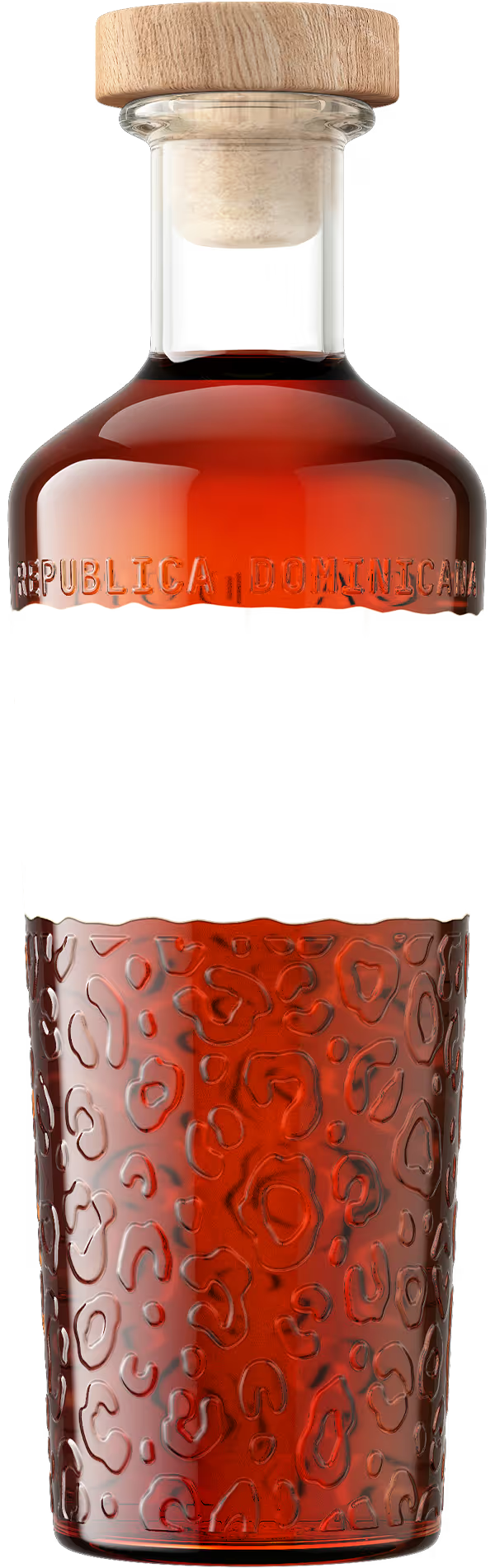
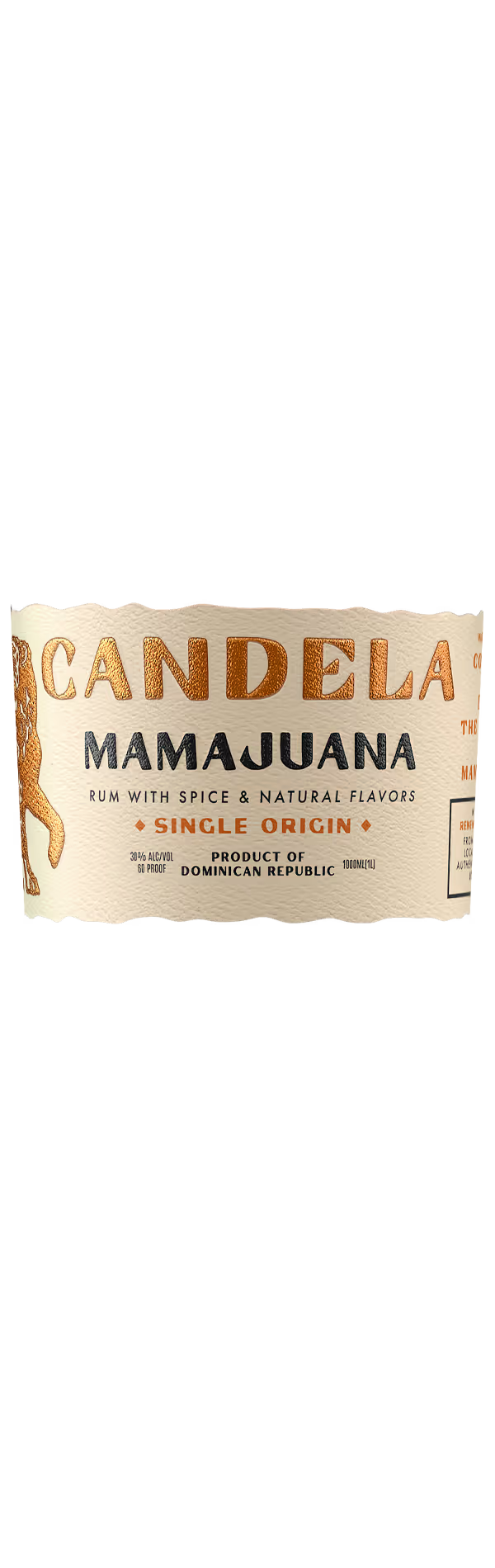

Simple bottle shot?
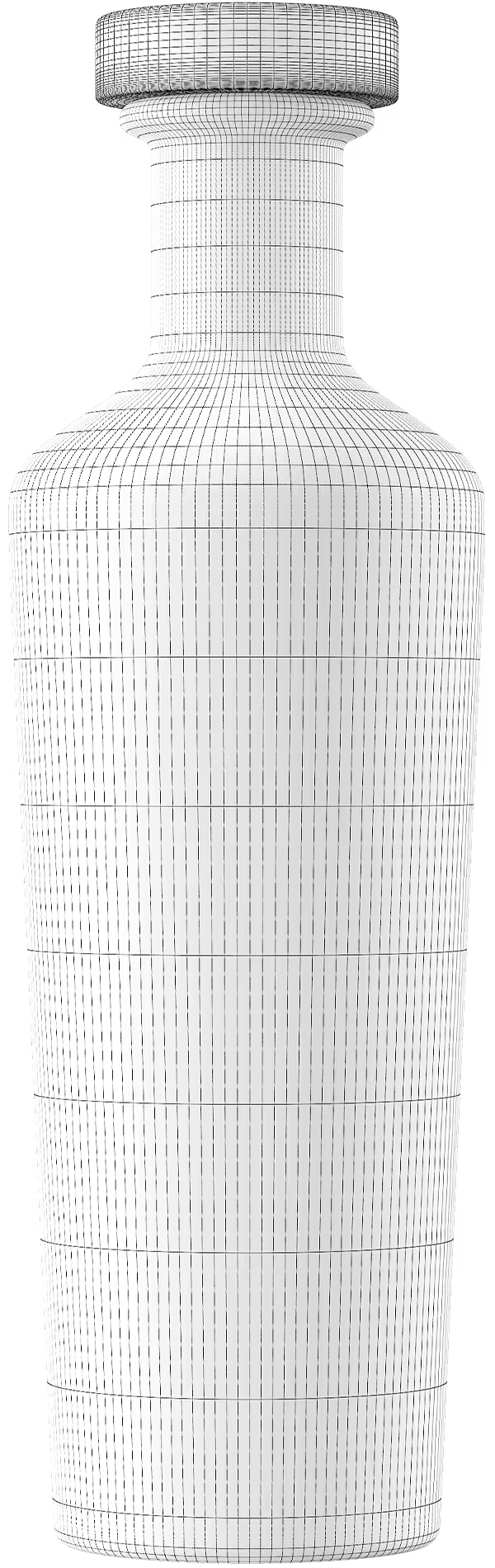
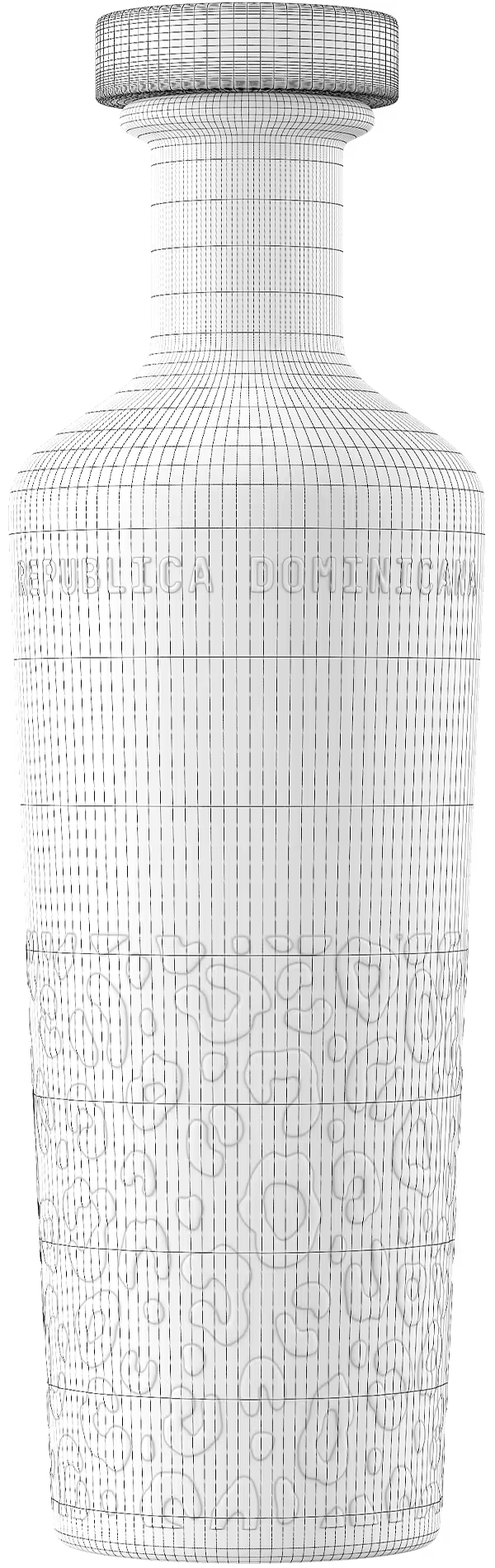
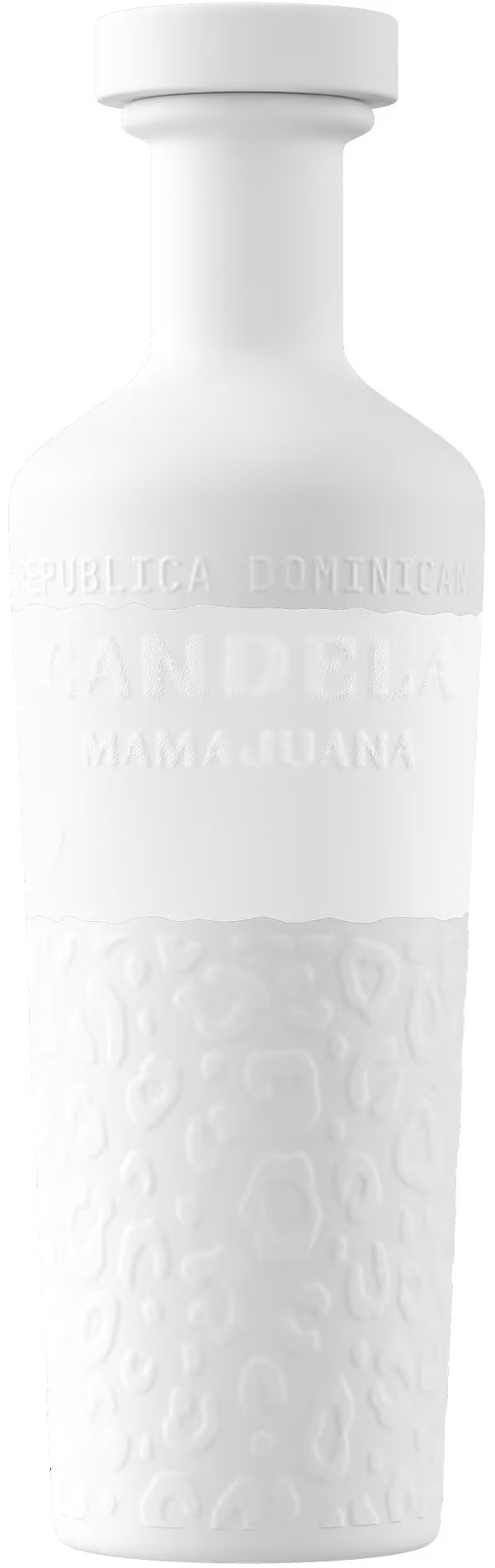
Turn your label into a photorealistic bottle shot in under an hour. Upload it, pick your shape and closure, download a PNG that’s ready to sell. Works for standard wine, cider, and beer bottles with flat-printed labels and standard closures. $29 per image, built on the 3D expertise behind Outshinery Studio.
Try Outshinery Lite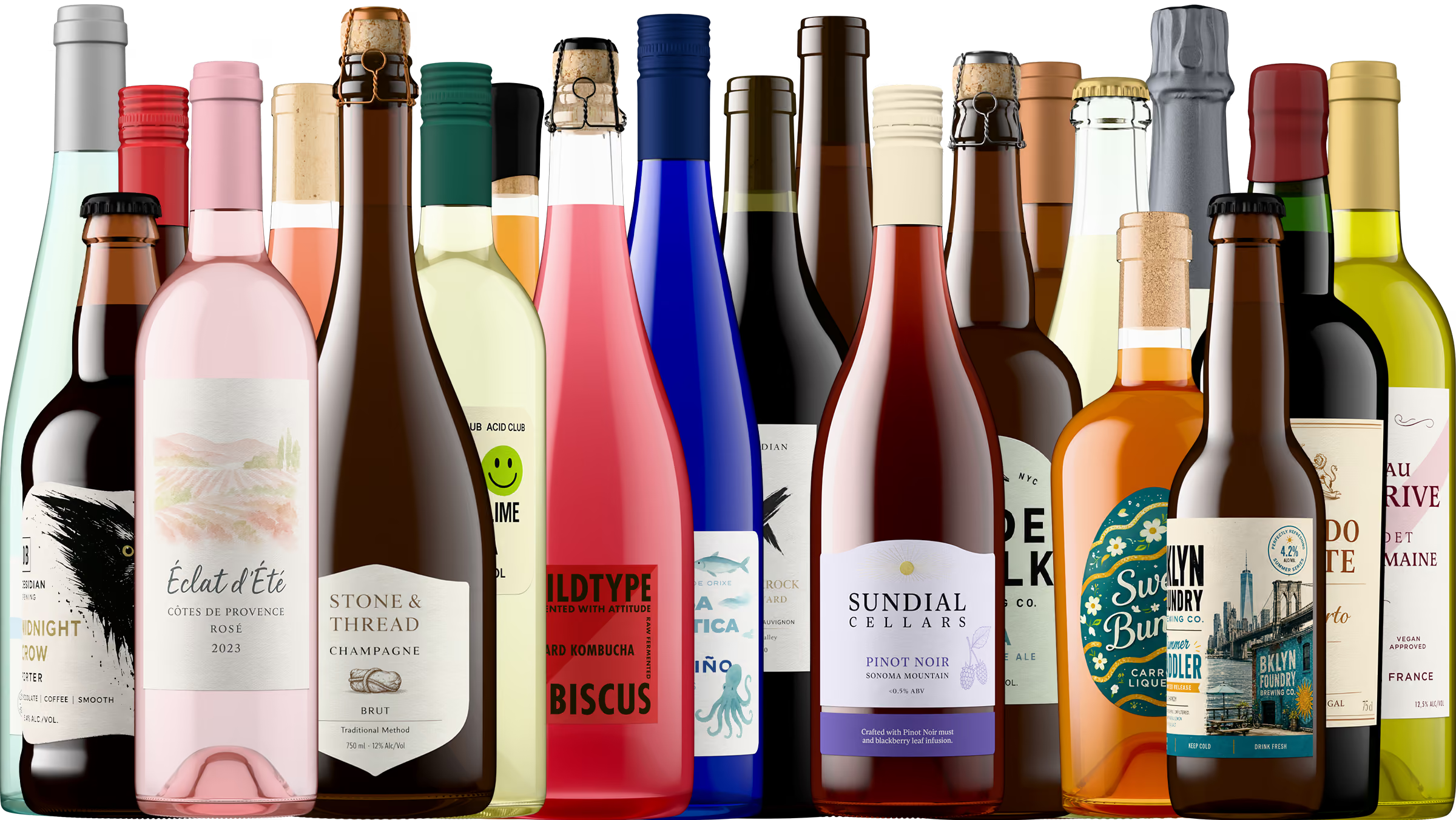
King Family Vineyards, a family-owned winery in Crozet, Virginia, increased sales 4x and cut product photography costs 55% after switching its campaign imagery to Outshinery's photorealistic 3D renders.
Tank Garage Winery, the Calistoga producer known for launching 25+ new releases every year, has used Outshinery for its product photography since 2016, receiving more than 220 Product Shots and saving over $10,000 compared to hiring a photographer.
Heard Creative, an independent, woman-owned creative agency, builds point-of-sale campaigns for enterprise beverage brands on Outshinery renders: more than 500 POS and packaging visuals delivered and an estimated 5,600 hours of team capacity saved.
CGI, computer-generated imagery, is a rendering of a real product built from a verified 3D model. The bottle’s exact mold, the actual label file, the real closure, the specific finishes, all loaded as inputs and lit by trained 3D artists. The output is your bottle, rendered, not invented.
AI-generated images synthesize pixels from a text prompt. The bottle and label are statistical approximations of what “a wine bottle” or “a Cabernet label” typically looks like, not of your bottle or your label.
CGI is anchored to your real product. AI is anchored to its training data. The distinction matters for accuracy, for consistency across a portfolio, and for compliance under disclosure laws now in force in the US and EU. Outshinery is a CGI service, not a generative AI tool.
ChatGPT can produce a wine bottle image from a description. It cannot produce an image of your specific bottle. The model does not have your label file, your bottle’s mold spec, your closure type, or your finishes. The output looks generally correct from a distance and incorrect to anyone who knows what your bottle should look like.
For an internal mood board, that may be acceptable. For a product image that represents your real SKU to a buyer, distributor, or retailer, it is not.
A few examples have been circulating recently of ChatGPT swapping the vintage year on a wine bottle and producing something that looks close. The bottles in those examples tend to have one thing in common. Clean, simple labels. Plain serif text. No foil, no embossing, no specialty finish. That is the easiest possible test for a generative model.
The behavior underneath shows up the moment you ask for more, or send it a bottle with foil, embossing, or three lines of legal copy on the back. ChatGPT regenerates the entire image from scratch every time. The lettering on your label drifts toward something close to your design but not quite right, because the model cannot load your actual label file. Foil flattens. Embossing softens. Vineyard names, ABV, appellation, and sub-region edits compound the drift, because each new generation is a new image, not an edit to the old one.
Outshinery’s vintage updates are edits to a persistent 3D model. The label file is the same one your printer is working from. Everything else stays exactly the same.
Google's image models (Imagen 4, Nano Banana 2) are improving fast, and Imagen 4 is positioned for product catalog work and colorway variants. They still face the same constraints as every other generative tool: no access to your specific label file, no knowledge of your bottle mold, and no guarantee of consistency across 15 SKUs over 3 vintages.
They can help you explore lifestyle directions and build a mood board. For the real thing they are riskier than they look. Drop your accurate bottle shot into a generated scene and the model redraws the bottle rather than keeping it. The label softens, the foil flattens, the closure shifts. Text is where it breaks most quietly: letters scramble, an appellation you never wrote appears, the ABV changes by a point.
The errors look plausible, so they slip past a quick glance and onto a buyer's screen. You lose the accuracy you already paid for.
Midjourney produces strong artistic imagery, but the aesthetic is recognizable. That recognizability is part of the problem. The output often reads as “a Midjourney image” before it reads as your product. Midjourney also has no path to use your real label, your specific bottle mold, or your finishes. It is a creative tool, not a product imagery tool, and the gap between those two jobs widens the closer the image gets to a buyer.
Flux 2 and Stable Diffusion are open-weight models with strong technical capability. The fundamental constraint is the same: they generate from text and reference images, not from your real product. A skilled retoucher can spend hours guiding a Flux output toward something usable, but the time and skill required cancel the speed advantage that pulled brands to generative AI in the first place.
Yes, in the parts of production where it does not affect what the buyer sees on your label. Cleaning up textures, harmonizing pre-designed backgrounds, speeding up work our 3D artists would otherwise do manually. The bottle, the label, the finish, the consistency: those are built from your verified files by trained 3D artists. AI is a sidekick to the craft, not a substitute for it.
It depends on the jurisdiction, the channel, and what the image contains. New York’s synthetic performer law (effective June 9, 2026) targets AI-generated humans in marketing. California’s AI Transparency Act (effective August 2, 2026) requires watermarks on AI-generated content broadly. The EU AI Act’s transparency rules begin August 2, 2026.
Outshinery’s CGI from a verified 3D model is not AI-generated content under these rules. Our explainer on CGI vs AI disclosure has the full landscape.
Per image, generative AI models look cheaper. Per usable image of your actual product, the math changes.
The hidden cost of generative AI is the retoucher time required to get from a hallucinated approximation to something that represents your real bottle, plus the brand cost of any image that ships before someone catches the drift.
Outshinery’s Studio per-image cost also drops over time: the 3D model already exists, and vintage updates are a fraction of the original order.
Outshinery Lite is our self-serve product for standard wine, cider, and beer bottles.
Upload your label, pick your bottle shape and closure, receive a photorealistic PNG in under an hour. Lite runs on the same 3D engine and container library as Studio, scoped to what automation can handle reliably.
Lite is the right tool for standard bottle shots at $29 per image.
Studio is the right tool for everything else: complex packaging, cans, bag-in-box, lifestyle imagery, video, POS displays, and specialty finishes.
Get a free first image from Outshinery and see your actual product, rendered from your actual file, by trained 3D artists.
Start with a free first image