Gin branding and packaging: standing out after the gin boom
Escaping the apothecary look, leading with the botanicals, and getting the bottle right on the shelf and on the screen

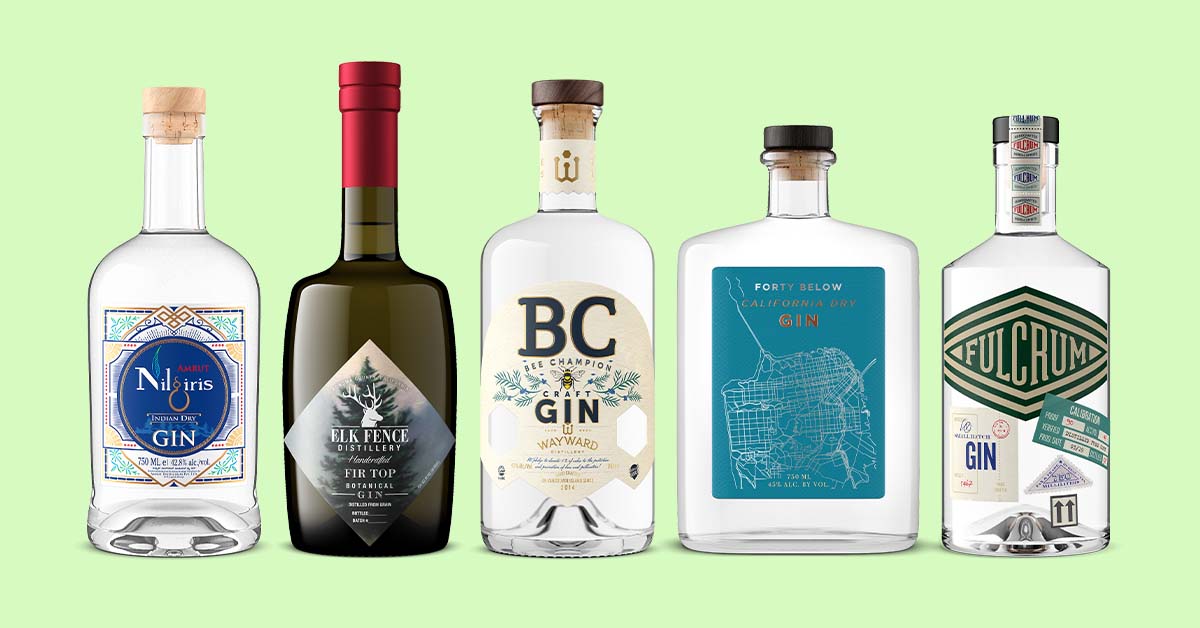
Gin has more brands on the shelf than any spirit its size, and fewer reasons than ever for a shopper to pick one. The boom that launched a thousand craft distilleries has faded, and the apothecary label they all reached for now distinguishes no one.
This is where the packaging becomes your silent ambassador, differentiating your brand at first glance the way vodka brands have had to for decades. The difference is that gin has something vodka does not: a recipe worth printing.
This guide covers where the gin market stands, the design decisions separating the gins that get picked up from the ones that get passed over, and how to get the imagery a botanical spirit needs on every shelf and screen it sells from.
The gin market in 2026
The gin boom is over, and the category is still bigger than it was before the boom. IWSR put worldwide gin consumption at about 107 million nine-liter cases in 2024, 25% above 2019, with global volume up 2% year on year and value flat. It forecasts growth of just 1% a year through 2029.
In the United States, the Distilled Spirits Council's 2025 briefing recorded gin supplier revenue of $924 million, down 3.4%, on 8.0 million cases, down 3.5%. One tier grew: high-end premium gin, roughly $135 to $205 a case at supplier prices, added 1% in volume while value, premium, and super-premium all fell.
Two more IWSR signals matter for packaging. Flavored gin, about 10% of the category, has fizzled while dry, traditional expressions have held. And gin overtook vodka to become the fourth-largest premium-plus international spirits category, which means the shelf it competes on is the expensive one.
The picture for a gin brand: the crowd is thinning, buyers are back to core styles, and the mid-premium bottle with a clear point of difference is the one still moving.
Gin does not stand alone on the back bar. For how premium positioning is built across every spirits category, read how distilleries build premium spirits brands. And for gin's most frequent partner in a martini, see the design ideas for vermouth, aperitifs, and liqueurs.
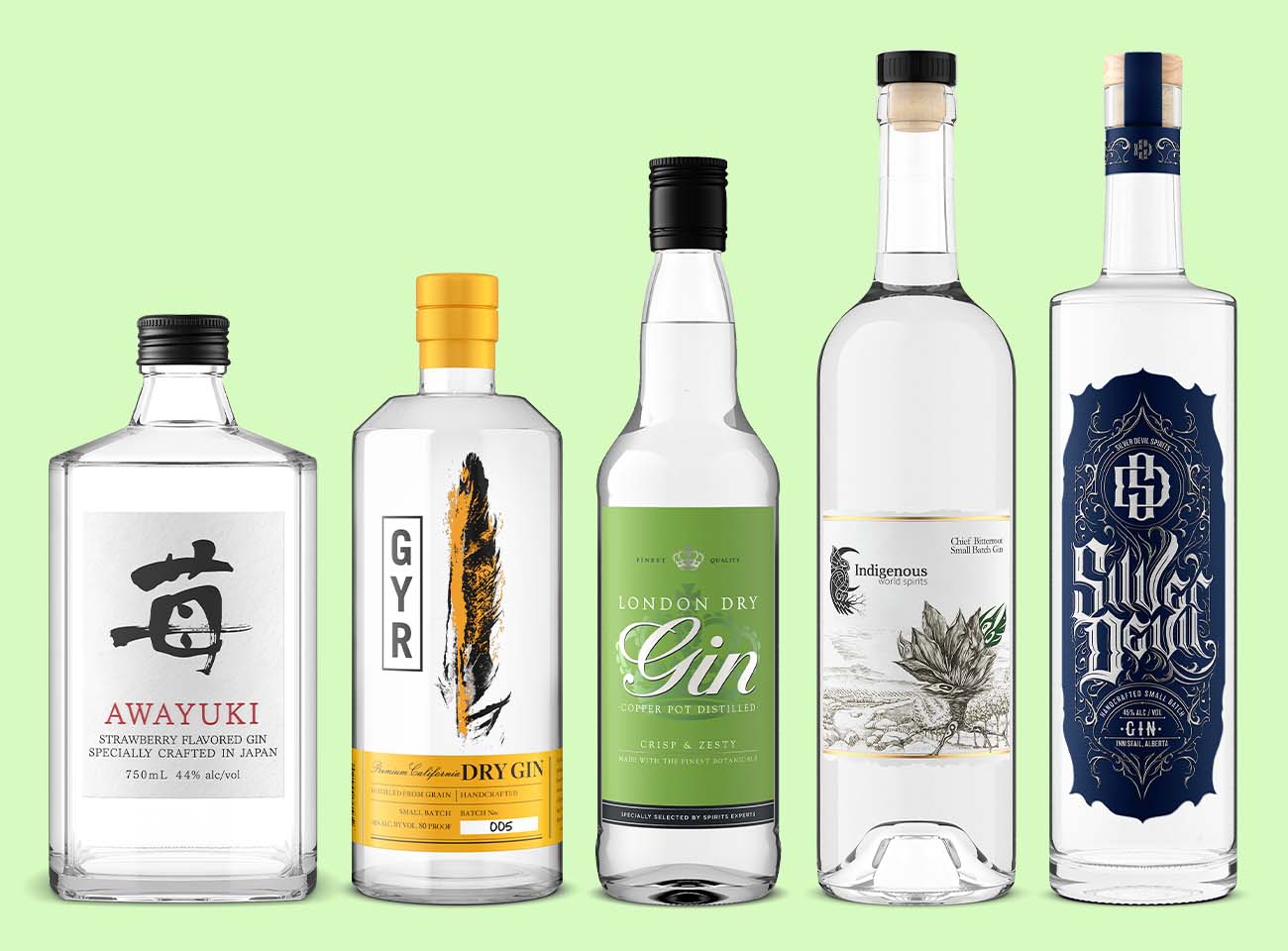
Design decisions that separate a gin now
Escape the apothecary
The Victorian pharmacy label, serif type, a crest, cream stock, "distilled in small batches," was the look of the boom. It was a good idea the first two hundred times. Today it reads as a template, and the shopper's eye slides over it.
The way out is not to abandon heritage. It is to pick one specific thing and lead with it: a botanical, a place, a color, a shape.

Lead with the botanicals
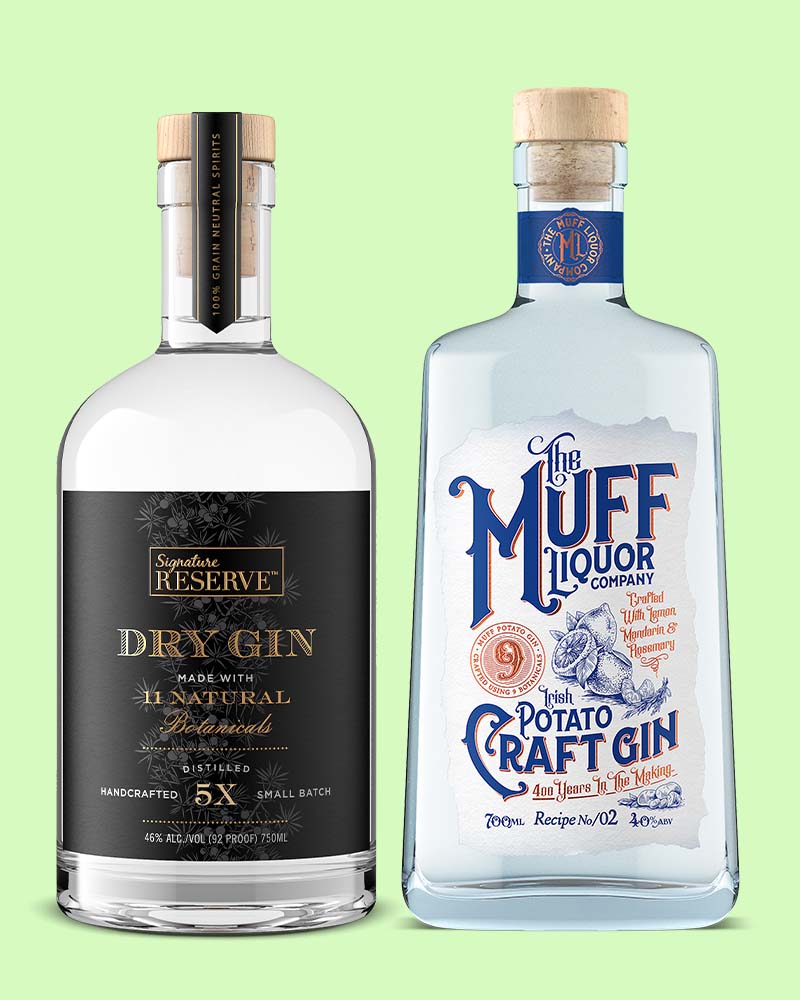
Gin is the one white spirit with a recipe worth printing. Juniper plus what, exactly? Earl Grey, lavender, yuzu, Douglas fir, seaweed. The botanical list is the flavor promise and the design brief in one, and the brands that put it on the front label give a buyer a reason before the price.

Use the front panel
Gin's signature bottle is the tall, round-shouldered 750 ml with a wide front panel. Use it. Distillation method, botanical count, the distiller's name, the region: craft distillers stake their reputation on that transparency, and it is what a commercial brand cannot copy.

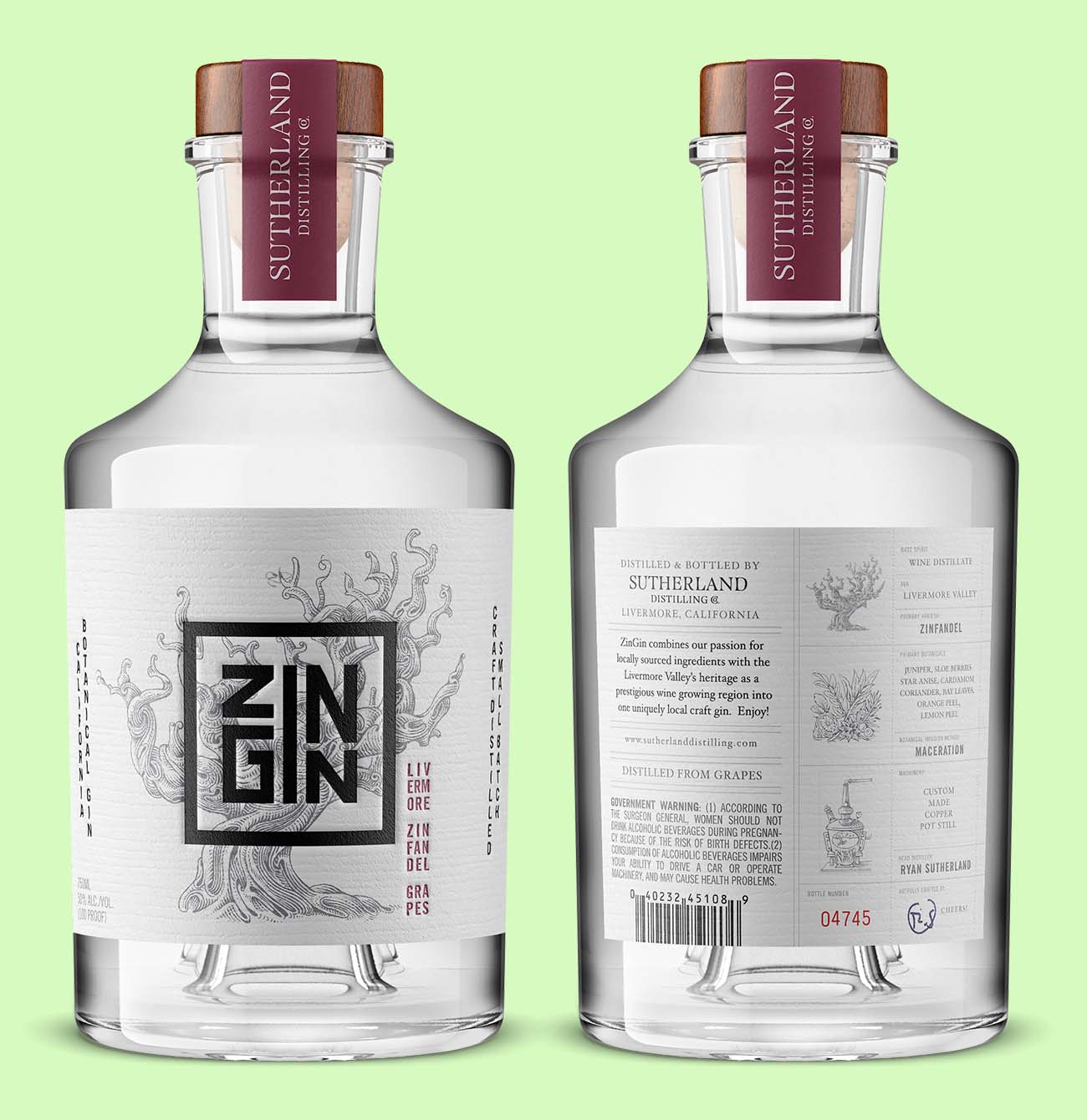
Custom glass, weighed against cost
Custom molds and glass embossing are the surest way to own a shape on the shelf. They are also the slowest and most expensive decision on the list, and a shape that photographs badly is a shape that sells badly online. Test the mold as a render before committing to the tooling.

Modern, color-led, for the home bar
The other exit from the apothecary look is the opposite direction: minimal type, saturated color, a bottle designed to sit on a kitchen shelf. It works for gins aimed at buyers under 40 who choose a bottle partly as decor, and it works for ranges, where one system with a color per expression scales cheaply.

Where the bottle gets judged
A gin buyer in 2026 usually meets the bottle on a screen first: a retailer's product page, a bar's ordering platform, a distributor's sell sheet, or an AI assistant's shortlist. The botanical list, the embossing, and the color that do the work on the shelf have to survive at 300 pixels wide.
Outshinery Studio builds those images from your label files and bottle specification. A trained 3D artist places the label on a model of your mold, renders the embossing, the foil, and the stopper as they will look in hand, and keeps the liquid clear or tinted as the recipe dictates, so the image exists before the first production run and never needs a reshoot when a batch number changes.
Gin is Studio work throughout. Custom molds, embossed glass, and specialty finishes sit outside what a self-serve tool handles, and spirits product photography covers what a Studio render includes.
Print the reason
The gin boom rewarded anyone with a still and an apothecary label. The market after it rewards a bottle that gives the buyer one specific reason: this botanical, this place, this shape, this color.
Print the reason on the front panel, make it survive as a thumbnail, and the crowded shelf becomes an advantage instead of a problem.

Gin beyond the London Dry
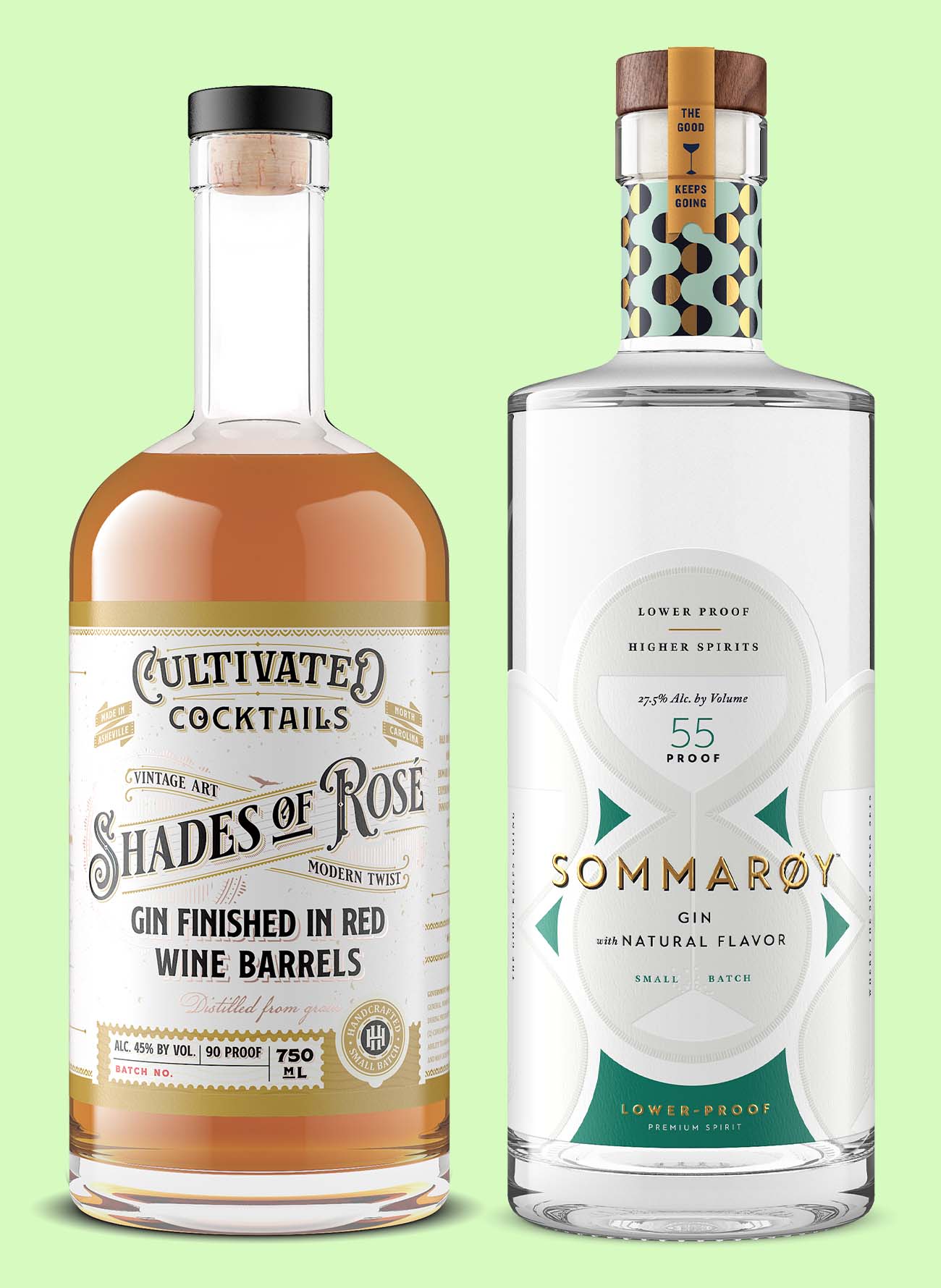
Two adjacent shelves borrow gin's cues. Barrel-aged and wine-cask gins take their color and their closures from whiskey and wine, and the label has to explain the crossover in a line. And the no-alcohol shelf is built largely on botanical spirits that look like gin without the ethanol. IWSR estimates no-alcohol analogues grew 9% globally in 2025, so the gin design vocabulary now sells on a shelf gin itself does not sit on.

Frequently asked questions
Is gin still growing?
Slowly, and unevenly. IWSR reports global gin volume up 2% in 2024 to about 107 million nine-liter cases, 25% above 2019, with growth of about 1% a year forecast through 2029. In the United States, the Distilled Spirits Council recorded gin revenue of $924 million in 2025, down 3.4%, with only the high-end premium tier growing. Flavored gin is fading; dry, traditional expressions are holding.
What makes gin packaging different from other spirits?
Gin has a printable recipe. The botanical list is both the flavor promise and the design brief, which is why gin labels carry more information, more illustration, and more color than vodka or whiskey. The category also uses more bottle shapes than any spirit its size, so the silhouette does part of the branding.
What should a gin label include?
The style (London Dry, Old Tom, Navy Strength, contemporary), the lead botanicals, the ABV, the region or distillery, and the still or method if it is a point of difference. Small distillers add the batch and the distiller's name. The recipe belongs on the front; the story can live on the back.
What gin packaging trends matter in 2026?
Moving off the apothecary template toward one committed idea per bottle, botanical-led front labels, restrained dry expressions over novelty flavors, modern color-led ranges for the home bar, and custom glass tested as a render before the tooling is ordered.
How do I get bottle shots for a gin without a photoshoot?
Send Outshinery Studio your print-ready label files and the bottle specification. A trained 3D artist builds the render from a model of your mold, including embossing, foil, and the stopper, so the image is ready before the bottle exists and stays identical across every retailer listing.
Does Outshinery Lite make gin bottle shots?
No. Outshinery Lite is a self-serve generator for wine, cider, and beer in flat-label glass bottles, at $29 an image. It does not cover cans, spirits, or specialty finishes. Gin is Studio work.

The gin packaging brief checklist
- Bottle mold: The exact glass mold and manufacturer, with the spec sheet and any embossing artwork for a custom shape
- Closure: Bartop cork, stopper, or screw cap, plus capsule material and any wax or seal
- Label files: The print-ready vector files sent to your printer, front and back, for every expression
- Print finishes: Foil, emboss, deboss, varnish, and any paper texture called out one by one
- Liquid color: Clear, tinted, or barrel-aged, with a reference or hex value for anything that is not water-white
- Botanical copy: The botanical list and ABV as they appear on the label, so the render is proofread as well as rendered
- Listing specs: The resolution and background every retailer, distributor, and marketplace requires
One complete brief means the render matches the bottle on the first pass, not the third.