Tequila and mezcal branding and packaging: what sells when the boom pauses
Agave spirits after a decade of growth: the design decisions that hold a price when buyers trade down, on the shelf and on the screen

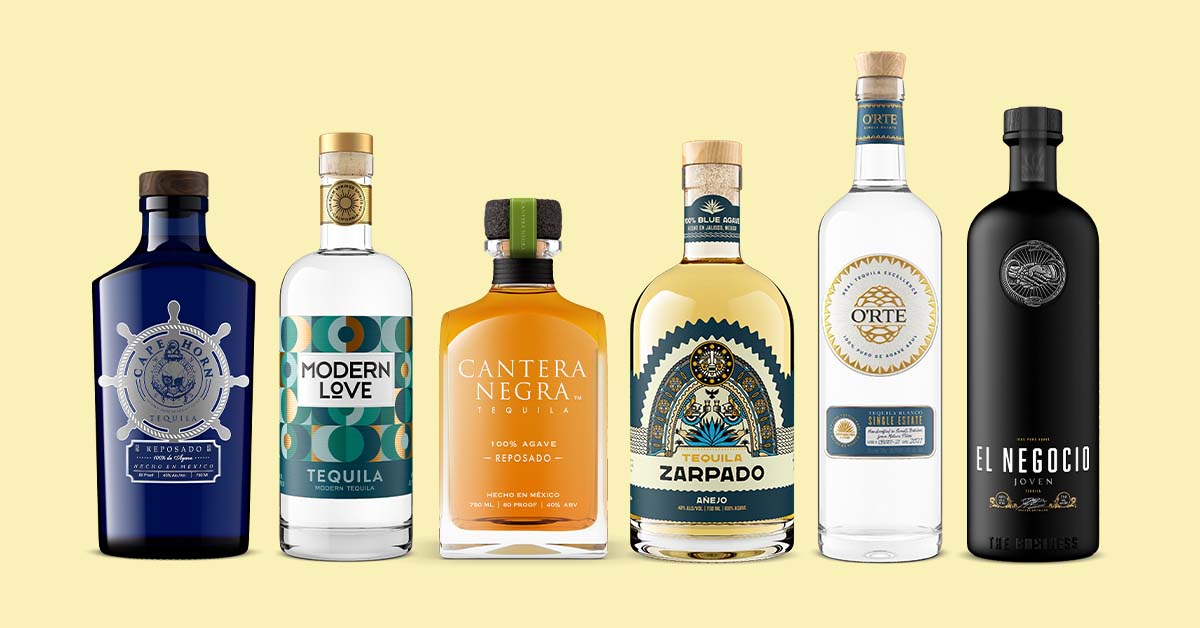
Tequila spent a decade as the spirit that could not miss. Celebrity brands, $60 blancos, a super-premium tier that grew every year. In 2025 the growth stopped, and the buyers who stayed traded down.
That changes what tequila and mezcal packaging has to do. Looking expensive is no longer enough. The bottle has to explain why this agave spirit is worth its price to a shopper who has just discovered that a $30 one is fine.
This guide covers where the category stands, the design decisions that separate the brands holding their price from the ones sliding, and how to get the imagery an agave spirit needs on every shelf it sells from.
The tequila and mezcal market in 2026
Tequila and mezcal is the second-largest spirits category in the United States by revenue, behind only vodka. The Distilled Spirits Council's 2025 briefing put supplier revenue at $6.44 billion, down 4.1%, on 32.1 million nine-liter cases, down 0.3%.
Flat volume and falling revenue means one thing: the same drinkers are paying less. The DISCUS tables confirm it. Value-tier tequila, under $100 a case at supplier prices, grew 6.5% in volume and 7.9% in revenue. Super-premium, over $260 a case, fell 6.1% in volume and 7.9% in revenue.
The premium boom did not end. It paused, and for the first time in years a tequila brand's packaging has to justify a price rather than simply signal one.
Agave is one chapter in a larger spirits story. For how premium positioning is built across the whole category, read how distilleries build premium spirits brands. And for another category that sells on botanical character and provenance, see gin bottle and packaging design.

Design decisions that hold a price when buyers trade down
Print the provenance
The old differentiator was age class: blanco, reposado, añejo, extra añejo. The new one is provenance: the region, the altitude, the agave variety, the distillery's NOM number, whether the agave was cooked in a brick oven or an autoclave.
A shopper trading down still wants to believe the $55 bottle is different. Provenance printed on the front label is the proof. The "100% de agave" line is the minimum, not the argument.

Finishes that read as earned
Tequila leans on hot-stamped metallics, embossed glass, and debossed labels more than most categories. They work when the rest of the bottle backs them up, and they backfire when a $28 blanco is dressed like a $120 extra añejo.
Match the finish to the tier. One metallic accent on the blanco, a heavier mold and a stopper on the añejo, and the range reads as honest.

Materials as the premium signal
Volcanic stone stoppers, leather cord, ceramic, and custom-weight glass are how the top of the category signals that the liquid does not need a loud label. They are also expensive, slow to source, and hard to photograph with a camera, which matters later.

Modern over antique, without losing Mexico
The tequila revival brought a wave of vintage-style labels, then a wave of brands rejecting them. Minimal typography, matte black, a single bold color: the modern aesthetic is now the default for a launch aimed at drinkers under 40.
The risk is anonymity. A modern bottle with nothing Mexican on it reads as a lifestyle brand borrowing a category, and buyers who are trading down are suspicious of exactly that.

Where the bottle gets judged
A tequila buyer in 2026 meets the bottle on a screen first: a retailer's product page, a bar's ordering platform, a distributor's sell sheet, or an AI assistant's shortlist. Every cue above has to survive at 300 pixels wide, and the blanco, reposado, and añejo have to look like one family in a row.
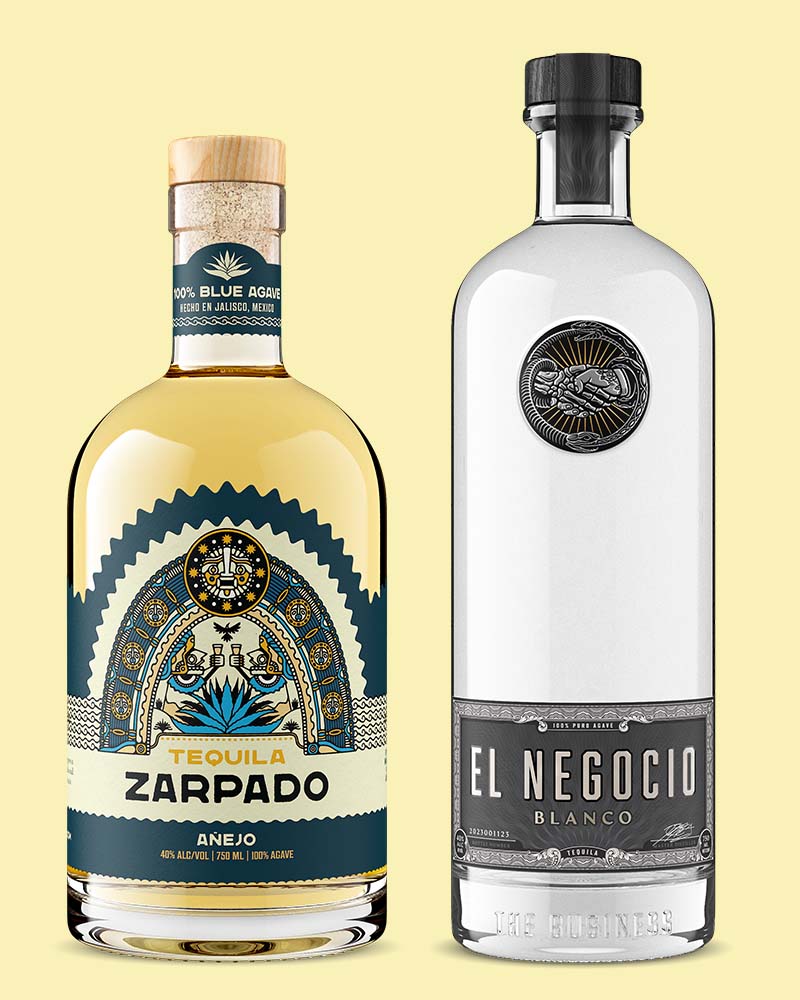
Outshinery Studio builds those images from your label files and bottle specification. A trained 3D artist places the label on a model of your mold, matches the liquid color across the age statements, and renders the hot stamp, the emboss, and the stone stopper as they look in hand, so the image exists before the first production run and never needs a reshoot when a batch number changes.
Agave spirits are Studio work throughout. Custom molds, stoppers, and metallic finishes sit outside what a self-serve tool handles, and spirits product photography covers what a Studio render includes.
The bottle has to earn the price now
For ten years tequila packaging could signal luxury and let the category's momentum do the rest. That momentum paused in 2025, and buyers proved they will trade down when the bottle does not give them a reason not to.
Provenance printed plainly, finishes matched to the tier, and one consistent image of the range everywhere it sells. That is the reason.


Frequently asked questions
Is tequila still growing in the United States?
In volume, barely; in revenue, no. The Distilled Spirits Council reports US tequila and mezcal supplier revenue of $6.44 billion in 2025, down 4.1%, on 32.1 million nine-liter cases, down 0.3%. Value-tier tequila grew 6.5% in volume while super-premium fell 6.1%, so the category is still the second largest by revenue, but buyers are trading down inside it.
What is the difference between tequila and mezcal packaging?
Tequila is made from blue Weber agave in Jalisco and small parts of four other states, and its packaging usually organizes around age class in clear glass. Mezcal can be made from many agave varieties across nine states, is often pit-roasted, and its packaging leads with agave species, village, and the maestro mezcalero, frequently on a simpler bottle with a hand-numbered label.
What should a tequila label include?
Whether it is 100% de agave, the NOM number of the producing distillery, the age class, the region, the ABV, and increasingly the agave source and cooking method. The provenance lines are what a buyer checks when deciding whether the price is earned.
What packaging trends matter for tequila and mezcal in 2026?
Provenance-first labels, modern minimal design that keeps one Mexican element, finishes matched to the price tier rather than stacked on every bottle, and more investment in the listing image than in the gift box, because the bottle is judged on a screen before it is judged in hand.
How do I get bottle shots for a tequila range without a photoshoot?
Send Outshinery Studio your print-ready label files and the bottle specification. A trained 3D artist builds the render from a model of your mold, including the stopper, the hot stamp, and the liquid color for each age class, so the whole range is ready before the bottles exist and stays identical across every retailer listing.
Does Outshinery Lite make tequila bottle shots?
No. Outshinery Lite is a self-serve generator for wine, cider, and beer in flat-label glass bottles, at $29 an image. It does not cover cans, spirits, or specialty finishes. Tequila and mezcal are Studio work.

The agave spirits packaging brief checklist
- Bottle mold: The exact glass mold and manufacturer, with the spec sheet for any custom or embossed shape
- Closure: Stopper material (stone, wood, synthetic, metal insert), cord or capsule, and any wax
- Label files: The print-ready vector files sent to your printer, front and back, for every age class
- Print finishes: Hot stamp, emboss, deboss, varnish, and metallic ink called out one by one
- Liquid color: A reference or hex value per expression, because blanco, reposado, and añejo read as three different liquids in clear glass
- Provenance copy: NOM, region, agave source, and cooking method as they appear on the label, so the render is proofread as well as rendered
- Listing specs: The resolution and background every retailer, distributor, and marketplace requires
One complete brief means the render matches the bottle on the first pass, not the third.