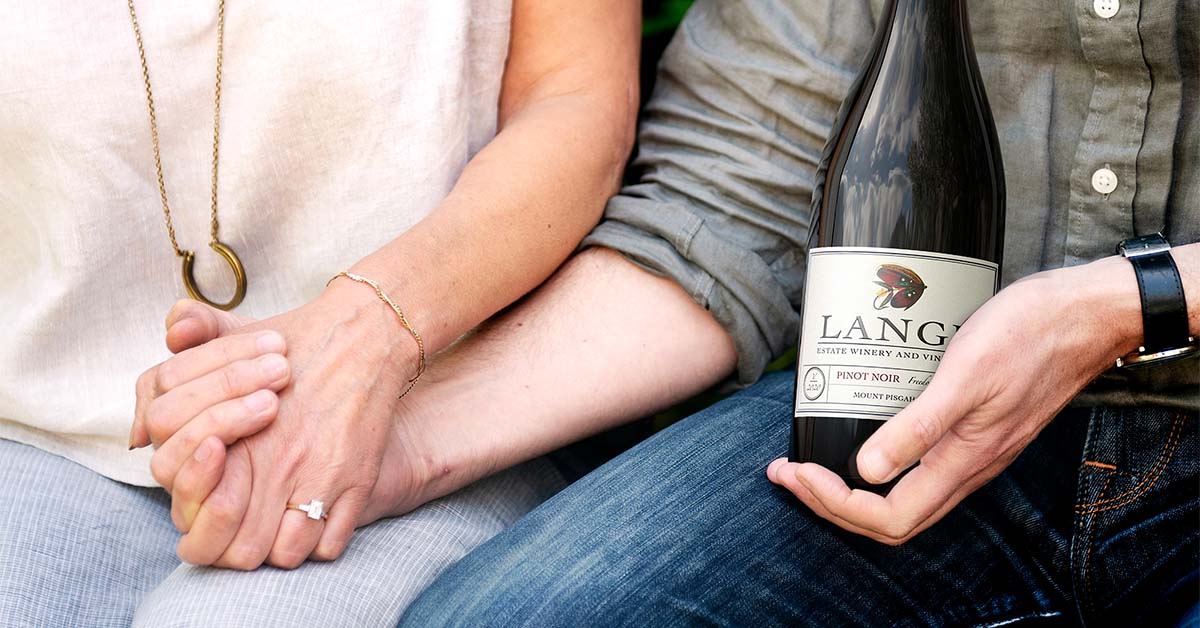
Wine photography for wineries: the four shots you need
The four image types a wine brand needs, what a photoshoot costs, and how to get both without one

You have eight SKUs, a release in six weeks, and one usable photo: a bottle on your kitchen counter, shot on a phone.
Wine photography is not one job. It is four, and they are not interchangeable.
A retailer will reject the lifestyle scene. A social feed will scroll straight past the plain cutout. Knowing which image does which job is the difference between one shoot and three.
The four wine photos a winery needs
Wine brands need four image types: a bottle shot on a plain background for listings and sales sheets, a lifestyle image that places the bottle in a real scene, a beauty shot that shows the label finishes up close, and a lineup that shows the portfolio together.
The bottle shot
One bottle, straight on, on white or transparent, cropped tight.
This is the image retailers, distributors, and marketplaces ask for. It is also the one that gets sent back most often, usually for a soft label, the room reflected in the glass, or a background that is not actually white.
The lifestyle image
The bottle in a setting: a dinner table, a vineyard row, a bar top with the glasses poured.
It does not sell the specification. It sells the occasion, which is what club emails, social feeds, and ad campaigns run on.
The beauty shot
A close crop on the part of the packaging you paid extra for: the foil, the deboss, the wax dip, the paper texture.
Most small producers skip this one, then wonder why the label looks flat online.
The lineup
Every SKU in the range, in one frame, lit identically.
Buyers read a lineup as evidence that the portfolio holds together. Mismatched light across three vintages reads as three different producers.

You now have four criteria to grade your current images against. The free Visual Scorecard does it for you in five minutes.
What a wine photoshoot actually costs
Professional product photography runs roughly $100 to $300 per image once production is counted, with about $150 as the US average.
That is the per-image number, not the day rate. Add the sample bottles you ship, the courier both ways, a stylist if the scene has props, and the retouching pass at the end.
Then add the line nobody budgets for. A new vintage, a corrected ABV, a redesigned back label, and the whole set is out of date.
We were reusing old shots with the wrong vintage year because we didn't want to deal with it year to year. Jordan Tanaka, Tasting Room Manager, Shadow Ranch Vineyard
That is the real cost of a photoshoot. Not the invoice, the year spent avoiding the next one.
Wine lifestyle photography, location by location
Location does more work than any other variable in a lifestyle image. Each one carries a different message, and the wrong one is how a premium wine ends up reading as casual.

The kitchen table
Familiar, warm, low stakes. This is the Tuesday-night bottle, and it works for anything positioned as approachable.
It is also the location that costs a premium wine its positioning fastest. A bottle you priced for a special occasion should not be shot on a weeknight table.
Keep the table shallow and the props few. A crowded table pulls the eye off the label.

The vineyard
Vines behind the bottle are the fastest way to say the wine came from somewhere specific.
Shoot late in the day. Midday sun blows out the glass and flattens the rows behind it.

The restaurant table
On-premise placement is a different sell. A bottle on a set table with the glasses poured says a sommelier chose it.
Useful for trade decks and distributor outreach, less useful for direct-to-consumer.

Outdoors
Picnics, boats, beaches, bikes. Outdoor scenes carry seasonality.
Shoot them knowing you will retire them within a year, and price the shoot accordingly.

Seasonal and holiday scenes
A holiday image works for about six weeks and then looks wrong.
Order it early. A Thanksgiving scene commissioned in October arrives after the club email has already gone out.

Lighting, and why glass is the hard part
Glass is one of the hardest subjects in product photography. It reflects the room, refracts the liquid, and holds every fingerprint.
Natural light
Soft, free, and honest about color. It also changes every twenty minutes, which is why two bottles shot an hour apart will not match.
Diffuse it at the window and put a white card on the shadow side.
Artificial light
Strobes and continuous light give you control and repeatability. They also give you reflections, and glass finds every one of them.
Large, soft sources set behind and to the side of the bottle produce the long vertical highlights that read as premium.
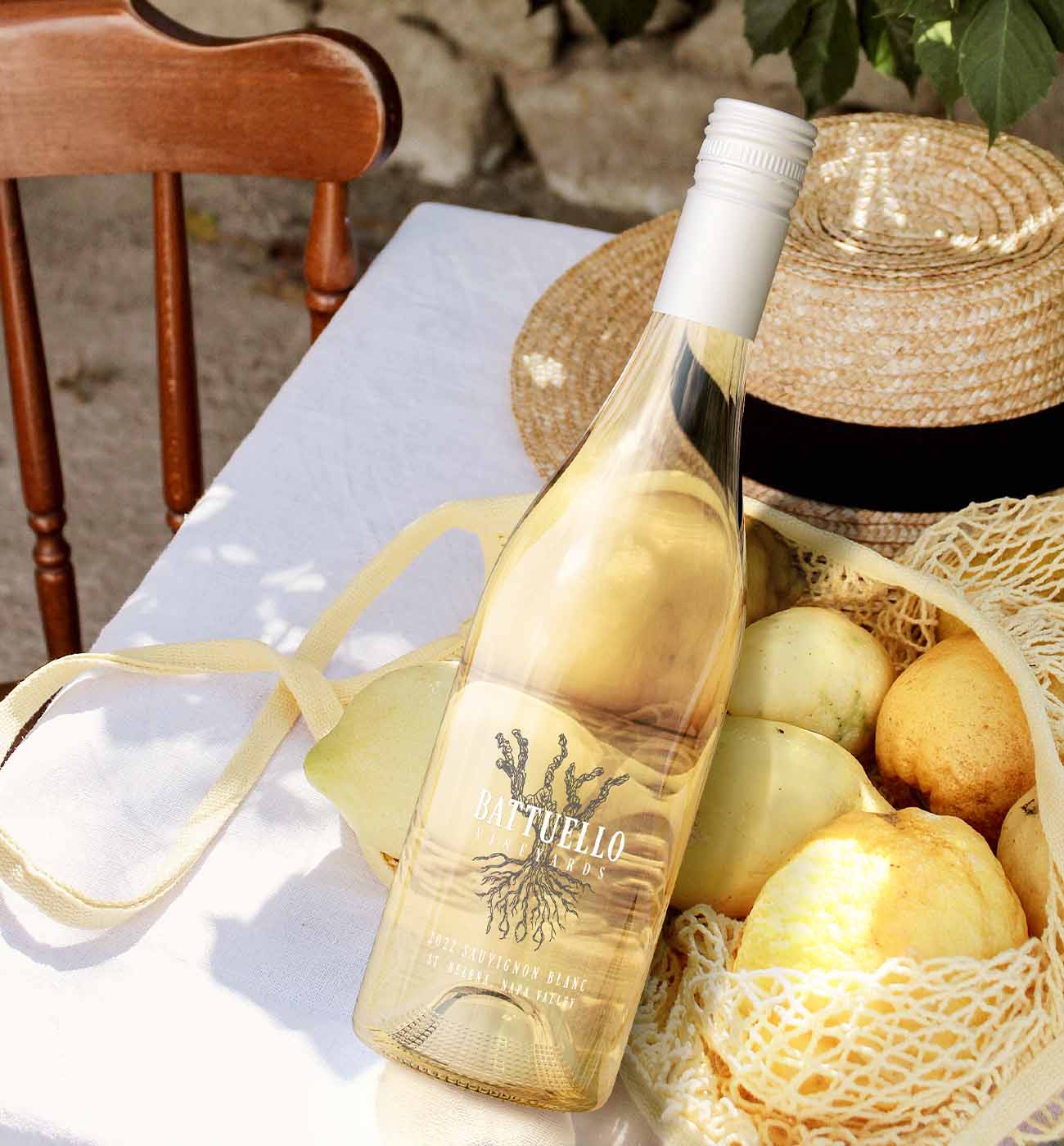
CGI-controlled light
In a 3D render, the light is a value, not a lamp. Set it once and every bottle in the portfolio gets the identical setup, this vintage and the next one.

Ideas are cheap. The test is whether the image has somewhere to go the week it lands.
Wine photography ideas that earn their place
Pair the bottle with the dish
A plated dish beside the bottle turns tasting notes into something the reader can picture.
Shoot the pairing your tasting room already recommends. It is the one your team can talk about without a script.

Put your glassware in the frame
Branded glasses, an etched decanter, a logo on the stem. These carry the brand in the frames where the label is turned away.
The rest of the table should suggest the life the wine belongs to without competing with it. Art books, textured linen, handmade ceramics, a luxury glass chess set left mid-game.

Build a scene around one color
A single-color set makes a bottle look considered, and it crops cleanly to every social format.
It also ages slowly.

Shoot one scene for the whole campaign
A digital ad, a club email, a shelf talker, and a feed post can all come out of one scene shot at different crops.
Decide the crops before the scene is built. Vertical, square, and wide are three compositions, not one image resized.

Wine product photography without a photoshoot
Outshinery builds your bottle in 3D from your print-ready label file and renders the image. No sample shipped, no studio booked, no photographer scheduled.
The label is placed on the verified container shape rather than redrawn, so the type on the render is the type you sent to print.
Studio covers three of the four image types: lifestyle scenes, beauty shots, and lineups, plus any packaging complex enough to need a specialist. Trained 3D artists build each one from a Studio container library of 1,128 bottle models, and orders start within 3 business days.
Lite covers the fourth. Upload a label, pick a bottle and closure, and a plain-background bottle shot comes back in under an hour for $29. Lite produces bottle shots only, never lifestyle imagery.
That is the four-image set from two places instead of three photoshoots.

Both work before the wine is bottled, which is the part a photoshoot cannot do.
Browse Pre-Designed Imagery to see the lifestyle scenes available, or start with a Product Shot.

Frequently asked questions
What is wine lifestyle photography?
Wine lifestyle photography places a bottle in a real setting, such as a dinner table, a vineyard, or a restaurant, instead of isolating it on a plain background. Its job is to sell the occasion, so it is used for social media, email campaigns, and advertising. Retailer and marketplace listings need the opposite, a clean bottle shot on white or transparent.
How much does wine photography cost?
Professional product photography typically runs $100 to $300 per image once production costs are counted, with roughly $150 as the US average. Sample shipping, styling, and retouching sit on top of that, and a vintage change or label revision means paying again. A 3D bottle shot through Outshinery Lite is $29, and vintage updates on a Studio model are free.
Can I get wine photos before the wine is bottled?
Yes. Outshinery builds a 3D model from your print-ready label file and your container specification, so the image exists before there is a physical bottle. Wineries use this to hit listing deadlines and finish sell sheets while the wine is still in production.
What lighting works best for wine bottles?
Large, soft sources placed behind and to the side of the bottle. That produces the long vertical highlights on the glass that read as premium, and it keeps reflections of the room off the label. Glass refracts and reflects more than any other packaging material, which is why bottles are harder to light than boxes or cans.
How do I get bottle shots without shipping physical samples?
Use a virtual studio that works from files instead of physical product. Outshinery renders the bottle from your label artwork and container specification, so nothing is couriered, nothing comes back damaged, and no wine is lost to the process.
The pre-shoot wine imagery checklist
- Shot list: Name every image by where it will be published, not by what it shows
- Container spec: Exact glass mold and manufacturer, not just "Bordeaux" or "Burgundy"
- Label files: The print-ready artwork your printer used, not a JPEG or a COLA scan
- Finishes: Call out foil, embossing, deboss, and wax explicitly, they change the lighting
- Crops: Decide vertical, square, and wide before the scene is built, not after
- Vintage plan: Know what happens to this image when the year on the label changes
Twenty minutes on this list is the difference between one shoot and a reshoot.