Seasonal beverage promotions: a holiday ROI guide for wine brands
What to offer, when to start, and how to tell whether the season paid, for wine and beverage producers.

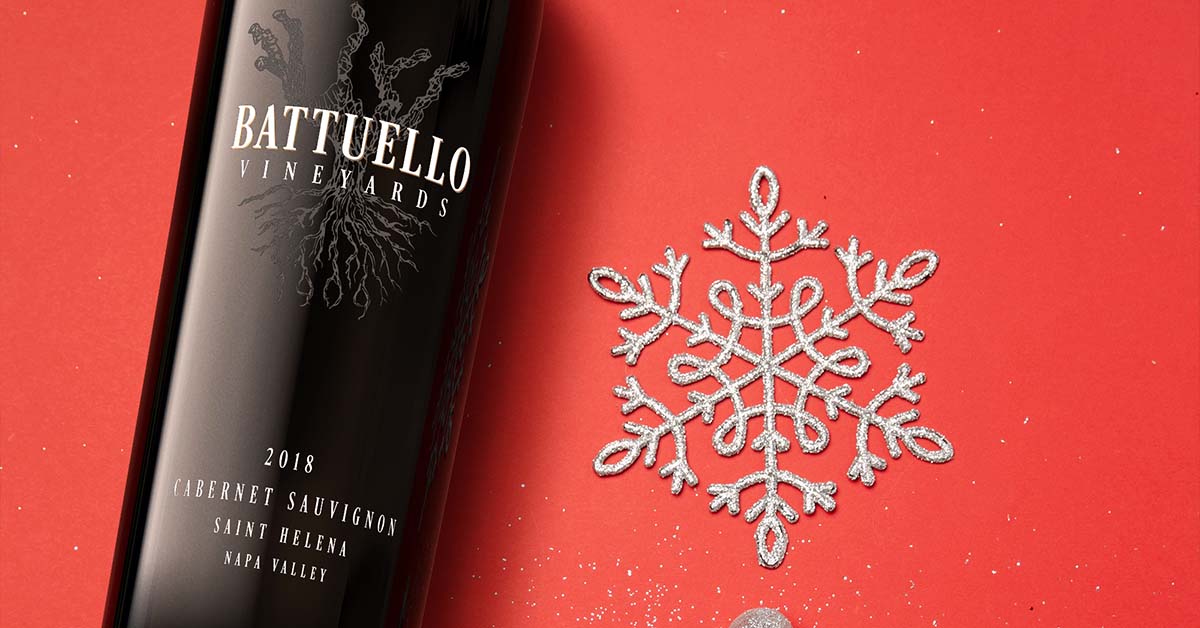
Seasonal beverage promotions are limited-time offers a brand ties to a moment in the calendar, such as a holiday gift set, a limited-edition label, a bundle or a seasonal release. For wine and beverage producers, the biggest window by far is November and December.
Bars and cafes run their own version, with menu specials and limited-time drinks. This guide is for the brands that make the bottle, where a promotion that ships late or looks generic is spend that never comes back.
Why November and December carry the year
Holiday demand is concentrated in a way no other period matches. In 2025, US beer, wine and liquor stores sold $7.3 billion in December, about 30% more than in an average month, and November and December together made up 19% of the year’s sales, according to US Census Bureau retail data.
Online, the season keeps growing. Adobe Analytics counted $257.8 billion in US online spending from November 1 to December 31, 2025, up 6.8%, and forecasts $275.1 billion for 2026. These are all-category retail figures, not alcohol alone.
Across all of retail, the National Retail Federation forecasts November and December sales of $1.013 trillion in 2026, up 4.2% on 2025.
Shoppers plan to spend more, but carefully: Deloitte’s 2026 holiday survey of 4,000 US consumers puts average planned spend at $1,654, up 4% from $1,595, and 38% are value seekers who use five or more cost-saving tactics.

Seasonal promotions that work for beverage brands
The promotions that pay for a producer add value to the bottle rather than cut its price. Five formats do most of the work.
- Gift sets and multi-bottle packs: a curated pair or trio in a box, priced above the bottles bought separately
- Limited-edition labels and packaging: a holiday label, sleeve or tin that exists for one season
- Large and small formats: magnums for parties, half bottles for a splurge
- Bundles with a shipping threshold: free shipping above a set order value instead of a sitewide discount
- Corporate gifting: a short order form for businesses buying by the case
Formats are the sleeper. Anthony Taylor, wine director at Cru Uncorked, told SevenFifty Daily that his large-format sales go up during the holidays and that guests “trade up one position wherever they are.” His example: a guest comfortable with a $50 bottle may reach for $80 in December.
Discounts still have a place, but late and narrow. Our guide to Black Friday for wineries covers bundling before you discount, and winter holiday campaigns for alcohol brands covers building the bundles themselves.


Plan the season backward from your last ship date
A holiday promotion fails most often on timing, not on the offer. Work back from the last date you can guarantee delivery before December 25, then set each step against it.
Shoppers are starting earlier, too. In Deloitte’s 2026 survey, 22% plan to shop sooner than last year, and Thanksgiving week remains the main event.
- Offer and pricing: fixed by early October, so the gift set exists before anyone photographs it
- Imagery: product shots and holiday scenes approved by early November
- Listings: gift sets, formats and bundles live on your site and marketplaces before Thanksgiving week
- Email and social: scheduled from Thanksgiving to your last ship date
- Last ship date: stated on every product page and in every send
For the email side, see holiday email marketing for wineries.

Show the offer, not just the bottle
A promotion only sells if the shopper can see it. Gift sets, magnums and limited labels are the items a holiday promotion exists to sell, and they are often listed as a line of text, with no image of their own.
Most of that shopping happens on a phone. Adobe expects 57.4% of 2026 holiday online spending to come through mobile devices, so the set, the box and the label have to read at thumbnail size.
Each format needs its own image: the gift box open and closed, the magnum next to a 750ml for scale, and the holiday label as it actually prints. A festive scene helps the shopper picture the gift, as long as the bottle in it is the one that ships.


How to measure the ROI of a holiday promotion
Two numbers tell you whether the season paid. Return on ad spend (ROAS) is the revenue a campaign brings in for each dollar of ad spend, and marketing efficiency ratio (MER) is total revenue divided by total marketing spend across every channel.
Neither one includes the cost of the wine. To know whether a campaign made money, compare ROAS with your break-even ROAS, which is 1 divided by your gross margin.
The numbers below are an illustrative scenario, not a benchmark or a quote. Your figures depend on your margins, your channels and your catalog.
- Gift set at $120 with a 50% gross margin: break-even ROAS is 2.0 (illustrative)
- Ad spend over the season: $3,000 (illustrative)
- Gift sets sold from those ads: 60, for $7,200 in revenue and a ROAS of 2.4 (illustrative)
- Gross profit after ad spend: $3,600 minus $3,000, or $600 (illustrative)
A ROAS that looks healthy can still lose money. Set the break-even line before the season starts, not after.
Beyond ROAS and MER, track average order value, customer acquisition cost, and how many December buyers order again by March. A gift buyer who comes back is the part of the season that keeps paying.

Holiday images with Outshinery Studio
Photographing gift sets, formats and holiday scenes is slow and costly. Traditional photography typically runs $100 to $300 per image with production costs, needs finished bottles and props, and starts over when the label changes.
Outshinery Studio works from your label files instead. A trained 3D artist builds your bottle as a photorealistic 3D model on the exact glass shape, from a library of 1,100+ bottle models, and delivers product shots that match the printed pack, before your wine even exists.
A Studio Product Shot is 1 Shine Credit, $95 to $129 depending on plan, and the first proof arrives in 3 to 5 business days from a complete brief.
From the same model, Studio places your bottle into a festive scene from the Pre-Designed Imagery library, which includes scenes for Thanksgiving, Christmas and New Year’s Eve. A Lifestyle Image starts at 2 Shine Credits and includes 3-month regional exclusivity; see Studio pricing for every plan.
Plan the offer in October, and the images will be ready when the shoppers are.


Frequently asked questions
What are some good promotions?
For a wine or beverage brand, the strongest holiday promotions add value instead of cutting price: gift sets, limited-edition labels, magnums and half bottles, and bundles with free shipping above a set order value. Each one needs its own product image and a clear last ship date.
What are some unique promotional ideas?
Beyond the gift set, beverage brands can run a holiday-only label or tin, a corporate gifting order form for buying by the case, or a format promotion that pairs a magnum with a matching 750ml. Ideas that make the bottle itself the gift keep the price intact.
When should beverage brands plan holiday promotions?
Fix the offer by early October and have product images approved by early November, so listings are live before Thanksgiving week. Deloitte’s 2026 survey found that 22% of US shoppers plan to start earlier than last year.
How do you measure the ROI of a holiday campaign?
Use return on ad spend for each campaign and marketing efficiency ratio for total revenue against total marketing spend. Compare ROAS with your break-even ROAS, 1 divided by gross margin, because neither metric includes the cost of the product.
Should wineries offer discounts during the holidays?
Use discounts late and narrowly, after bundles and gift sets have had their run. Value that comes from the pack, such as a gift box, a limited label or free shipping above a threshold, protects the price better than a sitewide percentage off.
The holiday promotion checklist
- Offer: One gift set or format per price point, priced above the bottles bought separately
- Break-even: Break-even ROAS written down (1 divided by gross margin) before any ad spend
- Images: A product image for every gift set, format and holiday label, approved by early November
- Listings: Every offer live on your site and marketplaces before Thanksgiving week
- Ship date: Last guaranteed delivery date on every product page and email
- Follow-up: A January email to every first-time December buyer
An hour on this list in October saves the week in December when a gift set has no photo.


