Winery ecommerce checklist: the four C's for product images
Complete, consistent, current, calendared: the four checks from our Sovos ShipCompliant webinar, with the numbers behind them.


A winery ecommerce checklist for product images comes down to four checks: every listing is complete, the catalog is consistent, every photo is current, and new imagery is calendared with one named owner. Run them on your online shop before the holiday rush and again at every release.
This framework is the takeaway from Compliant to Ship, Ready to Sell, the October 14, 2026 webinar Outshinery founder Laurie Millotte co-hosted with Alex Koral of Sovos ShipCompliant. The recording is on demand from Sovos.
Compliance decides whether a bottle can ship. The product page decides whether anyone wants it shipped.
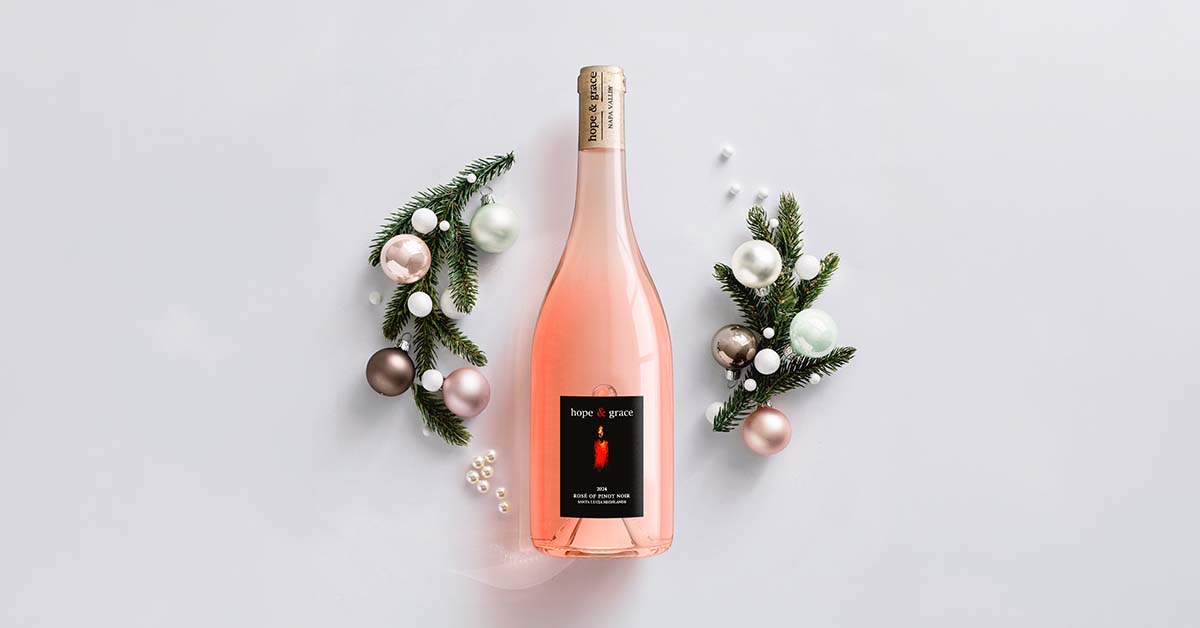
Why the holiday gift set is where the gaps show first
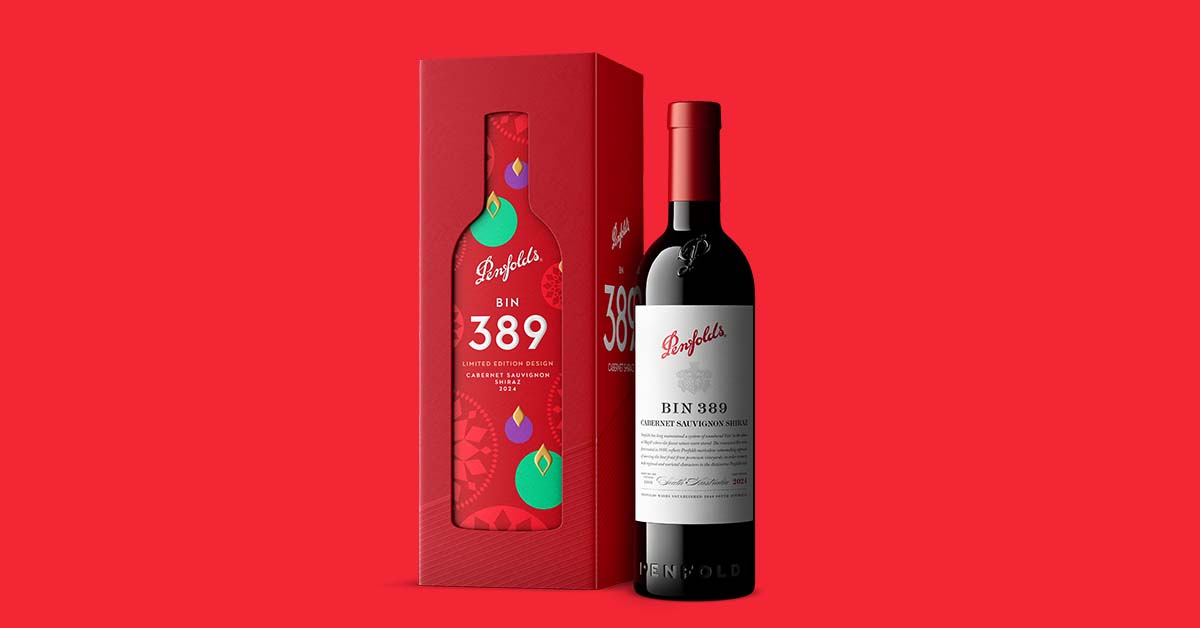
The holiday gift set is the hardest product a winery sells online, because it often does not exist as one object until it is packed. A three-bottle set is assembled at fulfillment, a magnum gets etched, a wooden box arrives from a different supplier than the wine.
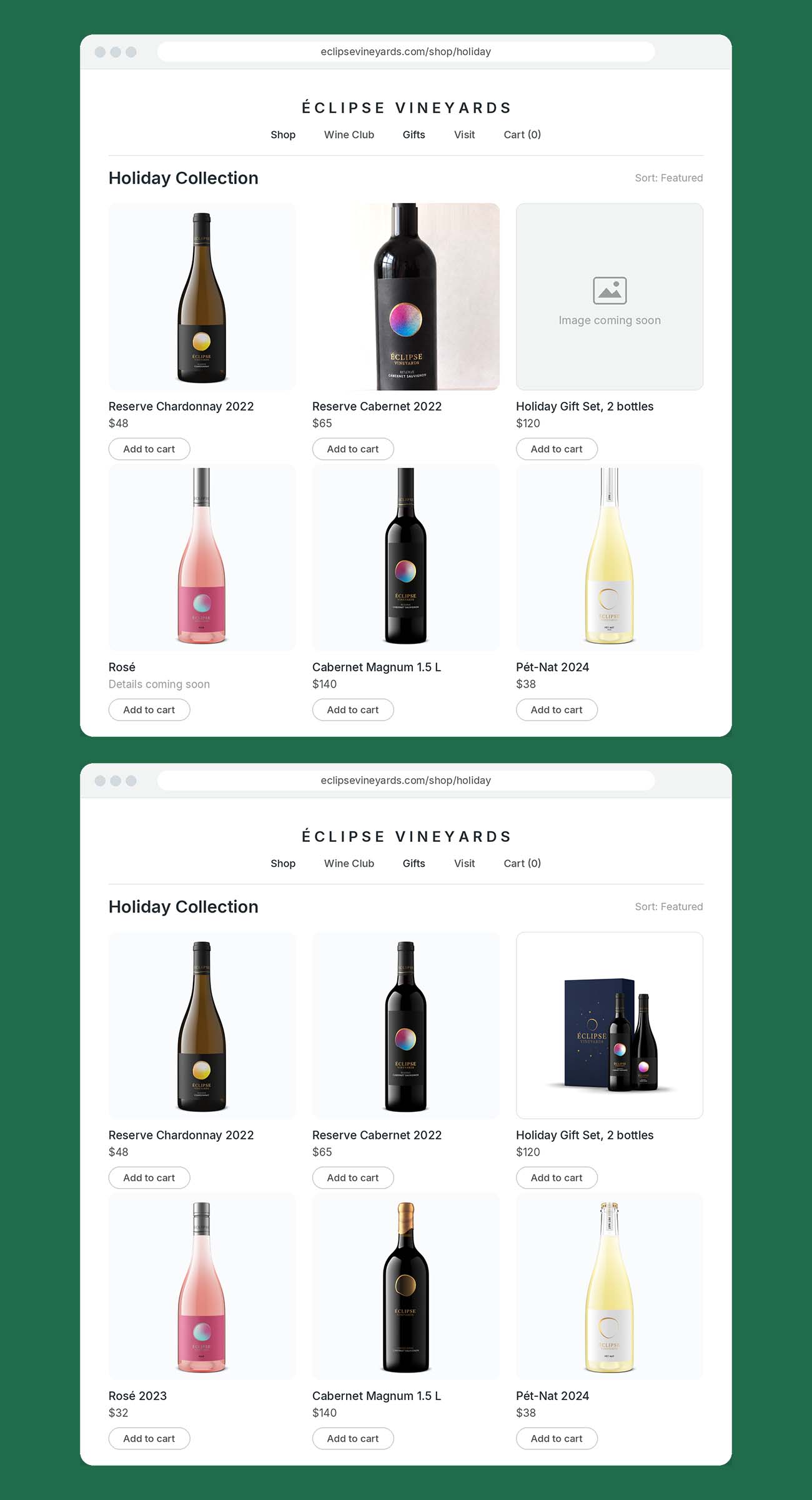
There is nothing to put in front of a camera, so the listing goes live with a single-bottle photo, a phone shot, or "image coming soon." The shopper choosing a gift is choosing an object someone else will unwrap, and needs to see what arrives.
The gift set fails all four checks at once, which makes it the fastest place to start. The same checks apply to every wine in the catalog, in March as much as in November.

Why the online shop matters beyond its revenue share
The online shop reaches more new customers than its sales suggest. In Commerce7's Tasting Room Effect data across six markets, ecommerce is 11.7% of direct-to-consumer revenue but creates 36% of new customer records.
The product page is also not the only place a bottle shot travels. The same files go to the press, to sell sheets, to retailer and distributor listings, to competitions and to wine apps.
Where should the audit start?
Start in the folder where your bottle shots live, not on the shop page. Most shop themes place every image in a fixed box, so the grid looks tidy even when the files behind it do not match.
Open the folder where your bottle shots live. Select them all. Look at the thumbnails.
A mix of tall, square and everything between is normal, and it is rarely anyone's fault. Outshinery's State of Wine Product Imagery 2026 describes most wine catalogs as assembled rather than photographed: one migration at a time, by different people, over several years.
Complete: does every listing have the images it needs?
A complete listing shows every product the way it ships, with nothing marked "coming soon." Across 189 wine storefronts, 82% of wine listings have exactly one photo, and roughly half of wineries have exactly one on every wine they sell.
One front-label photo cannot show the back label, the closure, the format or the gift box. A complete listing adds the back label for every wine, the set as a unit for every gift set, and the real format for every magnum.
Retailers already treat images as part of a complete listing. Total Wine & More's supplier page states that product images are required for a product to be sold digitally.
Consistent: do your bottle shots match each other?
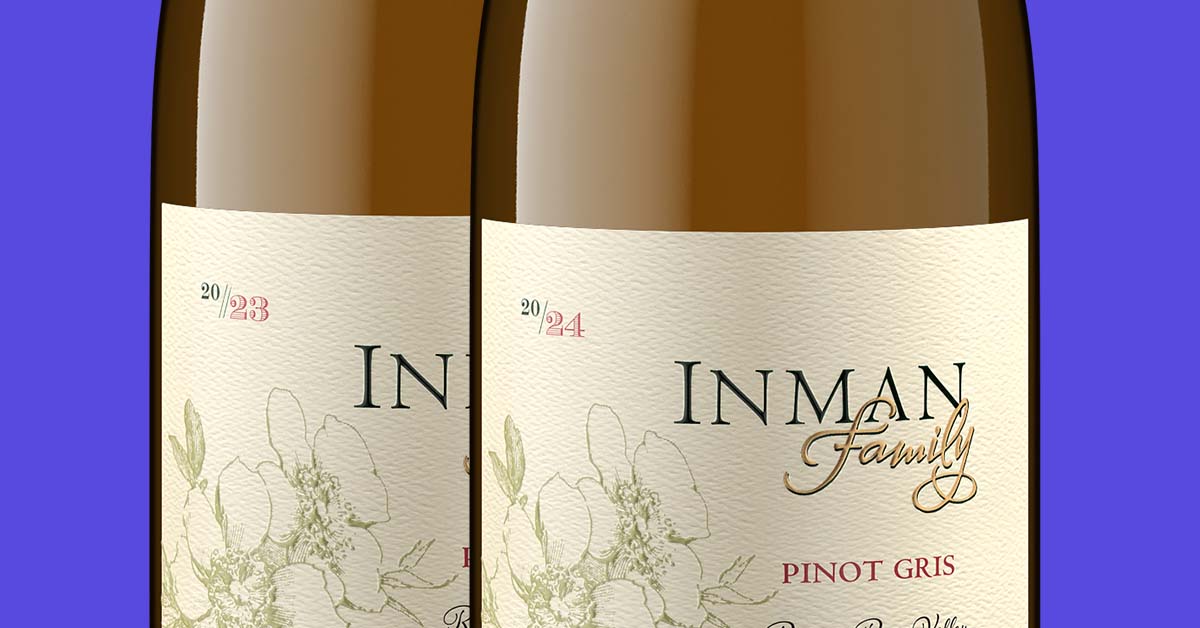
A consistent catalog uses one background, one angle, one crop and one set of proportions across every wine. 74% of wine storefronts carry product images in mismatched proportions, which the shop page softens and a sell sheet or retailer grid does not.
The study also found that in the typical winery, roughly half the catalog was uploaded in a single burst a few weeks long, and in a third of wineries the oldest and newest product photos are more than three years apart. Each photo was fine on the day it went up; nothing checked the set against itself.
Consistency is judged against the bottle next to it. Pick the wine your catalog looks best on, and hold every other listing to it.
Current: does the photo show the wine in the box?
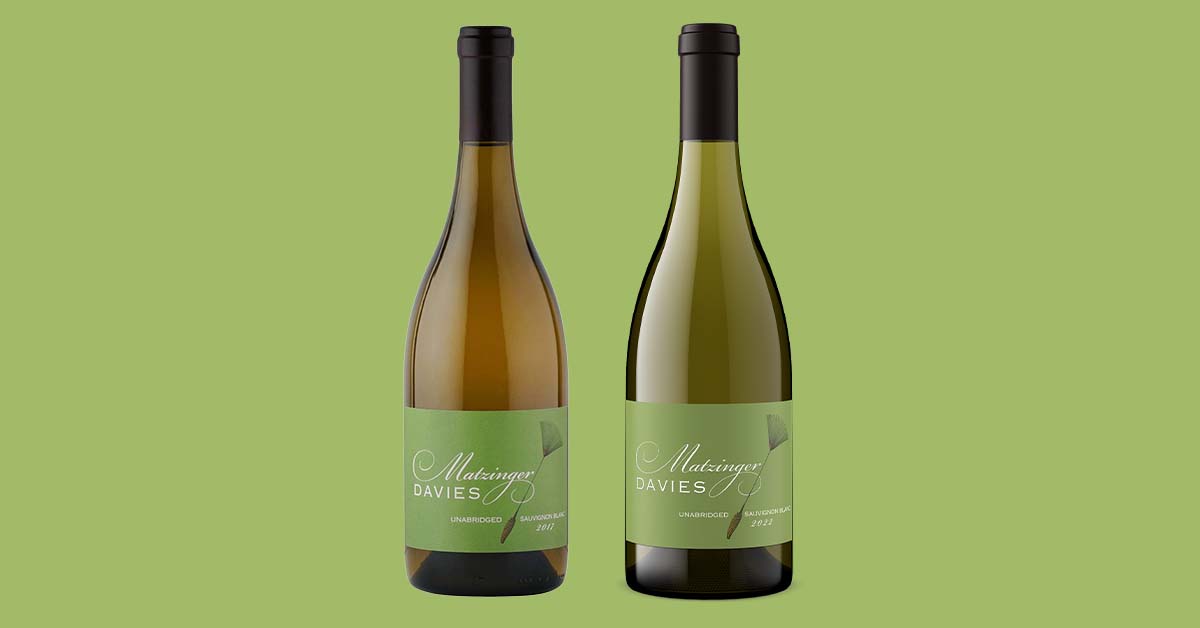
A current photo shows this vintage, this format and this label. About one wine listing in eleven shows a photograph of a different vintage from the one in the product title, among the listings where this could be checked.
A new vintage rarely changes only the year. The alcohol percentage moves, the appellation can change when fruit is sourced differently, a closure switches from cork to screw cap, and every one of those details is printed on the label in the photo.
When a new vintage cannot be shot in time, a vintage-neutral image, with the year removed, is a clean interim fix. It is never a reason to leave last year's bottle standing in for this year's.
Calendared: who owns the catalog, and when?
A calendared catalog has one named owner and an image date tied to every release, set when the label is approved rather than when the bottle lands. The biggest gap the webinar named is that nobody owns the product catalog, so it falls between marketing, the club team, the tasting room and the winemaker.
Releases are known months ahead, and so are the holidays. In Salsify's 2026 Holiday Pulse survey of 1,212 shoppers in the US, UK and Canada, 16% start holiday shopping in October and 25% in November, against 9% who start in December.
Corporate gifting moves earlier still. Catalogs for employee and client gifts often go to print in late summer, long before the first bottle of a holiday set is packed.
How do you run the four C's on your shop?
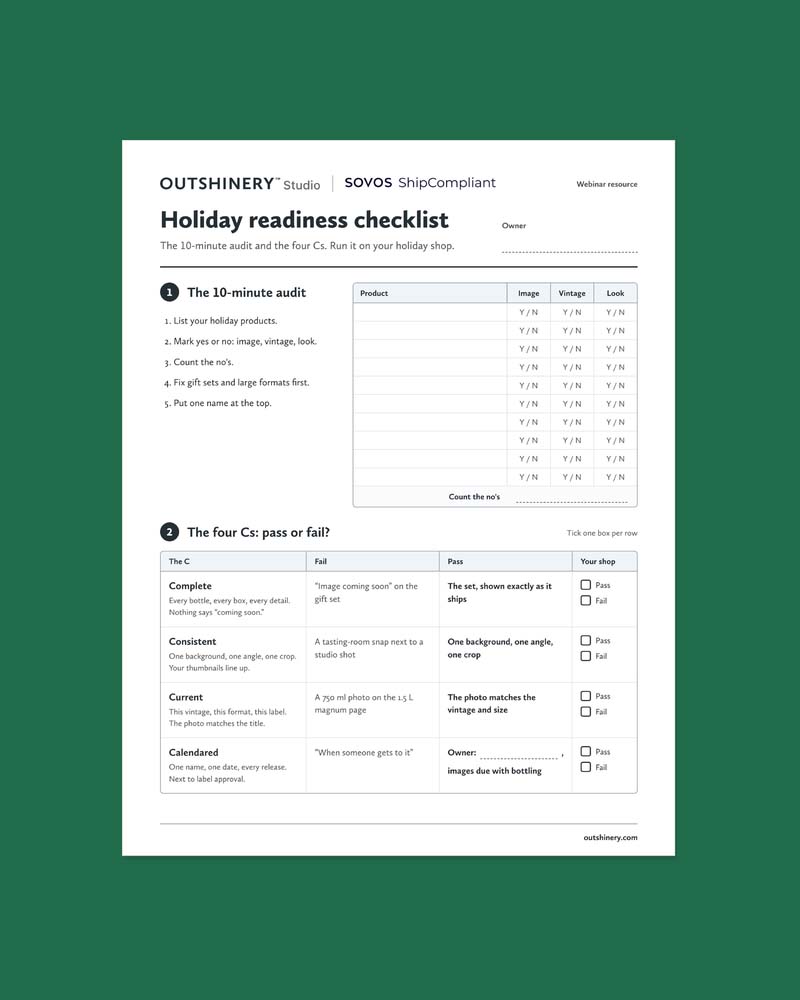
List your holiday products, then mark each one yes or no for image, vintage and look, and count the no's. Fix gift sets and large formats first, then work through the rest of the catalog by price, most expensive first.
Put one name at the top of the list. For a scored read of your whole image library across five standards, the 7-question visual audit leads to Outshinery's free Visual Scorecard.
Where Outshinery fits
Outshinery builds a 3D digital twin of each wine from its label file and container, so the image can exist before the wine is bottled and every image in the catalog shares the same light, angle and proportions. Two services do this for two different situations.
Outshinery Studio is human-led 3D production: trained artists build each digital twin and render gift sets, large formats, etched bottles and boxes, and the next vintage is free. Studio is the route for foil, embossing, custom scenes and full catalogs.
Outshinery Lite is self-serve for standard wine, cider and beer bottles with flat-printed labels: upload the label, pick the bottle and closure, and the bottle shot arrives in under an hour for $29 per image. Lite is pay-per-order.
Frequently asked questions
What should a winery ecommerce checklist include?
For product imagery, four checks: complete (every product shown as it ships), consistent (one background, angle and crop), current (the photo matches the vintage, format and label) and calendared (one owner, images due with label approval). The other half of a winery ecommerce checklist covers copy, pricing, shipping and checkout.
What are the four C's of catalog readiness?
Complete, consistent, current and calendared. They come from the October 2026 Sovos ShipCompliant and Outshinery webinar on winery product imagery, and they apply to any direct-to-consumer wine shop.
When should a winery audit its shop before the holidays?
By early October, before most holiday shoppers start. Salsify's 2026 Holiday Pulse survey found 16% of holiday shoppers start in October and 25% in November, against 9% in December.
How do I check whether my bottle shots match?
Open the folder where your bottle shots live, select them all and look at the thumbnails. A mix of tall, square and everything between means the files are in mismatched proportions, even if your shop page looks even.
What if a gift set has not been assembled yet?
Use an image built from the components rather than waiting for a physical set. A 3D digital twin of each bottle and box can be composed into the set before it is packed, so the listing shows what the buyer receives.
Before you run the four C's
- Product list: Every live listing, holiday sets and large formats on top, with the vintage that is actually shipping
- Image folder: The folder where every current bottle shot lives, sorted by date
- Labels in hand: One finished bottle or label proof per current release, to read the vintage, alcohol and appellation against the photo
- Gift set specs: Box, bottles and any etching for each set, exactly as it ships
- Release dates: Label approval and on-sale dates for everything launching in the next six months
- Owner: One name who will sign off the catalog
With those six things on the desk, the holiday readiness checklist from the webinar takes about ten minutes.