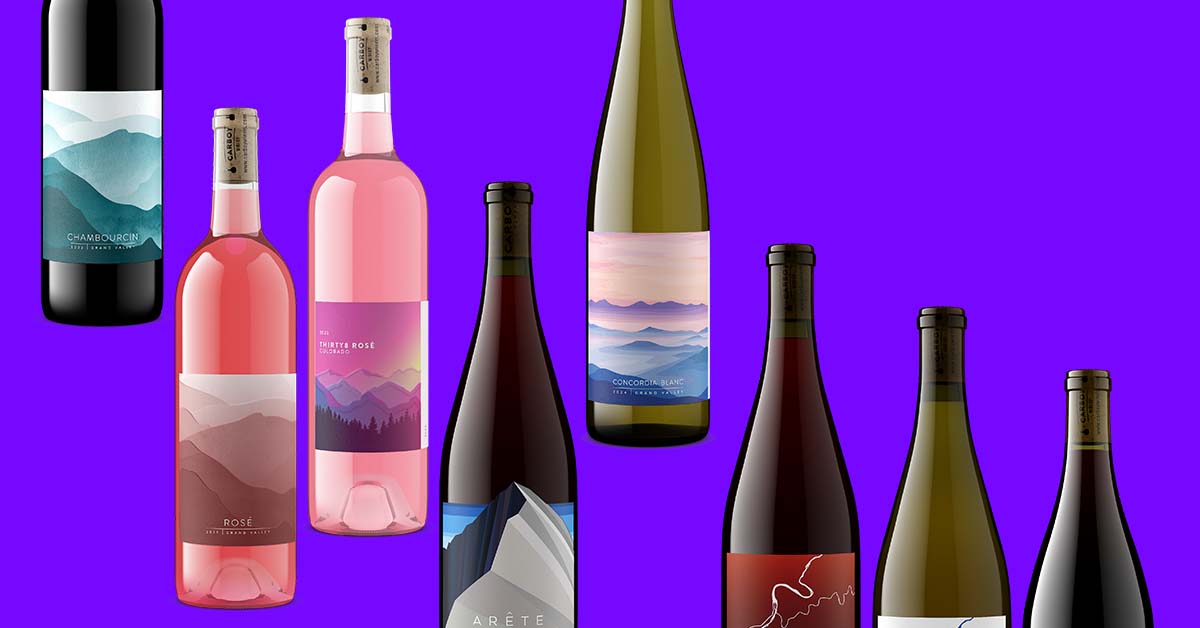
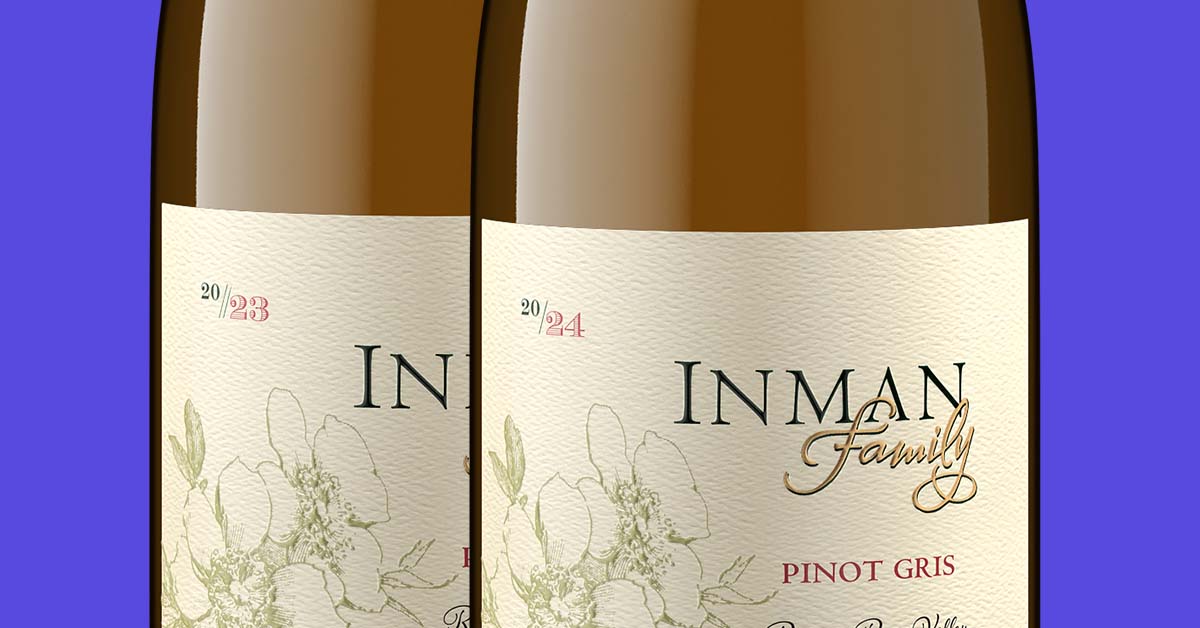
A consistent look for your whole wine portfolio, vintage after vintage
New vintages, new formats, new packaging. Same lineup.
A consistent look across your whole wine portfolio comes from one rule: every bottle shot is made the same way, at the same angle, in the same light, at the same scale per format, whether it was ordered this week or three vintages ago. Photography cannot hold that rule over time. A 3D model of each bottle can, because every new image is rendered from the same setup and the model is updated when the packaging changes.
Most wine lineups do not look like that. They look like this: one shot from a photographer years ago, two from a phone, three SKUs with no image at all, and a magnum scaled wrong beside a 750ml.
Nobody chose that lineup. It accumulated, one release at a time, because each image was made in a different place by a different person.
What a mismatched wine lineup costs
A mismatched lineup reads as a brand that is not quite in control, and buyers trust it a little less without being able to say why. On a shop page, the bottles sit side by side, so every difference in angle, shadow, and scale is visible at once.
It is also the normal state of the industry. In Outshinery's September 2026 study of 189 wine storefronts, 74% of stores carried lead images that differed by more than 1.25x in aspect ratio across their own products.
82% of wine listings in that study carried exactly one image. When that one image is wrong, there is nothing behind it.
What a consistent wine lineup actually means
A consistent lineup means four things hold across every bottle, every time: the same camera angle, the same lighting, the same shadow, and the same pixel height for each format. A 750ml renders at one height, a magnum at another, and the ratio between them is correct.
Same angle means the label reads the same way on every bottle. Same lighting means a clear-glass white and a dark-glass red sit in the same room.
Same scale means a buyer can tell a 375ml from a magnum from the image alone, without reading the product name.
None of this is hard to get once. It is hard to keep, because a wine portfolio keeps changing.
Three ways a wine portfolio changes
A wine portfolio changes in three ways that each make existing imagery wrong: a new vintage, a new format, and a packaging change. Each one tests whether your imagery can keep up or whether the lineup drifts back to mismatched.
Here is how each one plays out with two Outshinery Studio clients, with their own products and the images built for them by Outshinery's 3D artists.
New vintages: the same wines, then and now
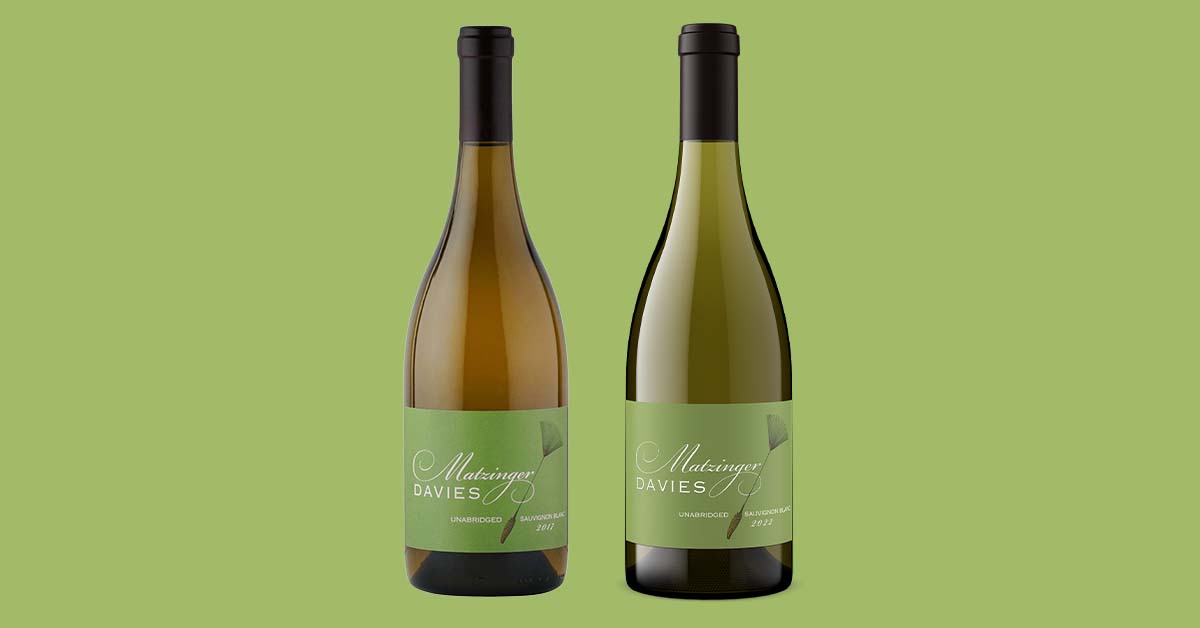
Matzinger Davies is an Oregon winery run by winemakers Anna Matzinger and Michael Davies. Their 2020 site carried photographs of a 2017 Gorgeous Savvy Sauvignon Blanc and a 2015 Chehalem Mountains Chardonnay, shot as separate images.
Their current wines page carries the 2025 Sauvignon Blanc and the 2023 Chardonnay, rendered by Outshinery's 3D team from the same model of each bottle.
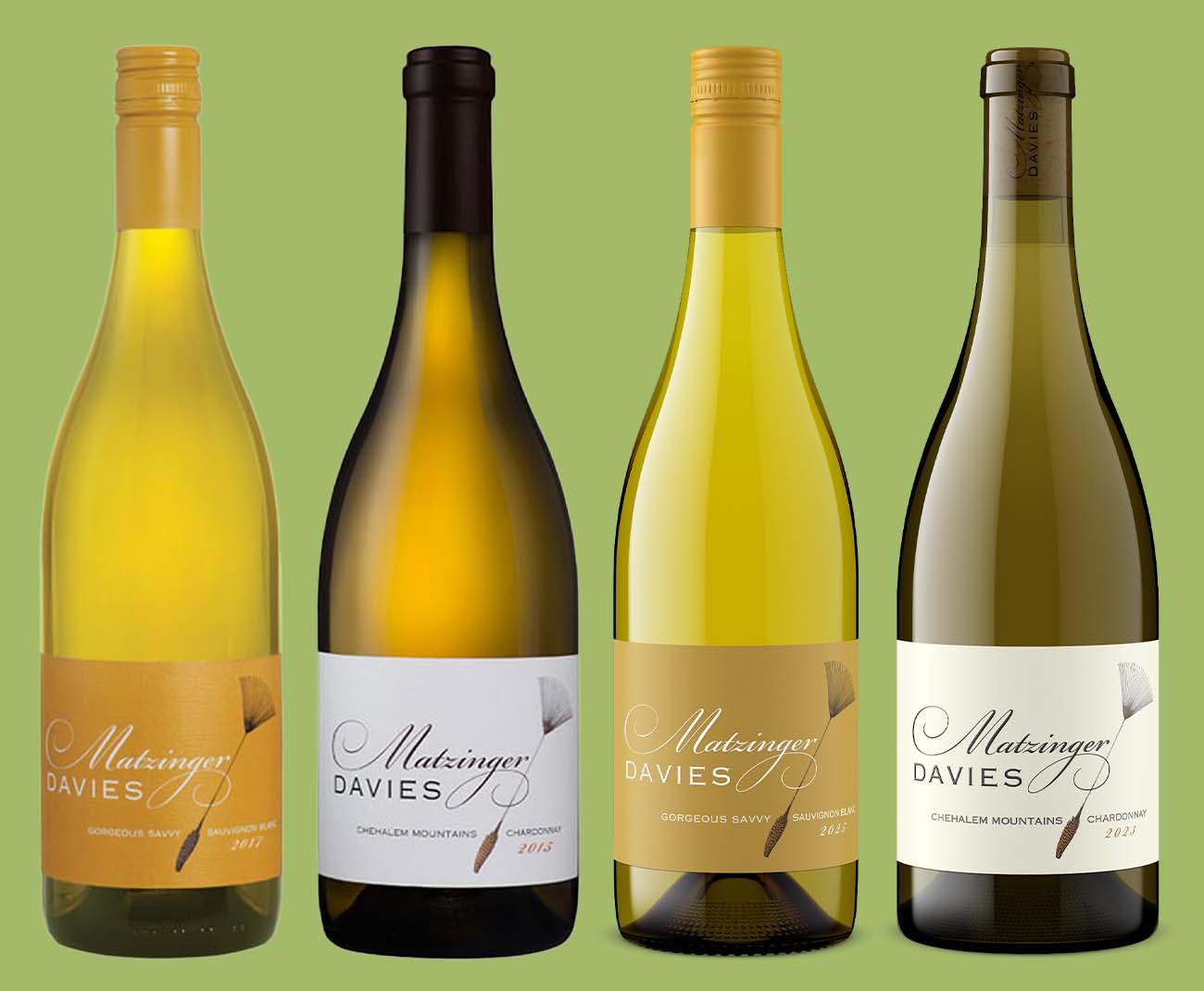
Two things changed between the two pairs. The vintage on each label moved forward, and the two wines now sit at the same angle, in the same light, at the same height, because they came out of the same setup.
When the 2026 vintage arrives, the label file gets updated on the existing model and the new image joins the row. A vintage update on an existing Studio model is free.
New formats: a pouch joins the bottles
The Walls Vineyards in Walla Walla sells two of their wines in a Bagnum, a wine pouch that holds 1.5L, and a Double Bagnum that holds 3L. Their shop lists them under "Pouches" alongside the 750ml bottles.
A pouch is not a bottle. It has no neck, no capsule, and no glass, and photographing it to match a row of bottles means matching the light, the shadow, and the scale by hand.
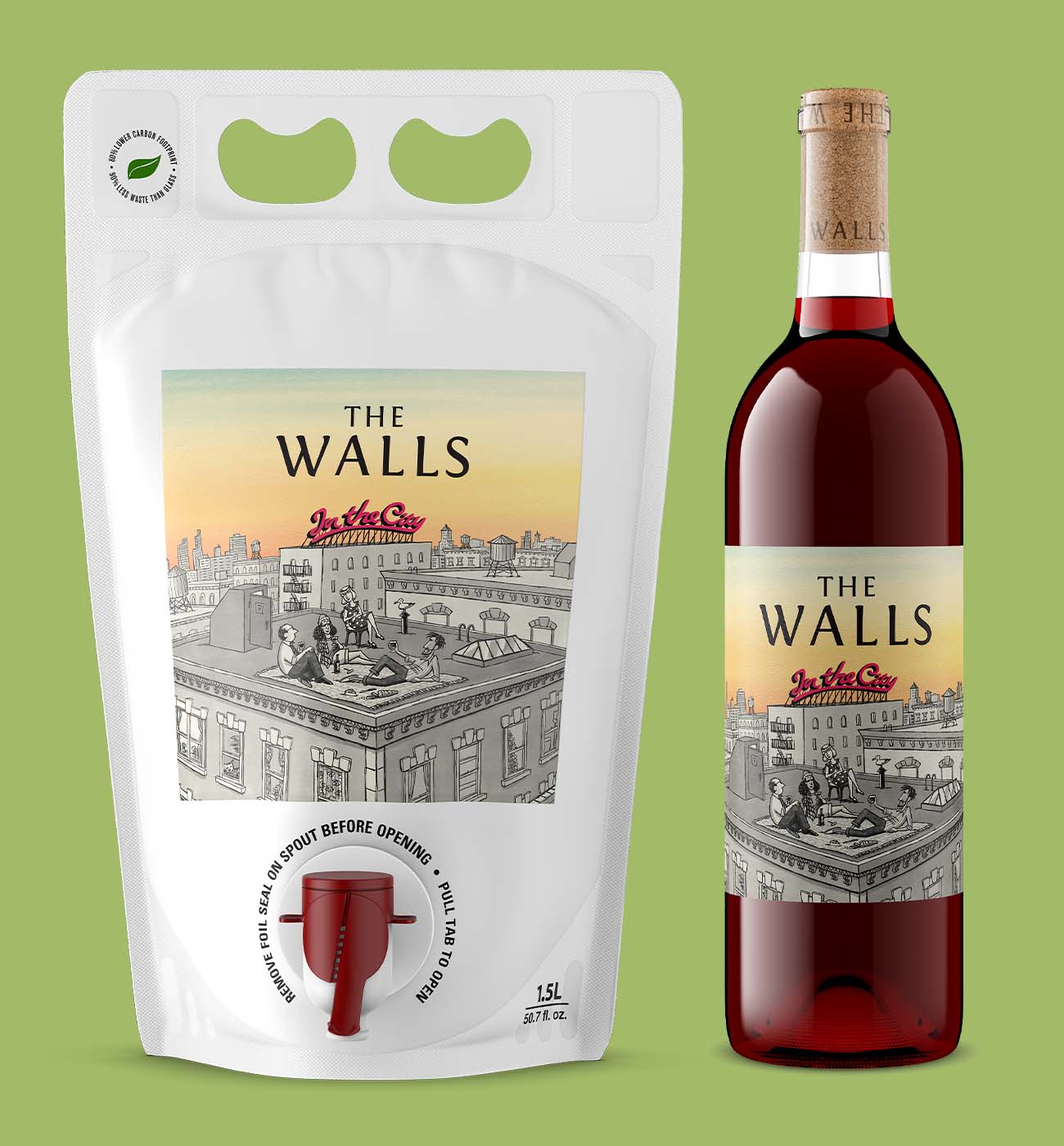
In the Studio render, the Bagnum sits in the lineup at its correct size next to the bottles, in the same light, with the same shadow. The 3D artist built the pouch as its own model, then placed it in the same scene as the bottles.
That is the test for any new format, a can, a magnum, a bag-in-box, a gift pack. It has to belong in the row.
Packaging changes: when the old photo stops being true
A packaging change makes the old photo inaccurate the day the new packaging ships. Lighter or eco glass, a new closure, a new capsule, a new label stock: the bottle on the shelf no longer matches the bottle on the screen.
With photography, the fix waits for the new physical bottle to exist, then for a reshoot. With a 3D model, the model is updated and the new render ships before the bottle does.
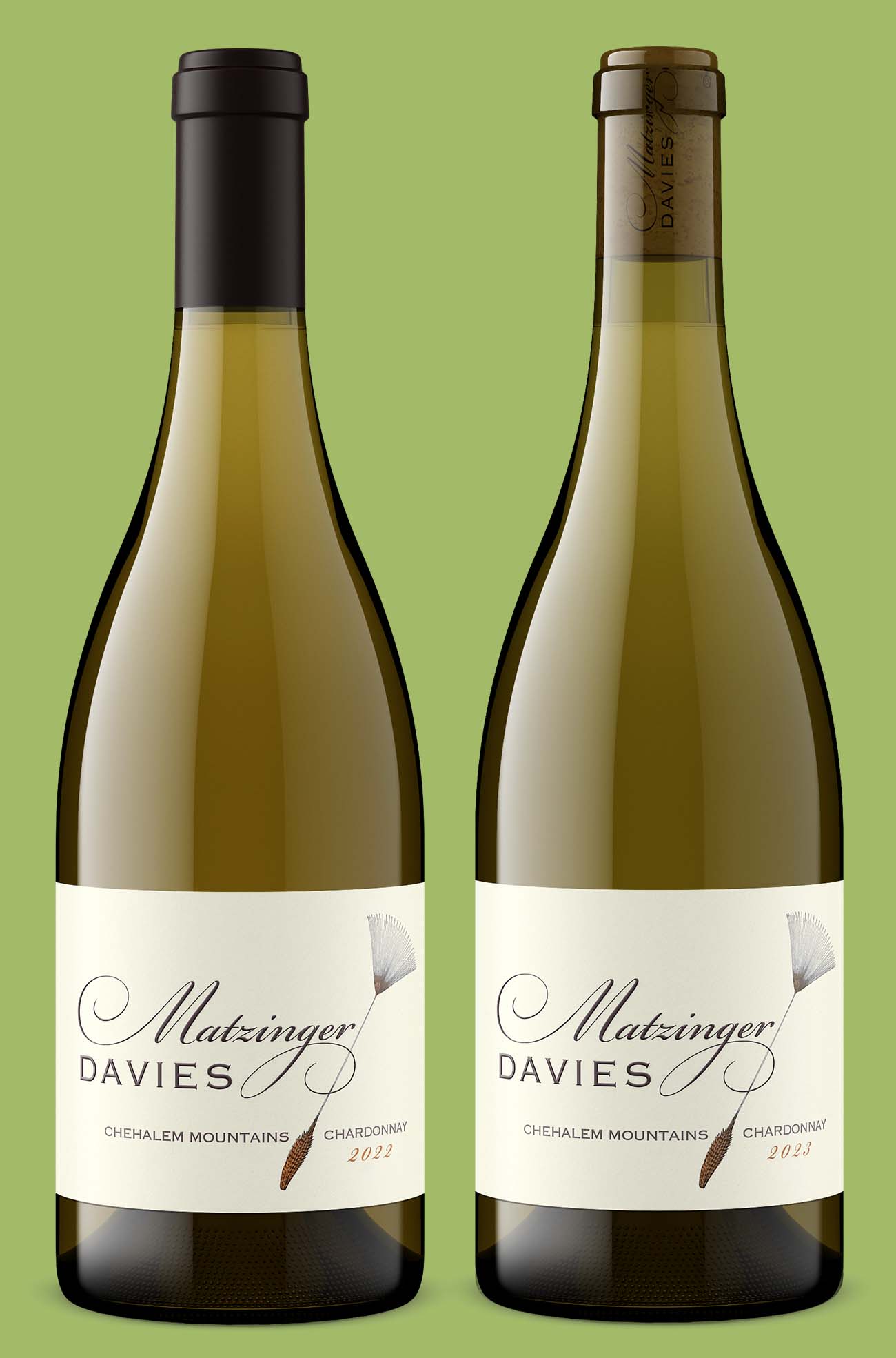
Matzinger Davies shows it on the Chardonnay. In the 2022 render, the capsule is plain and dark. In the 2023 render, the capsule is printed, and the render matches what ships.
The same applies to a closure swap, a glass change, or a label redesign. The model changes, the row stays consistent.
Imagery is an asset to maintain, not a shoot to schedule. A photoshoot produces a set of files that are correct on the day and drift from the product afterward.
Why imagery is an asset, not a one-time shoot
Product imagery is an asset because the product keeps changing and the image has to change with it, or it becomes wrong. Accuracy is the job, and accuracy has a maintenance cost that a photoshoot does not budget for.
That is the quiet reason lineups fall apart. The first shoot was fine. Nobody planned for the second vintage, the third format, or the capsule change.
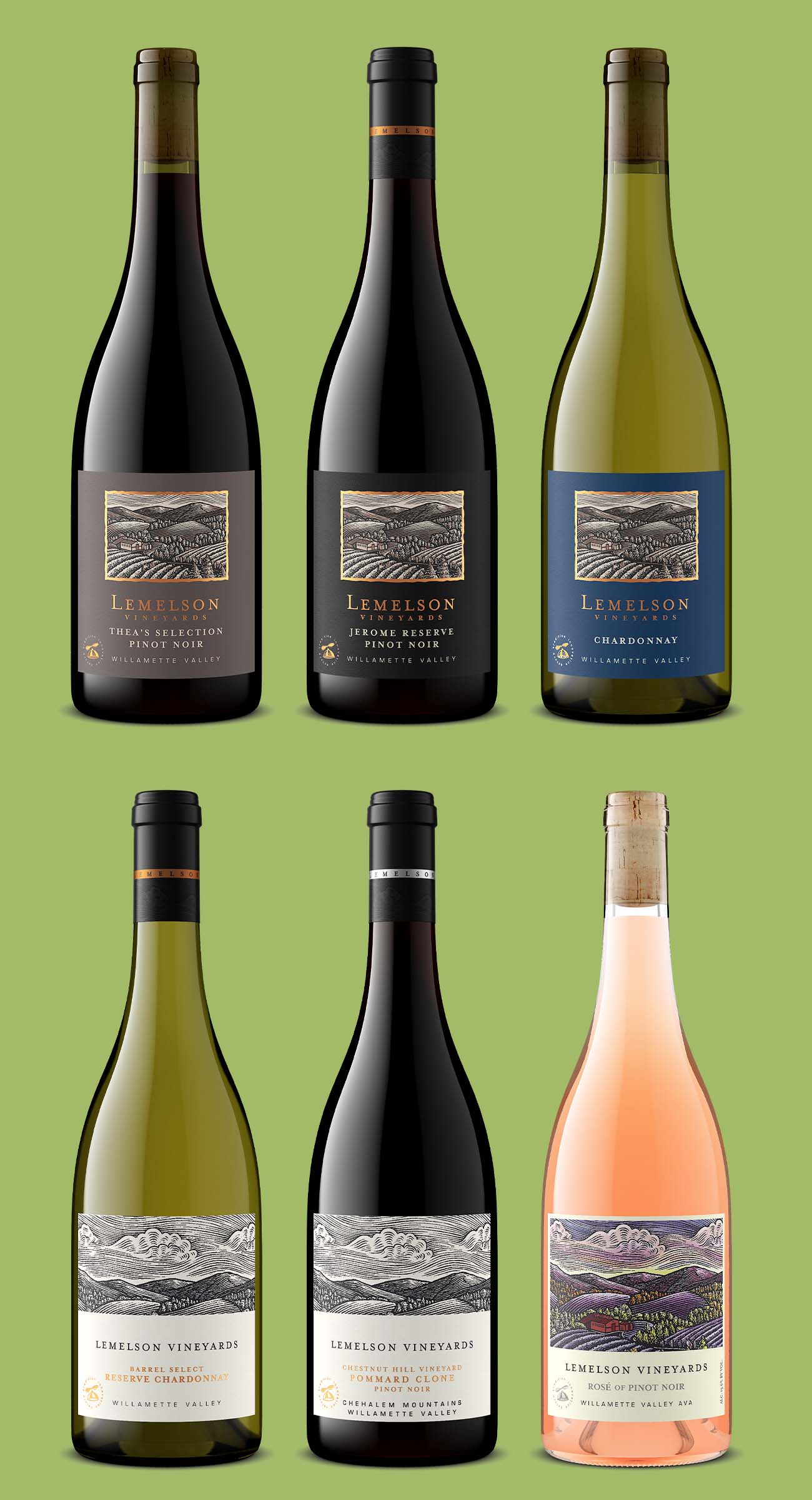
Leslie Kossoff of Lemelson Vineyards put it plainly: "Consistency with all our bottle shots was a problem that Outshinery solved."
How Outshinery Studio keeps a wine portfolio consistent
Outshinery Studio keeps a portfolio consistent by building a 3D model of each bottle once, then rendering every later image from that model in the same setup. The model is the digital twin of the product, and the lineup is rendered from it rather than photographed.
Each model is built by a trained 3D artist from the label file, the container spec, the closure, and the finishes. The label file is placed on a verified container model, never redrawn, so nothing is invented.
The Studio container library holds more than 1,100 bottle models, plus hundreds of closures.
The first proof arrives in 3 to 5 business days from a complete brief.
Studio costs about half of traditional photography up front, and the next vintage is free.
Your bottle is never photographed. There is no physical camera, no studio day, and no sample to ship, which is why the next vintage, the next format, and the next capsule all land in the same row.
Frequently asked questions
How do I get a consistent look for my whole wine portfolio?
Have every bottle image made from the same setup: same angle, same lighting, same shadow, and the same pixel height per format. Outshinery Studio does this by building a 3D model of each bottle and rendering every image from that model, so a shot ordered today matches one ordered three vintages ago.
Do I need new bottle shots for every vintage?
Yes, because the vintage year on the label changes and the old image no longer matches the product. With a Studio 3D model, the label file is updated on the existing model and a vintage update is free, so the new image joins the lineup without a reshoot.
Can a wine pouch or magnum match my bottle shots?
Yes. A new format is built as its own 3D model and placed in the same scene as the bottles, so it renders at the correct relative size, in the same light, with the same shadow. The Walls Vineyards' 1.5L Bagnum pouch sits in their lineup this way.
What happens to my bottle shots when the packaging changes?
The existing 3D model is updated with the new capsule, closure, glass, or label, and the new render ships before the physical bottle does. A photograph has to wait for the new bottle to exist and then be reshot.
Are Studio images made by people or generated by AI?
Studio images are built and maintained by trained 3D artists. The label file is placed on a verified container model and never redrawn, so there is nothing to hallucinate. No generative AI is used in production.
The portfolio imagery maintenance checklist
- One setup: Every SKU at the same angle, lighting, and shadow, no exceptions for older releases
- Scale per format: 375ml, 750ml, magnum, and pouch each at a fixed pixel height, in correct ratio to each other
- Vintage trigger: New vintage label approved means a new image ordered, before the wine ships
- Packaging trigger: Any change to capsule, closure, glass, or label stock retires the old image the day it ships
- Format trigger: A new container joins the lineup as its own model, placed in the same scene as the rest
- Gap audit: Every SKU on the shop page has an image, none older than its current label
A lineup that is checked against this list once a release cycle never gets a chance to drift.