Where teams lose time in visual production
The biggest time sinks in beverage visuals aren't where you'd expect.

It's rarely where you think.
When I started Outshinery, I was sure I knew where the problem lived. Photoshoots. The scheduling, the sample shipping, the photographer who's booked three weeks out. We built a service that eliminates all of that. No physical product required. No studio to coordinate. A photorealistic image from a label file, delivered in days.
And it works. That part of the problem is solved.
But after a decade of producing visuals for hundreds of beverage brands, I've learned something I did not expect: the time teams lose in visual production almost never happens during the actual image creation.
It happens before it. And after it.
The most visible tax on these teams is rework, the hidden cost of fixing images that should have been right the first time. Here is why product image rework slows down beverage brands.
Here's where.
The brief that arrives half-empty
This is the single biggest source of delay we see, and it has nothing to do with rendering technology.
A team submits a request. The label file is attached, but the bottle shape is listed as "standard Bordeaux." The closure type is missing. The specs are "same as last time," but last time was two years and three label revisions ago.
Here's the thing about "standard Bordeaux": we have dozens of Bordeaux molds in our library. Even more for Burgundy. They look similar in a lineup, but the differences in shoulder angle, punt depth, glass weight, and proportions are visible in a photorealistic render. Because our Studio work is built to be that precise, "close enough" at the brief stage means "wrong" at the proof stage.

What happens next is predictable. The client selects a container from our library that looks roughly right. We build the 3D model, render the image, deliver the proof. The client sees it and says: "That's not my bottle." They're right. It isn't. But nobody walked to the warehouse to check the mold number on the box, or asked the production team which glass supplier they use.
Now we're starting over. Not because of an error, but because of a gap in the brief.
A job that should take 48 hours stretches to two weeks. The rendering itself was maybe 10% of that timeline. The other 90% was waiting for information that could have been included in the original request.
This isn't a criticism. It's a pattern. And it is almost universal. The brands that move fastest through production are the ones that invested 20 minutes in a complete brief before hitting submit.
(And if you genuinely don't know your exact bottle mold? That's a real and common situation. It's one of the reasons we built Outshinery Lite with a curated set of the most common bottle shapes. You pick the closest match, and the result is consistently good without needing to track down a mold number. Different precision, different use case.)
What a complete brief actually looks like
I want to break this down because each detail matters more than you might expect.
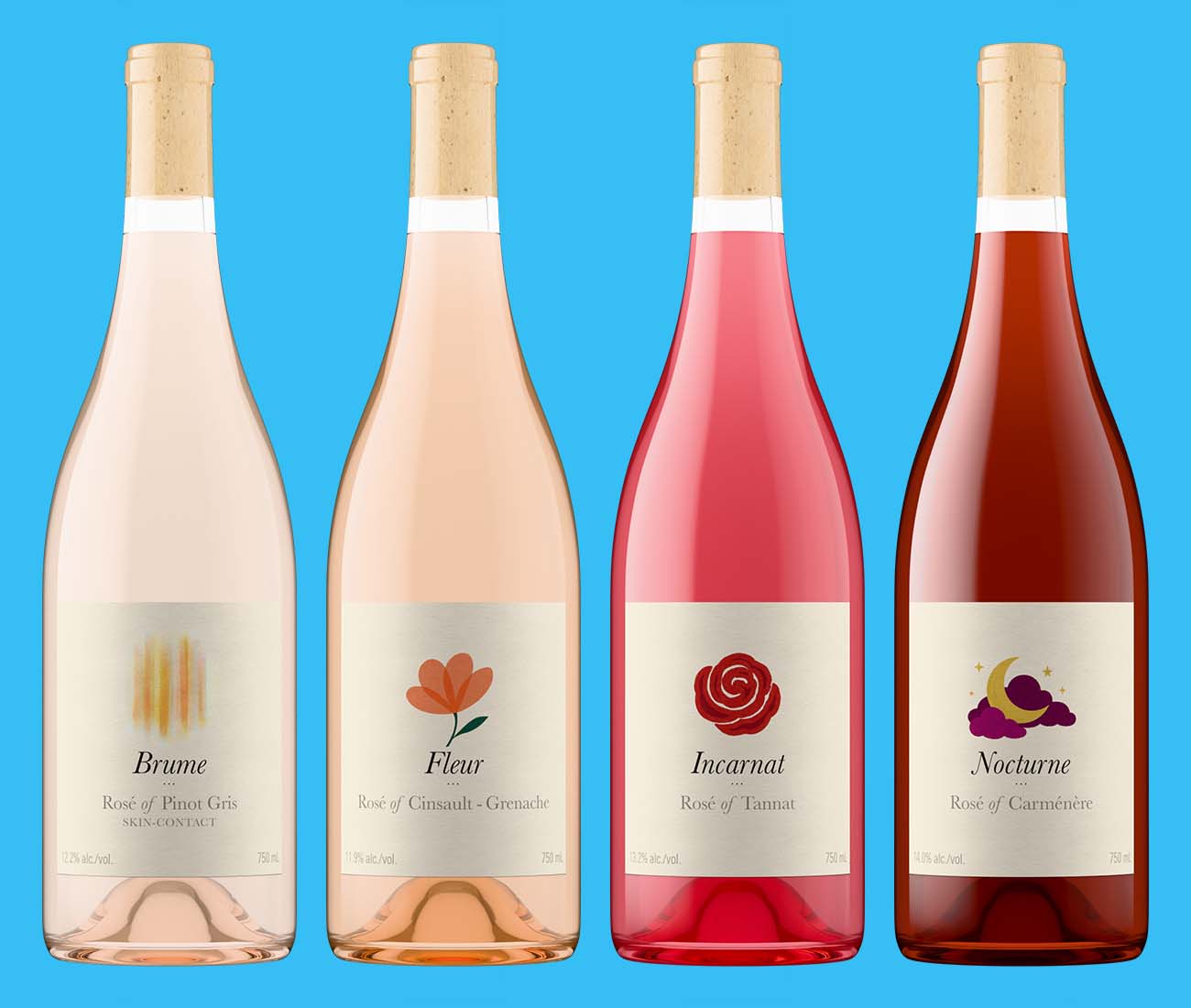
Container: Your exact glass mold number and manufacturer, not just "Bordeaux" or "Burgundy." The mold number is usually printed on the shipping box or available from your production team. One call to your cellar or glass supplier is all it takes.
Closure: "Cork" is not enough. Natural cork, agglomerated, synthetic? What length, 44mm or 60mm? What about the capsule, is it tin, PVC, wax? Every one of these options exists in our Studio library. If you select randomly, the result will look wrong, because the details are that precise.
Labels: We need the print-ready files your designer sends to the printer. Not a JPEG. Not a screenshot. Not a COLA submission. If the file you send us is low resolution or flattened, we cannot reproduce the embossing, foil, hot stamping, or varnish effects that make your label look like your label. The quality of the image we deliver starts with the quality of the file you provide.
Print finishes: Even with a great label file, it helps to call out what's what. Where is the foil? Which elements are embossed? A quick note or a phone snapshot of the physical bottle goes a long way. Put yourself in the shoes of the 3D artist who will build your product visualization. What do they need to know to get it right on the first proof?
Liquid color: If visible through the glass, especially for white wine or rosé in a clear flint bottle, give us a clear indication of the color family. A reference photo or a hex value works well. You don't need to be exact at this stage. For wines in clear glass, our Studio team will always provide a spectrum of color options to choose from at the proofing stage. But pointing us in the right direction up front means the options we show you will be closer to what you need.
What changed: If this is a repeat order or vintage update, list every change explicitly. New closure. Different back label. Adjusted liquid color. The details you forget to mention are the ones that cost a revision cycle later.
That's it. Twenty minutes of preparation, including one call to your production team about the glass, saves two weeks of back-and-forth.

"Oh, and one more thing"
This one is quieter, and more expensive.
We complete the work based on what was provided. The image matches the brief exactly. Then the client comes back: the closure actually changed to screwcap. The liquid color is slightly different this vintage. There's a back label they forgot to include.
The original image was technically correct. It matched the input perfectly. But now it needs to be redone, not because of an error on either side, but because not everything was communicated up front.
I call this the partial-information problem, and it is the most expensive kind of rework in visual production. It's invisible in budgets. It's avoidable with a single checklist. And it is nobody's fault in particular, which is exactly why it keeps happening.
The fix is not "be more careful." The fix is a process that forces completeness at intake. A checklist. A template. A five-minute review before the request goes out the door.

The label file that doesn't exist yet
Here is a timeline that plays out every spring, in some version, at almost every winery I work with.
January: the sales team commits images to a distributor for the new vintage. February: the marketing coordinator starts building the email campaign for the release. March: someone asks the designer for the label file. The designer says it's not finalized. Legal copy is still being reviewed. The ABV hasn't been confirmed. The barcode hasn't been assigned.
We can produce a photorealistic image in days. Sometimes hours for a vintage update on an existing model. But we cannot start without a label file.
The gap between "we need images now" and "the label isn't ready" is where weeks disappear. Not in production. In the internal handoff between compliance, design, and marketing.
The brands that avoid this have one thing in common: they put imagery on the same timeline as the label, not after it. The moment the label enters final review, the image request goes in. Not when it's approved. When it's in review. That one change can recover three to four weeks.
Three people have opinions. Nobody owns the sign-off.
The proof comes back. It looks good. But now three people want to weigh in.
One prefers a slightly different angle. Another thinks the shadow should be softer. A third isn't sure about the background color, even though it wasn't specified in the brief.
None of these decisions were made before production started. So they happen in the review cycle, one round at a time. Each round takes days, not because the changes are complex, but because the feedback has to be collected, consolidated, and sometimes arbitrated.
The decisions themselves are small. The delay they create is not.
The brands that move fastest through review share one trait: a single person owns the sign-off. That person made the creative decisions during the brief, not after the proof arrived. They review the image against what they asked for, confirm it matches, and approve.
One person. One round. Done.

The vintage update that should take a day but never does
This is the one that still surprises me after all these years.
A vintage update on an existing 3D model is one of the fastest things we do. The digital model already exists. The scene is built. The lighting is set. We swap the label, update the vintage year, render. It's a fraction of the time and cost of the original image.
The request comes in quickly. "Change the year to 2024." Done. We turn it around, send the proof.
And then it starts.
"Oh, the alcohol percentage also changed." Even though there was a field on the request form asking exactly that: did anything else change?
"Oh, we actually sourced grapes from a different vineyard this year, so the appellation is different."
"Oh, we switched to a screwcap."
Every one of these details was prompted for at the time of the request. We ask because we know. But clients don't fully think through what changed until they see the proof. The visual triggers the realization. The intake form doesn't.
So what should be a single update becomes two or three rounds. Not because the production is slow. Because the mental review only happens once the image makes the changes visible.
We have a two-week maximum on open requests. If we don't hear back within two weeks, we close it. If a proof is sitting in review, we mark it approved and ship as-is. Two weeks should be plenty. But the fact that we need a policy like that tells you something about how easy it is for these updates to drift.
The math is worth stating plainly. If you have 15 SKUs and each vintage update takes two or three rounds instead of one, that's dozens of extra revision cycles on what should be your simplest, most routine image work. All because the questions were answered too fast, without enough thought.

The real problem underneath all of this
Every friction point above has the same root cause.
Most beverage teams have no internal process for managing product imagery.
No calendar that says "vintage updates due by March 1." No checklist that ensures every request includes container specs, closure details, and all label files. No single owner who is responsible for imagery the way someone is responsible for production schedules or compliance filings.
Imagery falls between departments. Marketing assumes the designer will handle it. The designer assumes the winemaker will send the label file. The winemaker assumes marketing already placed the order. Nobody owns it. So nobody does it consistently.
Every release cycle becomes a scramble. Not because the tools are slow or the budgets are small. Because the process was never built.
This is true at five-SKU family wineries. It is also true at enterprise operations with dedicated marketing teams. The scale is different. The gap is the same.

What a decade of production has taught me
The brands that move fastest through visual production are not the ones with the biggest budgets or the most sophisticated technology.
They are the ones that built the process.
They have a person who owns imagery. A calendar that triggers requests at the right time. A brief template that captures everything in one pass. A single approver who signs off without a committee.
The production itself, the rendering, the artistry, the final image, that is the easy part. We've spent ten years making sure of it.
Building the process around it is what separates the brands that scramble every release from the ones that ship on time. Every vintage. Every channel. Every time.
The complete brief checklist
- Container: Exact glass mold number and manufacturer, not just "Bordeaux" or "Burgundy"
- Closure: Natural cork, agglomerated, or synthetic? 44mm or 60mm? Tin capsule, PVC, or wax?
- Labels: Print-ready files from your designer. Not a JPEG, not a screenshot, not a COLA submission
- Print finishes: Call out foil, embossing, hot stamping. A phone snapshot of the physical bottle helps
- Liquid color: Reference photo or hex value for wines in clear glass
- What changed: If a repeat order, list every change explicitly
Twenty minutes of preparation, including one call to your production team about the glass, saves two weeks of back-and-forth.