Winery ads: 8 best practices for creating effective wine advertisements
Eight tested practices for imagery, copy, and calls to action.


Wine brands spend months perfecting a blend, designing a label, building a story. Then the ad that introduces it to the world gets three seconds of attention. Those three seconds depend almost entirely on what the viewer sees.
The competition for attention is fiercer than it has been in years. The direct-to-consumer wine channel contracted by 967,000 cases in 2025, a 15% drop in volume and the steepest decline since Sovos ShipCompliant and WineBusiness Analytics began tracking it in 2010. Value fell 6%, more than $230 million.
The average price per bottle shipped rose 11% to a record $56.78, but the report is explicit that this is not premiumization: buyers of lower-priced wine are leaving the channel faster than anyone else, so the remaining mix simply skews expensive. Fewer buyers, higher stakes on every sale.
Whether you are running paid campaigns on Instagram, buying placements inside a retailer's app, or trying to make your product listings stand out, the fundamentals of effective wine advertising have not changed. What has changed is how competitive the space has become, and how many of your buyers now form an opinion before they ever see your ad.
These eight best practices will help you create wine ads that earn attention and convert it into sales.
Start with images that sell
A wine buyer cannot taste, smell, or hold the bottle before deciding. Everything the label, the glass, and the closure would communicate across a tasting room counter has to travel through a single image. That makes the product shot the highest-leverage asset in the entire campaign, and the one most wineries under-invest in.
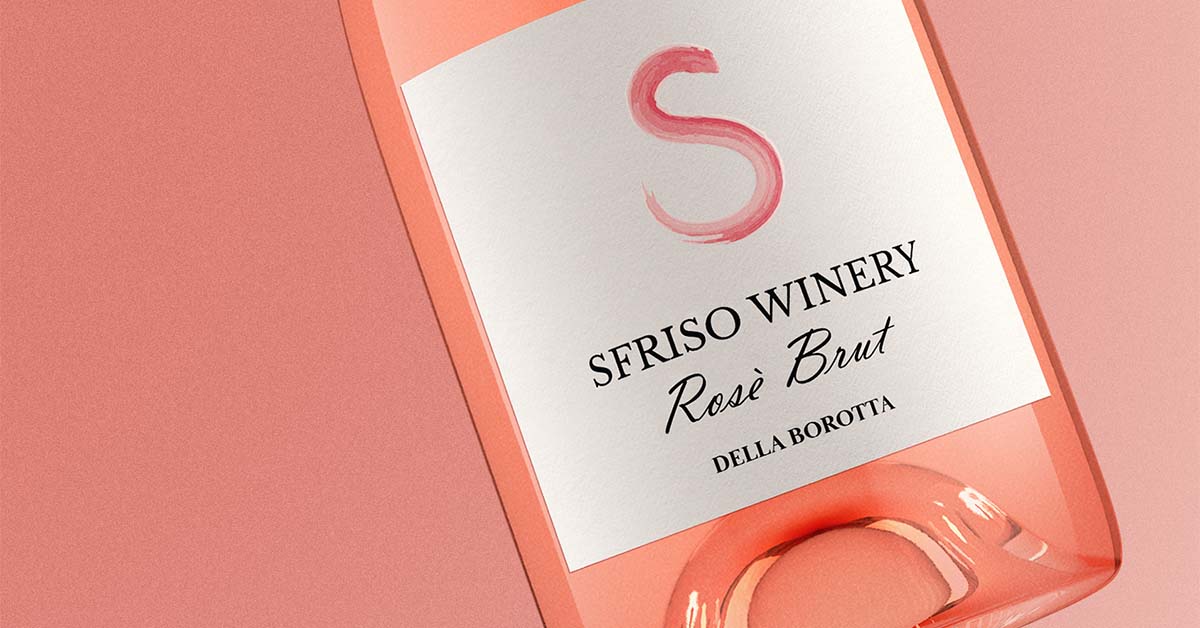
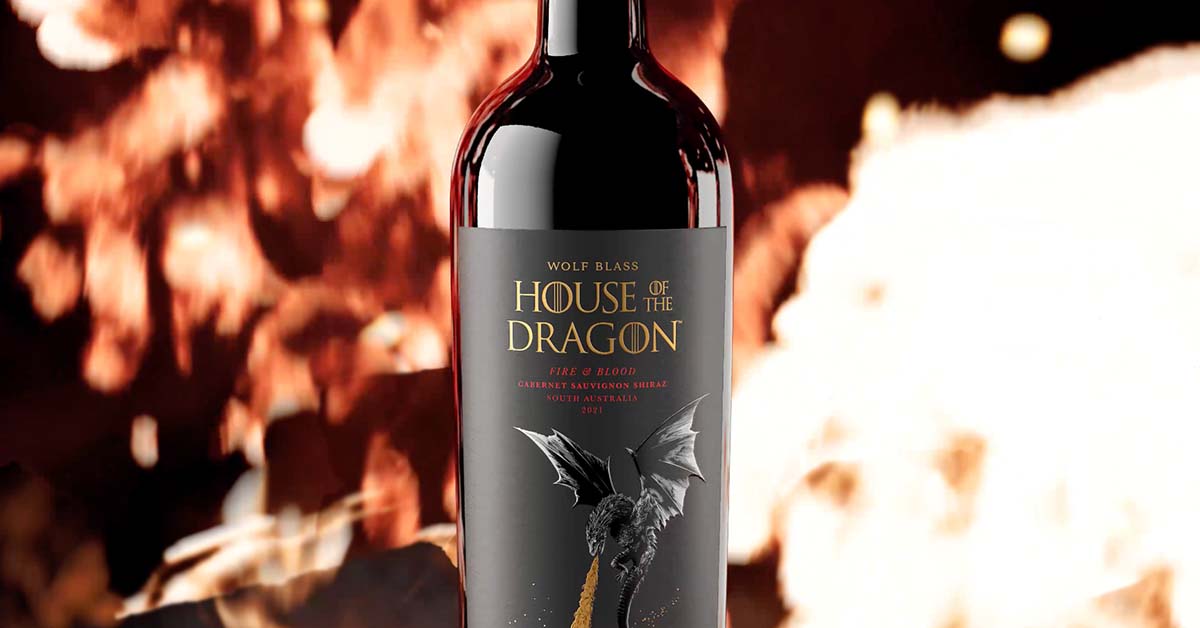
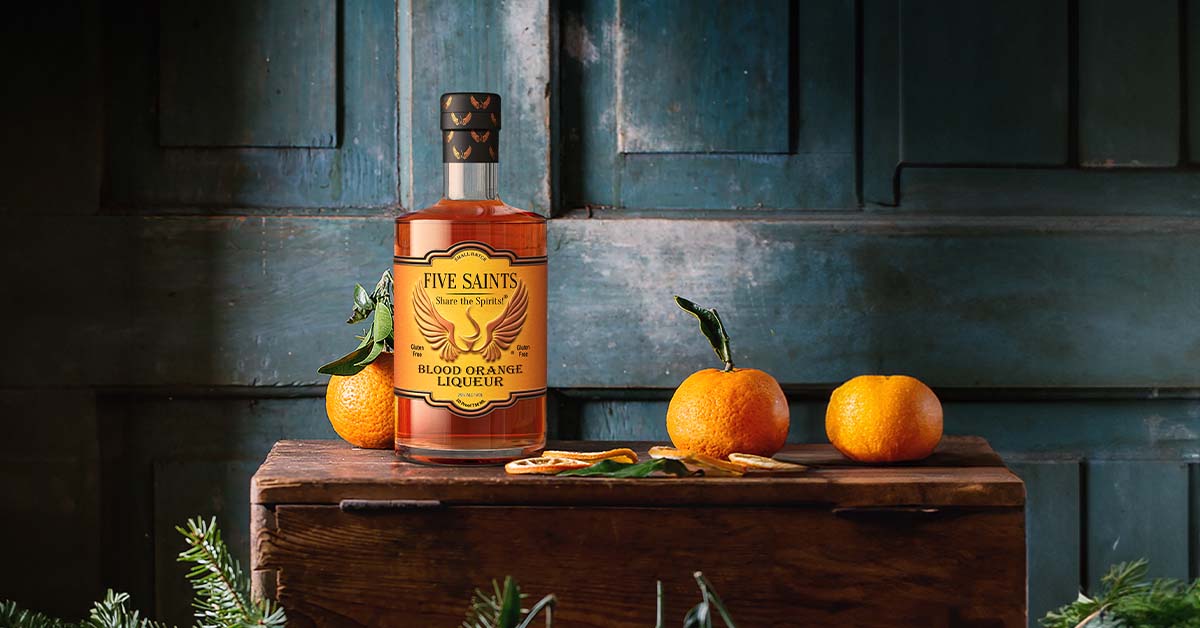
This means high-resolution, well-lit, distraction-free product shots. The bottle should be the clear focal point, with a clean background that does not compete for attention. This applies to standard product shots as well as lifestyle images used in social media and display ads.

Consistency matters as much as quality. If your Cabernet looks different in your Instagram ad than it does on your website or your distributor's listing, the disconnect erodes trust before the buyer even reads the tasting notes.
Use color intentionally
Bold, complementary colors draw the eye and stop the scroll. If the wine is red, pair it with a light or neutral background that lets the label pop. If the label is dark, go brighter with the surrounding creative.
This is also where brand consistency gets built. A coordinated color palette across your ads, social posts, and website helps customers recognize your products at a glance. Recognition drives trust, and trust drives repeat purchases.
Write copy that sells, not copy that describes
The biggest mistake in wine advertising copy is treating the ad like a tech sheet. Readers do not need the pH level or the barrel-aging timeline in a 150-character ad.
Instead, show how the wine fits into the buyer's life. A Friday evening. A holiday table. A gift that arrives with a story behind it.
Pair that emotional hook with a specific, tangible reason to choose this bottle over the dozens of others competing for the same moment.
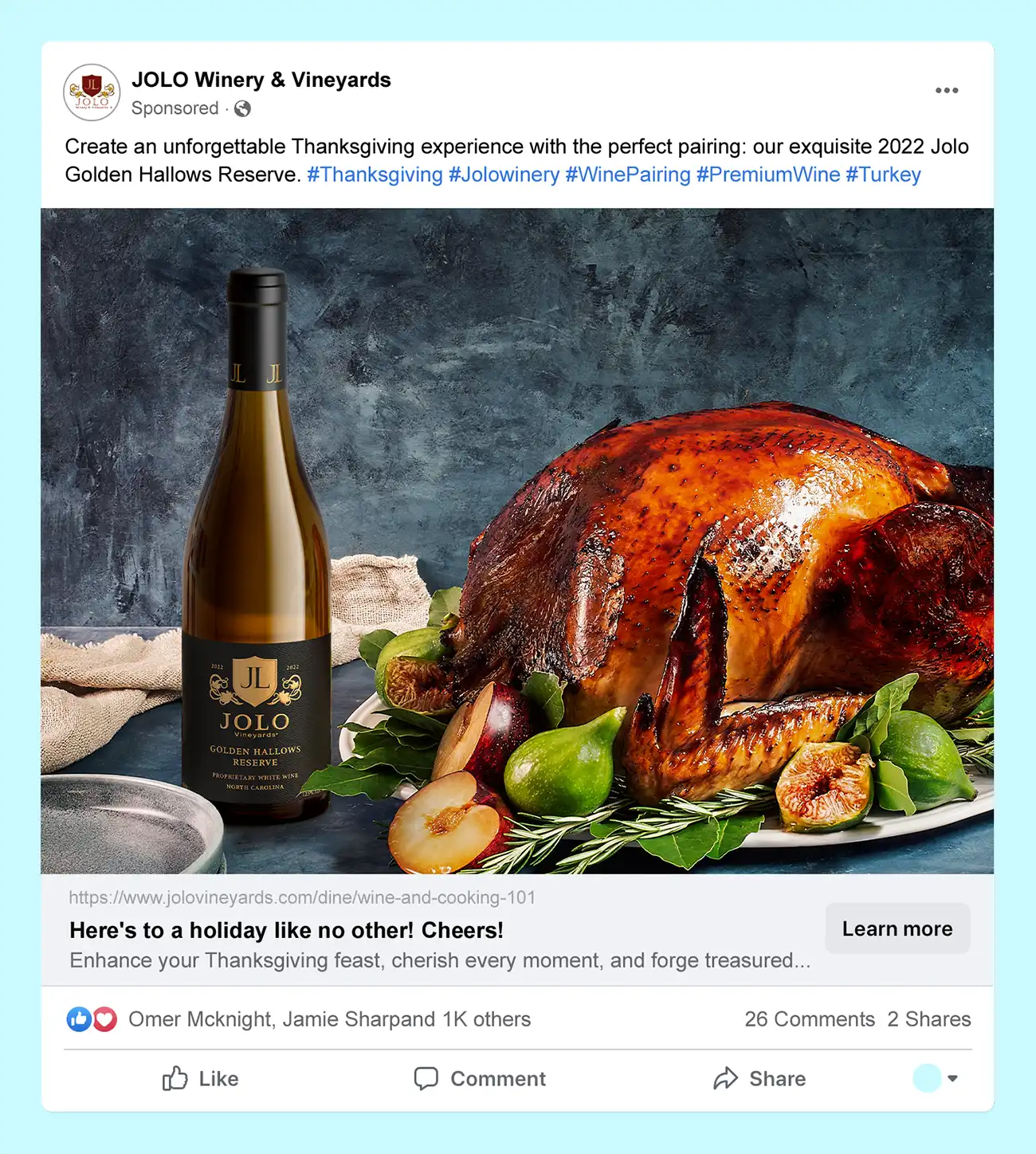
Complement your copy with high-quality visuals, including product shots, 360-degree views, and short product videos. The visual does the stopping. The copy does the selling.
Make your call to action specific
A call to action (CTA) tells the viewer exactly what to do next.
"Shop now" works for ecommerce. "Join our wine club" works for retention. "Book a tasting" works for tasting rooms.
Match the CTA to the goal of the ad, not to a generic template.
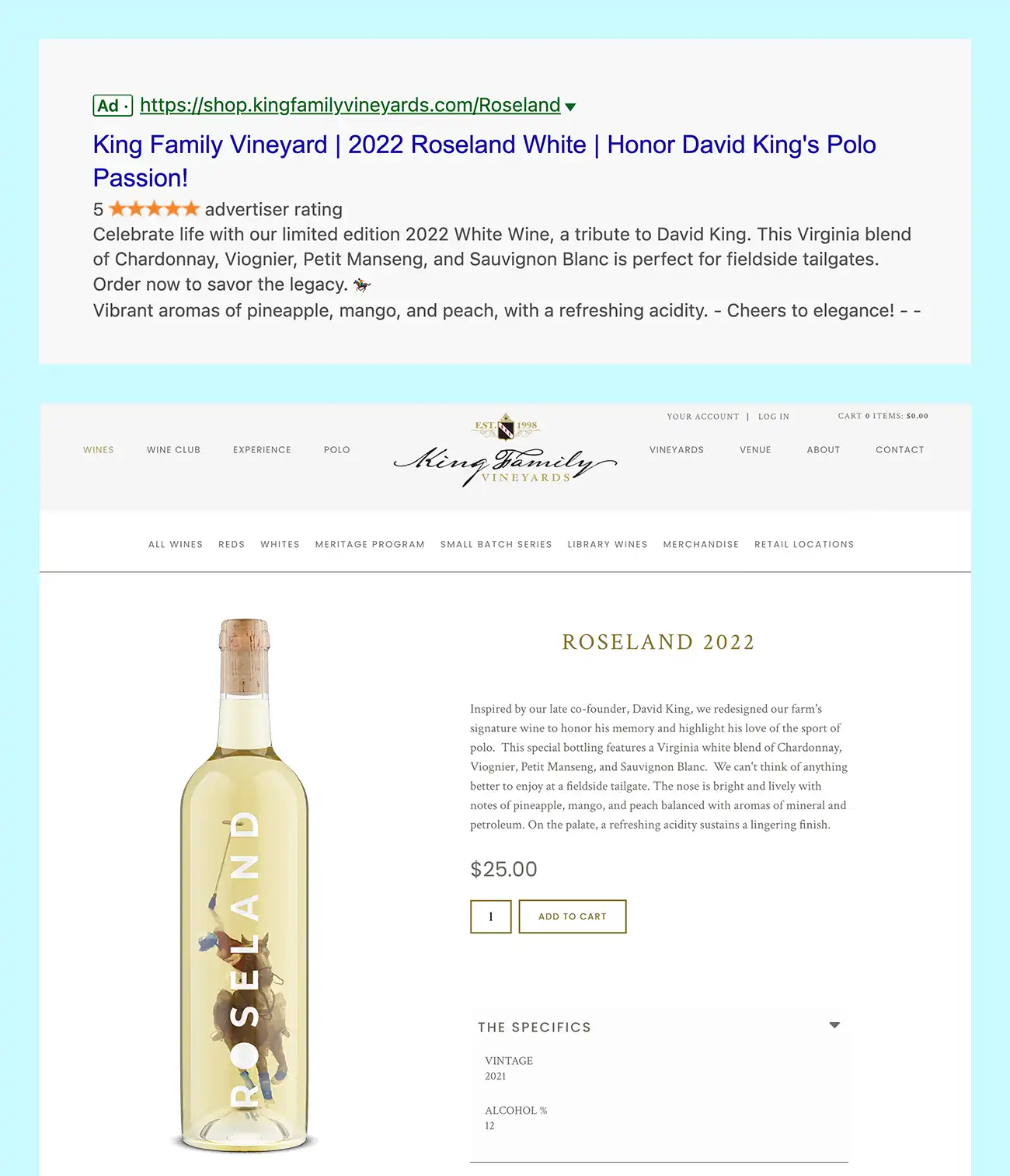
Just as important: the page the CTA links to needs to deliver on the promise. If the ad shows a specific wine, the link should go to that wine's product page, not to your homepage. Consistent imagery between the ad and the landing page reinforces the buyer's confidence.
Keep text readable at every size
Wine ads appear on phone screens, desktop feeds, magazine pages, and billboards. The text needs to be legible in all of them.
Large, clear fonts. Short messages. A selling point that lands at a glance.
Lengthy ads lose attention. Aim for one headline, one supporting line, and one CTA. If it takes more than five seconds to understand the ad, simplify it.
Use the right keywords in digital campaigns
When running digital ads, your keyword choices determine who sees them. "Wine gift box" finds a different buyer than "Napa Cabernet Sauvignon." Specificity wins, both for paid search targeting and for organic discoverability across your wine marketing strategy.
Keyword research tools can surface what your potential customers are actually searching for. Often it is not the industry term you would use internally. Matching the buyer's language in your ad copy and targeting increases both click-through rates and conversion.
Let your customers sell for you
Testimonials and customer reviews are among the most effective elements you can include in wine advertising. A quote from a real customer carries more weight than any copywriter's best line.
Beyond quotes, show how people actually use your wine. Pairing suggestions, gifting moments, event photos. This kind of social proof gives prospective buyers a way to picture your product in their own lives.
Plan for the buyer who already made up their mind
A growing share of wine buying now starts in a conversation with an AI assistant rather than a search bar or a feed. Forty-three percent of US online shoppers used ChatGPT, Gemini, Claude, Perplexity, or a comparable tool for product research in the past 90 days. Among people who use AI for shopping, 46% now begin their research on a standalone AI platform, up from 25% in 2024, while traditional search fell from 43% to 24% over the same period.
That changes what an ad has to do. The person who clicks may already have a short list, and your ad is confirming a choice rather than introducing one. Those visitors also arrive more decided, and AI-referred shoppers convert at higher rates than traffic from other sources, so the page behind the ad is being judged by a tougher audience.
What you control is whether your wine is described clearly enough, and shown clearly enough, to survive that filtering step. Accurate product pages, structured product data, and imagery that matches across every listing are what make a bottle legible to a system summarizing the category on a buyer's behalf. A wine that is hard to describe accurately is a wine that gets left off the short list.
Where to run wine ads that convert
Great creative needs the right placement to reach the right audience. Wine advertising in 2026 spans several channels, each with its own strengths and compliance requirements.
Meta (Facebook and Instagram)
Meta remains the dominant platform for wine DTC advertising, with brands allocating the majority of their digital ad budgets here. However, the rules have shifted significantly.
As of early 2026, alcohol-related business pages are no longer recommended algorithmically on Facebook. This means organic reach for wineries has effectively ended on Meta, making paid advertising your primary lever for visibility.
Age gating is now mandatory across all touchpoints, not just ad targeting settings. Every connected experience, including landing pages, lead forms, and Messenger flows, must include age verification.
Creative guidelines prohibit depicting excessive drinking, targeting minors, or making health-benefit claims. Country-specific minimums vary (19+ in Canada, 25+ in Sweden), so international campaigns need careful setup.
Despite the restrictions, Instagram in particular rewards strong product imagery. Wineries with consistent, high-quality bottle shots and lifestyle images see higher engagement and lower cost per click than those relying on phone photos or stock images.
Google Ads
Search ads capture buyers with high purchase intent. Someone searching "buy Oregon Pinot Noir online" is further along the path to purchase than someone scrolling Instagram.
Google requires LegitScript certification for alcohol advertisers in certain markets, and policies vary by country and state. Start with branded search (your winery name) and expand into varietal and regional terms as your budget allows.
Retail media
The fastest-moving addition to the wine advertising mix is retail media: the ad inventory sitting inside the platforms where people are already buying. Instacart's Carrot Ads network extended to Bottlecapps in August 2025, putting sponsored placements across more than 1,300 alcohol retailers' own storefronts. The advantage is intent, since you are reaching someone with a cart open rather than someone scrolling.
The constraint is creative. Retail media placements are small, and they render your bottle at thumbnail scale beside competitors doing the same thing. Category terms such as "red blend" or "sauvignon blanc" usually outperform branded terms here, because the shopper picks a style of wine before they pick a producer.
Programmatic and display
Programmatic advertising lets you place visual ads across thousands of websites, targeting by demographics, interests, and browsing behavior. For wineries, this works best for brand awareness and retargeting. Someone who visited your product page but did not complete a purchase can see your bottle shot again as they read a food or travel article.
Trade and industry publications
Advertising in trade publications like Wine Business Monthly, Wine Enthusiast, or regional wine magazines reaches a different audience: distributors, retailers, sommeliers, and serious wine buyers. The ROI model here is different from DTC.
These placements build trade credibility and open distribution conversations. Design contests like the Wine Business Monthly PACK Design Awards also offer exposure, with winning entries featured across the publication's print and digital channels.
Your ad creative and your feed image are not the same file
This one catches a lot of wineries. The image that performs in a Meta ad, styled and textured with a headline burned into it, is the same image that gets your product disapproved in a shopping feed. Google's Merchant Center policy prohibits promotional text, watermarks, and logos on the product image, and requires an unobstructed view of the product itself.
Plan for two versions from the start: one clean, centered, distraction-free wine bottle shot for feeds, listings, and retail media, and one styled variation for paid social and display. Rendering both from the same 3D model is what keeps them recognizably the same bottle, which is the entire point of consistency.

Bringing it all together
Effective wine advertising is not about any single tactic. It is the combination of strong imagery, clear copy, the right channel, and a message that matches what the buyer actually cares about.
The market is tightening. DTC volumes are declining industry-wide, and the brands that continue to grow are the ones investing in how they show up visually, from their product pages to their paid campaigns.
One pattern stands out across every channel and format: the quality of your product imagery is the single biggest variable you can control. A striking bottle shot stops the scroll on Instagram, earns the click on Google, sits legibly in a retail media thumbnail, and converts the browser on your website. It is also what an AI assistant is looking at when it decides whether your wine belongs on someone's short list.
If your current imagery is inconsistent across channels, outdated with the wrong vintage, or simply not doing your packaging justice, that is the highest-leverage fix you can make before spending another dollar on ad placement.
Outshinery creates photorealistic product visuals for wine, beer, spirits, and beverage brands, with no photoshoot required. Outshinery Studio delivers human-crafted renders for complex packaging and premium presentation. Outshinery Lite generates professional wine bottle shots in under an hour, with no samples to ship and no photographer to schedule.
Both give you the consistent, high-quality visuals that make every ad, listing, and social post work harder.
Frequently asked questions
What matters most in a wine ad?
The product image. A wine buyer cannot taste, smell, or hold the bottle before purchasing, so the visual has to do that work. High resolution, consistent, distraction-free imagery is the single biggest variable a winery can control across every channel.
Can wineries still advertise on Facebook and Instagram?
Yes, but only through paid campaigns. As of early 2026, alcohol-related business pages are no longer recommended algorithmically on Facebook, which effectively ended organic reach for wineries on Meta. Age gating is mandatory across every connected touchpoint, including landing pages and lead forms.
Which ad channels work best for wineries?
Meta for DTC reach and strong imagery, Google Ads for high-intent searches like a specific varietal or region, retail media such as Instacart Carrot Ads for shoppers with a cart already open, programmatic display for retargeting and awareness, and trade publications such as Wine Business Monthly for distributor and retail credibility.
Do AI assistants change how wineries should advertise?
Yes. Forty-three percent of US online shoppers used an AI assistant for product research in the past 90 days, and among AI users, 46% now start their research on a standalone AI platform rather than a search engine. Many buyers arrive at your ad with a short list already formed, so the ad is confirming a choice rather than making the introduction. Clear product pages, structured product data, and imagery that matches across every listing are what keep a wine on that list.
Can I use my Meta ad image in my Google Shopping feed?
No. Google's Merchant Center policy prohibits promotional text, watermarks, and logos on product images and requires an unobstructed view of the product, so a styled ad creative with a headline on it will be disapproved. Produce two versions: a clean, centered product shot for feeds, listings, and retail media, and a styled variation for paid social and display.
What should wine ad copy say?
Show how the wine fits the buyer's life, such as a Friday evening, a holiday table, or a gift with a story, rather than reciting tech sheet details. Keep it to one headline, one supporting line, and one call to action that is understood in five seconds.
What is a good call to action for a wine ad?
Match the CTA to the goal: "Shop now" for ecommerce, "Join our wine club" for retention, "Book a tasting" for tasting rooms. Then link to the exact product page the ad promises, not the homepage.
The wine ad pre-flight checklist
- Product image: High resolution, distraction-free, and identical across your site, your ads, and every retailer listing
- Color: A background that contrasts with the label, drawn from your brand palette rather than the ad template default
- Copy: One headline, one supporting line, one call to action, understood in five seconds
- Call to action: Matched to the goal, linking to the exact product page the ad promises, never the homepage
- Keywords: The buyer's search language, "wine gift box" over the varietal term you use internally
- Customer proof: A real quote, a pairing, or a gifting moment, not a copywriter's line
- Two image versions: A clean product shot for feeds, listings, and retail media, plus a styled variation for paid social
The product image is the only item on this list that every channel judges you on at once.