What AI shopping agents read in a wine listing
The three thresholds a wine listing has to clear for AI shopping agents, starting with Google's 500 x 500 pixel image floor on January 31, 2027.


An AI shopping agent reads a wine listing as data: the product feed, the details on the page, and the bottle image as one field inside that record. Three thresholds decide whether that record gets surfaced at all: an image that clears Google's new size floor, a feed with no gaps, and an image a machine can trust is your real bottle.
Shoppers already ask agents first. Salesforce reported on July 20, 2026 that 50% of shoppers use an AI assistant at some point in their buying journey, and 74% say they trust the product recommendations they get from AI chat. Salesforce also predicts that 20% of all 2026 holiday ecommerce traffic will originate from AI chat agents.
Most winery owners already ask a version of the right question, usually to a person: will this image meet the site's requirements? From January 31, 2027, a machine answers it first, before any shopper sees the listing. Here is what that machine reads, and where a wine listing drops out.
Can an AI agent buy wine for a shopper?
Not in 2026: for wine, AI agents find and compare bottles, then hand the shopper to a store to pay. Google's guide to checkout in AI Mode and Gemini lists "items requiring ID verification (e.g., Alcohol, Tobacco)" as ineligible, per its Merchant Center setup guide for the Universal Commerce Protocol.
OpenAI goes further. Its commerce policies, updated June 17, 2026, prohibit "Alcoholic beverages (over 0.5% ABV)" on "all commerce surfaces, including product listings or feeds."
So the agent's job ends at the handoff: to your own online store, a retailer, or a distributor portal. The listing has to do its work before that click.
What does an AI shopping agent read in a wine listing?
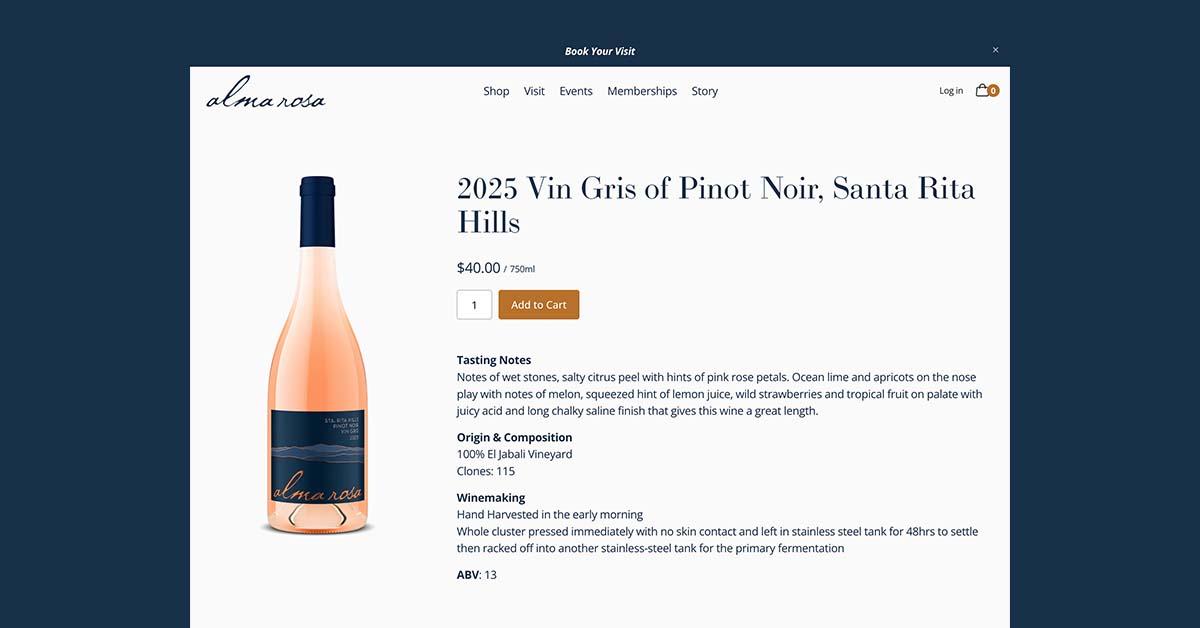
An agent reads structured product data first, and the image travels inside it as one attribute: name, size, vintage, price, availability and the image link arrive together. Salesforce's own advice to retailers is to "treat AI platforms as your most critical B2B data syndication partners," because agents "rely on programmatic, real-time feed integrations."
For wine, the feed that matters most is Google's. OpenAI's policy keeps alcohol out of its own product feeds, and a study published in Search Engine Land on March 5, 2026 found that over 83% of products in ChatGPT shopping carousels were strong title matches to Google's top organic shopping results. The study was run by a vendor on Peec AI data, and OpenAI has not confirmed how its carousels are sourced.
What no platform has published is a rule that agents rank wines by how good the photo looks. Claims that they do come from vendor blogs, not from Google, OpenAI or Amazon. What platforms do publish are floors, and the nearest one has a date.
Threshold 1: the image size floor
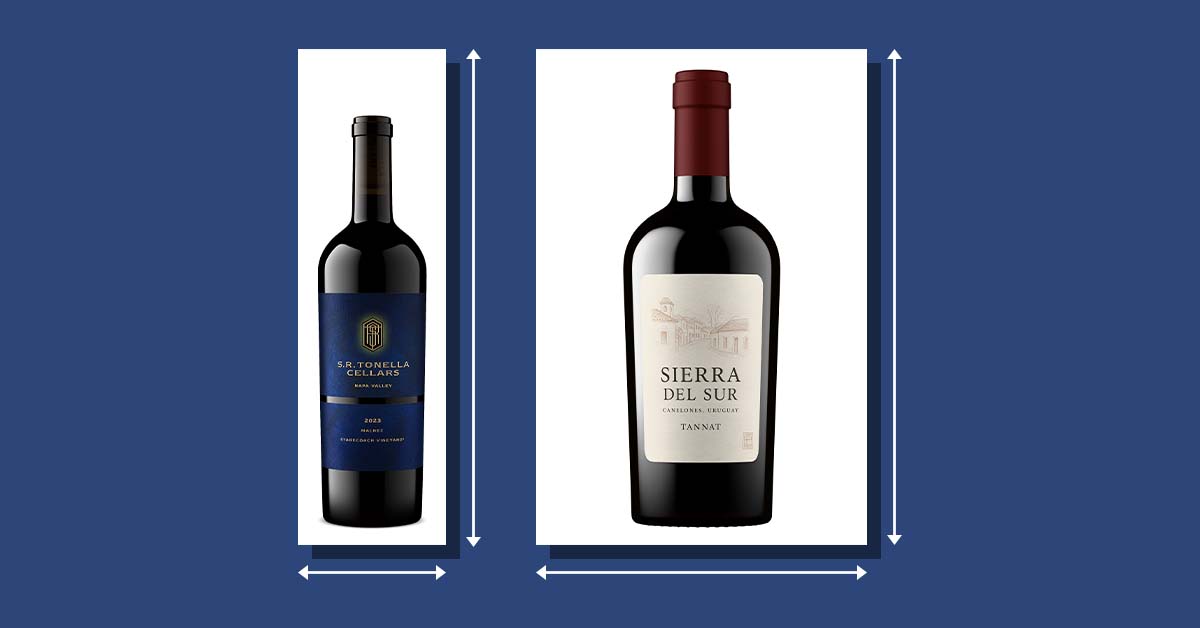
From January 31, 2027, Google Merchant Center requires at least 500 x 500 pixels for every product image, in every product category. The rule covers the main image and every additional image, and Google has issued warnings in Merchant Center since April 14, 2026, per its product data specification update.
Google Merchant Center image rules, from January 31, 2027
- Minimum: 500 x 500 px, main and additional images
- Recommended: 1,500 x 1,500 px or larger
- Applies to: all product categories
- Merchant Center warning: "Image too small for upcoming enforcement"
The floor is 500 x 500 pixels. The size Google recommends is three times that on each side.
The recommendation sits in Google's image link specification. Google also says it will automatically optimize some undersized images so they meet the floor and avoid disapproval.
That keeps a listing live, but an image enlarged from 400 pixels still carries only 400 pixels of label detail. The vintage and the fine print were never in the file to begin with.
Google is one channel of several. The sizes for each of the others are in our guide to image size and format for wine ecommerce.

Threshold 2: a feed record with no gaps
An agent can only match a shopper's request to the details a listing actually states. A request for a dry Riesling under $30 is answered by the variety, style and price fields, not by the picture.
For wine, the details that separate one bottle from its neighbors are vintage, bottle size, varietal and region. Each one belongs in the listing as text, not only on the label in the photo.
The image also has to agree with that text. A 2021 label on a listing for the 2023 vintage is a mismatch between two fields of one record. How background and angle affect the way a machine reads the bottle itself is covered in why your beverage brand needs neutral imagery.

Threshold 3: an image a machine can trust
Provenance is the threshold still forming: platforms are building ways to tell a real product image from a generated one. Google Merchant Center already states that "All AI-generated images must contain the IPTC DigitalSourceType trainedAlgorithmicMedia tag," per its policy on AI image metadata, and asks merchants to preserve it.
Google also says that when an image carries C2PA metadata, people can check it with the "About this image" feature in Search, and that its ad systems "are starting to integrate C2PA metadata," per a Google announcement from September 17, 2024.
An image of the bottle you actually ship, built from your real label and your real container, is a claim you can stand behind when a platform asks. What a generated bottle brings with it into a feed is covered in AI product images on Google Shopping.

What to fix before January 31, 2027
Start with the image sizes in your Google Merchant Center feed, then the details that travel with them. Check the main image and every additional image, and treat 1,500 pixels a side as the target, not 500.
Fix images at the source: the product page or the file your feed pulls from, not one channel at a time. Then compare what each image shows with what its listing says, vintage and bottle size first. The checklist below covers each item.
Getting a bottle shot from your label file
Outshinery builds bottle shots from your label file and a 3D model of your container, so the image shows the bottle you sell, without a photoshoot. Which product fits depends on how many wines you list.
Outshinery Lite is the self-serve route for one wine at a time. Upload a flat label, choose the bottle and closure, and receive a transparent PNG at 2,160 px on its longest side in under an hour. Lite costs $29 an image, $23 after 10 orders.

Outshinery Studio is for a full range: specialty finishes, a whole portfolio in one consistent look, or a release calendar to keep up with. A trained team of 3D artists builds each model, and every image passes human quality control before delivery.
Frequently asked questions
How do AI shopping agents work?
An AI shopping agent takes a request in plain language, searches product feeds and web pages for matches, and returns a short list with prices and links. For wine it stops there: Google and OpenAI both keep alcohol out of checkout inside their assistants, so the shopper pays on a store's own site.
How do you get AI to recommend your product?
Give it a complete, accurate record to match: every attribute filled in, a price, availability, and an image that meets each channel's published rules. No platform has published a formula for which products an agent recommends, so the part you control is what your listing states and shows.
Is there an AI agent for shopping?
Yes. ChatGPT, Google's AI Mode and Gemini all help shoppers find and compare products. For wine, Google and OpenAI both exclude alcohol from checkout inside the assistant, so the purchase happens on the merchant's site.
Will Google reject wine images under 500 x 500 pixels?
From January 31, 2027, Google Merchant Center requires at least 500 x 500 pixels for every product image, main and additional. Google says it will automatically optimize some undersized images to prevent disapproval, but it recommends 1,500 x 1,500 pixels or above for best performance, which is the size worth supplying.
The wine listing check before January 31, 2027
- Image size: Main and additional images at 1,500 x 1,500 px or larger, never under 500 x 500
- Warnings: No "Image too small for upcoming enforcement" flags left in Merchant Center
- Vintage: The label in the image matches the vintage in the listing
- Bottle size: 375 ml, 750 ml or magnum stated in the listing and matching the bottle shown
- Core details: Varietal, region, price and availability filled in for every wine
- Source file: Images fixed on the product page or feed source, not patched in one channel
An hour on the feed in November costs less than a gap found in February.