Wine bottle image generator: what it does and where it stops
Five choices, one label file, and a photorealistic PNG in under an hour. What a self-serve bottle shot generator does, and the packaging it cannot handle.
You can tell what someone wants from the noun they use. "Bottle photography service" means they are looking for someone to hire. "Wine bottle image generator" means they intend to do it themselves.
Those are two different products. Outshinery makes both.
This is about the second one: what a generator is, what you choose, what comes back, and where the approach stops working.
What a wine bottle image generator is
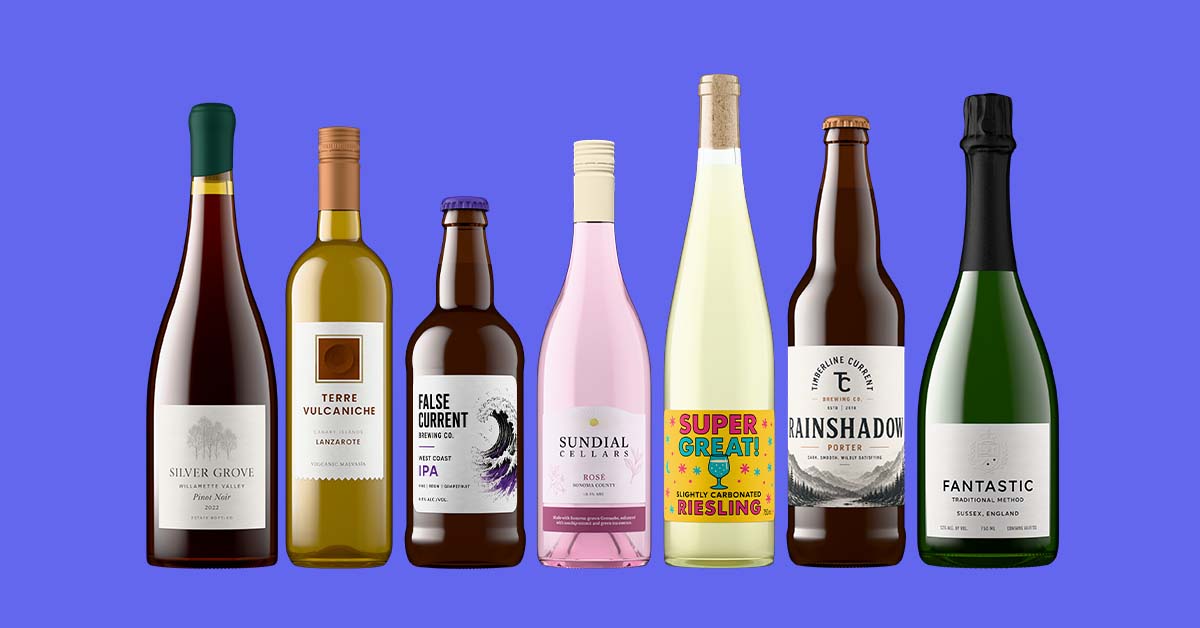
A wine bottle image generator is a self-serve tool that builds a photorealistic bottle shot from a set of choices you make and a label file you upload. You pick the bottle and closure from a fixed library, position your label, pay, and download the image.
No brief. No account manager. No revision rounds.
Outshinery Lite is that tool, at $29 per image, dropping to $23 after your first ten orders.
The five choices you actually make
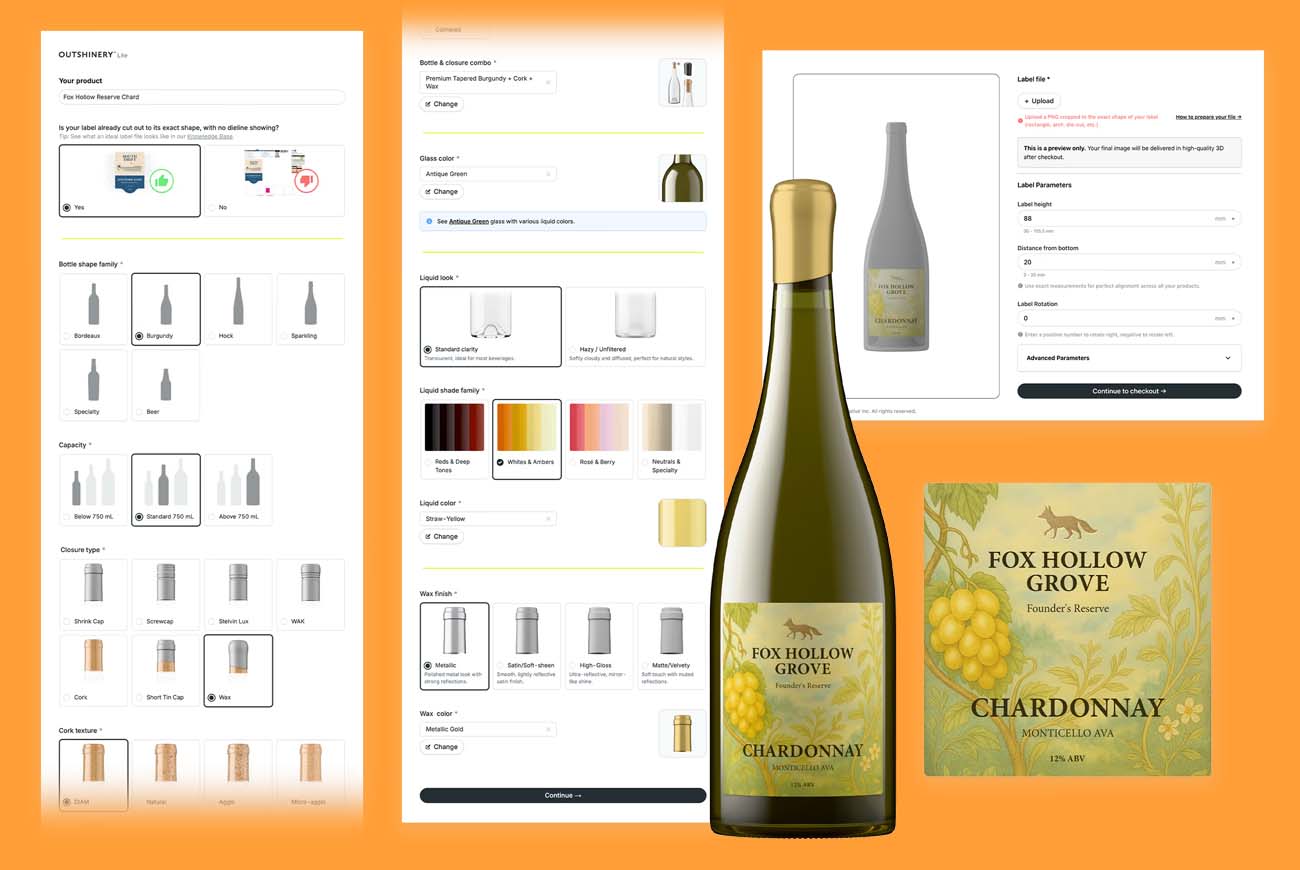
Most tools describe this vaguely. Here is the real sequence.
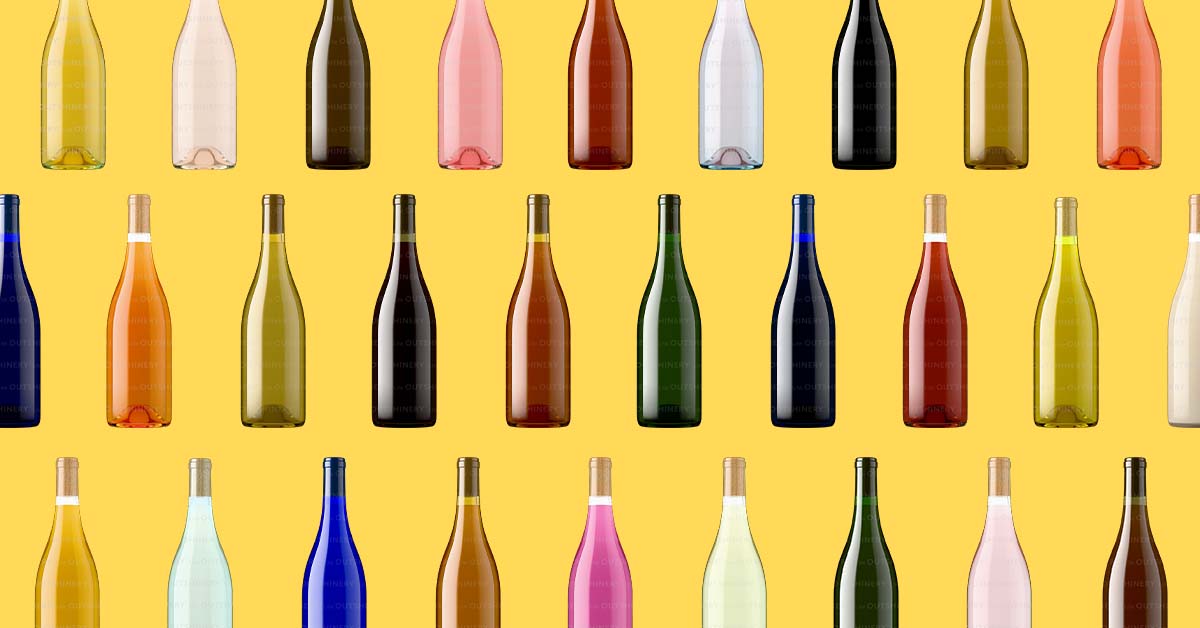
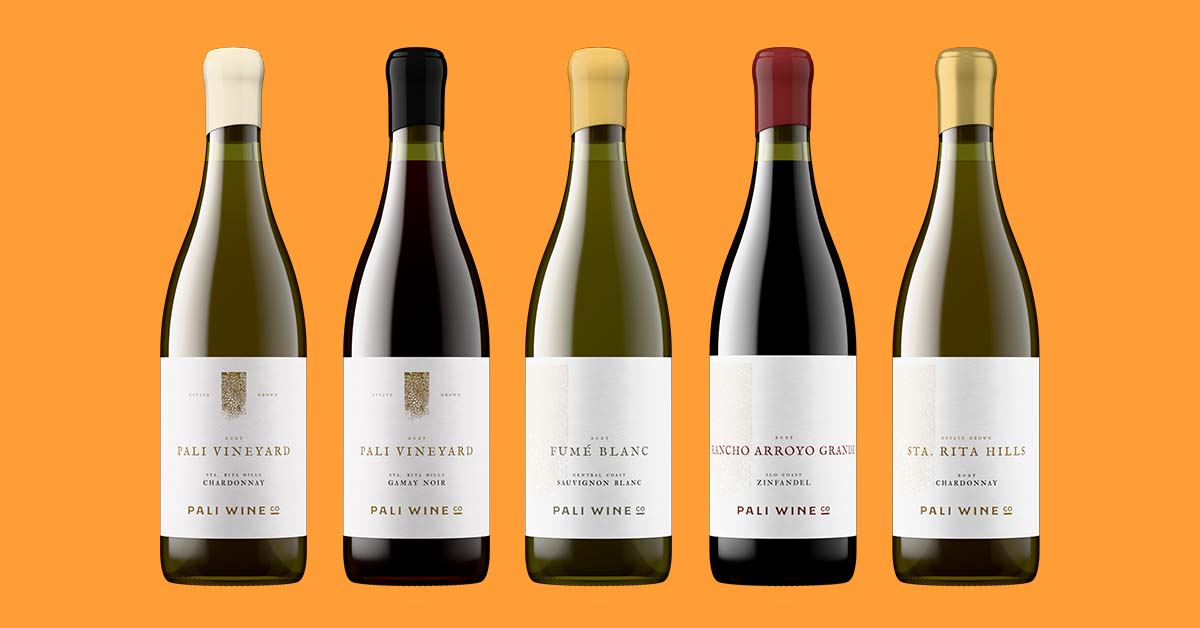
- Bottle and closure: one pick from 166 live combinations, covering wine, cider, and beer bottles
- Glass color: flint through antique green, matched to the mold you actually bottle in
- Liquid color: the shade inside the glass, which matters most in clear and pale bottles
- Cap finish: the closure treatment, from screw cap finishes to wax dip and sparkling hoods
- Your label: a transparent PNG you upload and position in a live preview
Payment is the last step, not the first. You see your label on the bottle before you decide.
That is the whole interaction. Five decisions and a file.
Why the menu is finite on purpose
A generator that accepted any bottle you could describe would have to invent geometry it has never seen.
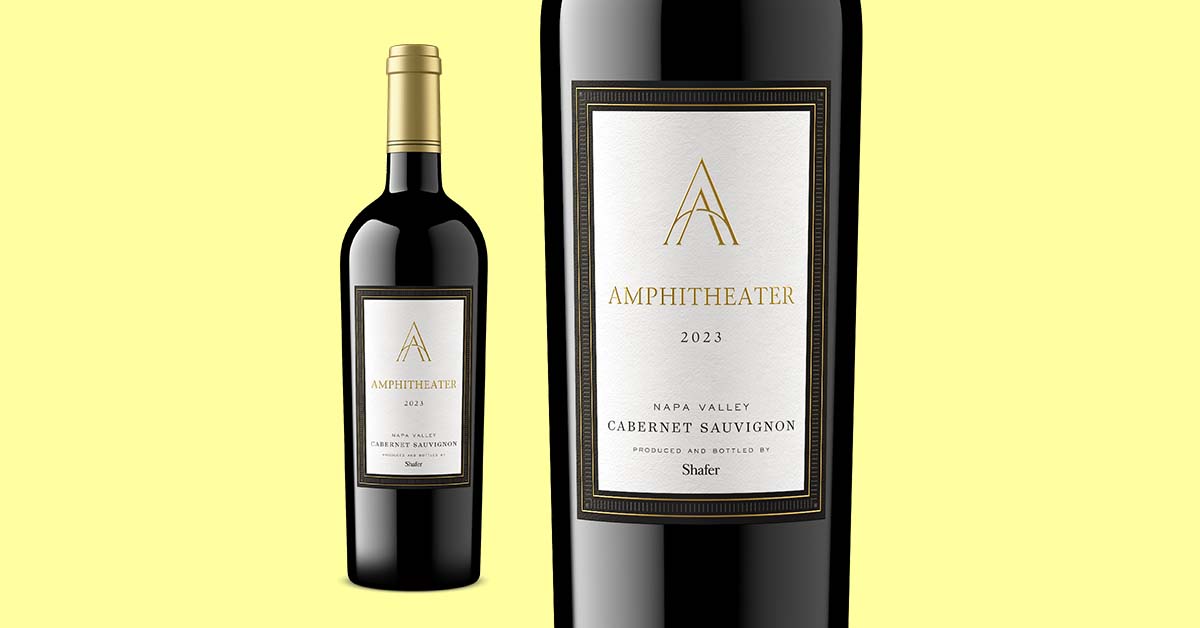
Lite does the opposite. Every option in the picker maps to a verified 3D model of a real production bottle, so your label lands on the actual shape, punt, and closure you bottle in rather than an approximation of it.
The camera, the lighting, and the scale never move. They are fixed for every order, by every customer.
That is a constraint, and it is also the product.
What you get back
The finished file arrives in under an hour.
- Format: PNG with a transparent background
- Size: 2,160 px on the longest side, every order, no exceptions
- Resolution: 72 DPI, sized for online listings, sell sheets, and marketplace uploads
- Delivery: by email, and the download link does not expire
Light wines in clear glass take a little longer to render. That is physics, not a queue.
Consistency in photography is something you chase. In a generator it is a property of the mechanism.
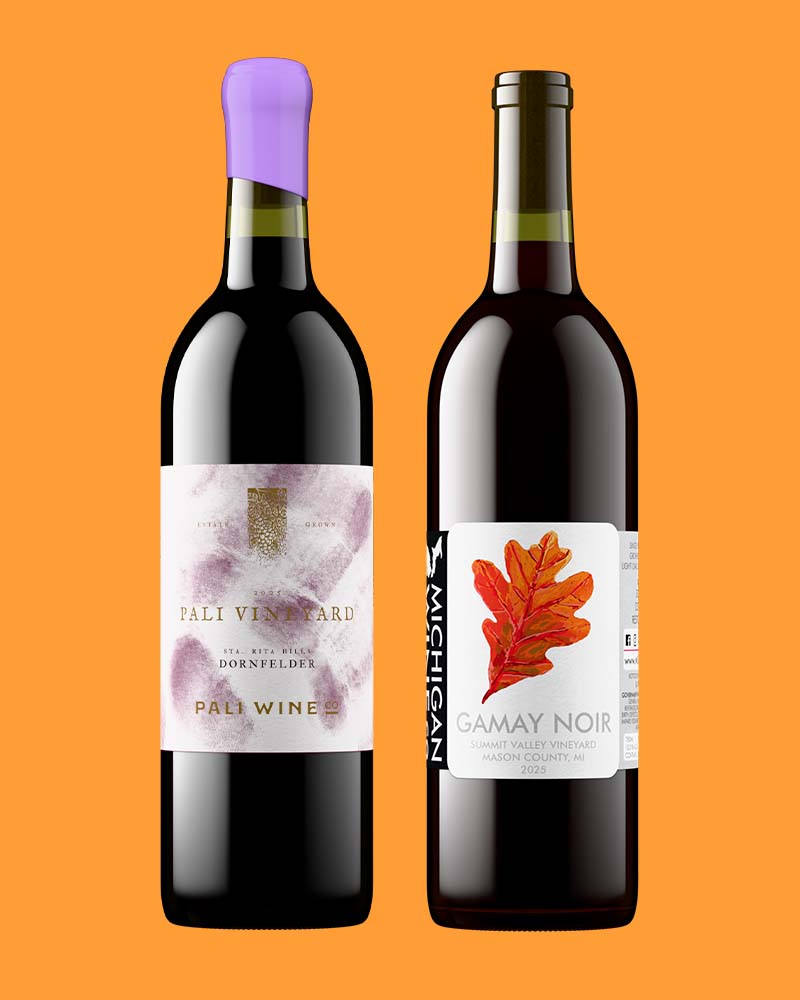
Same inputs, same image, every time
Because the choices are enumerated rather than interpreted, re-entering the same selections produces the same image. There is no set to rebuild and no photographer to rebook.
This is why front and back labels match. Order the back label as a separate $29 order with the same bottle configuration, and the two files line up exactly, because nothing between them changed.
Where the library ends
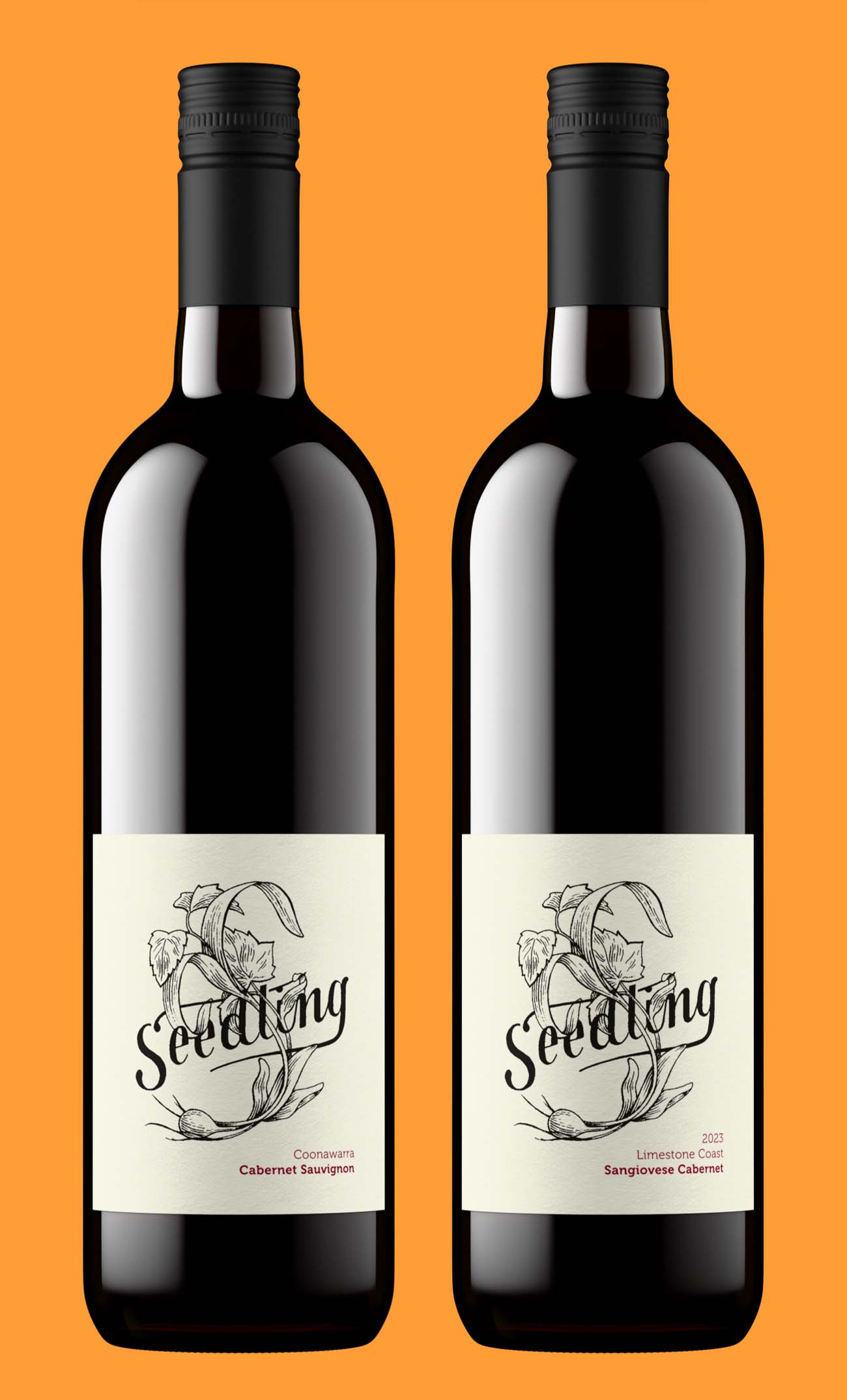
A generator places flat artwork on a fixed model. Anything that lives off that surface is outside what it can do.
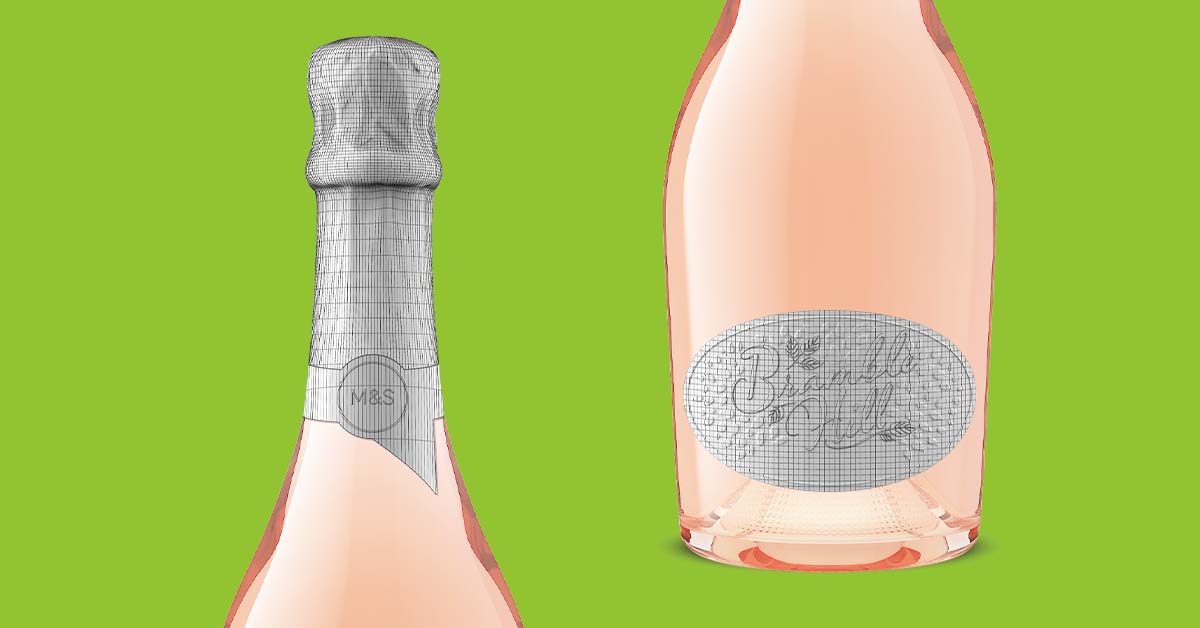
Lite does not render foil, embossing, debossing, metallic finishes, or textured stock. It places artwork on the bottle body only, so neck labels, neckers, ribbons, and medals are out.
Custom molds that are not in the library are out, as are cans of any kind, spirits, and sake.
None of that is a gap waiting to be filled. It is the boundary that keeps the automated path reliable.
A tool you operate, or a person who builds it
That boundary is where Outshinery Studio starts. A trained 3D artist builds your packaging from your production files, renders the finishes accurately, and handles the shapes and scenes a picker cannot.
Studio is not the paid upgrade to Lite. It is a different way of working, human-led and briefed, for packaging that needs a specialist.
Lite for the standard. Studio for everything else.
If your wine labels and bottles are conventional and your label file is ready, the generator is the shorter path. Generate your first bottle shot.
Frequently asked questions
Is a bottle shot generator the same as AI image generation?
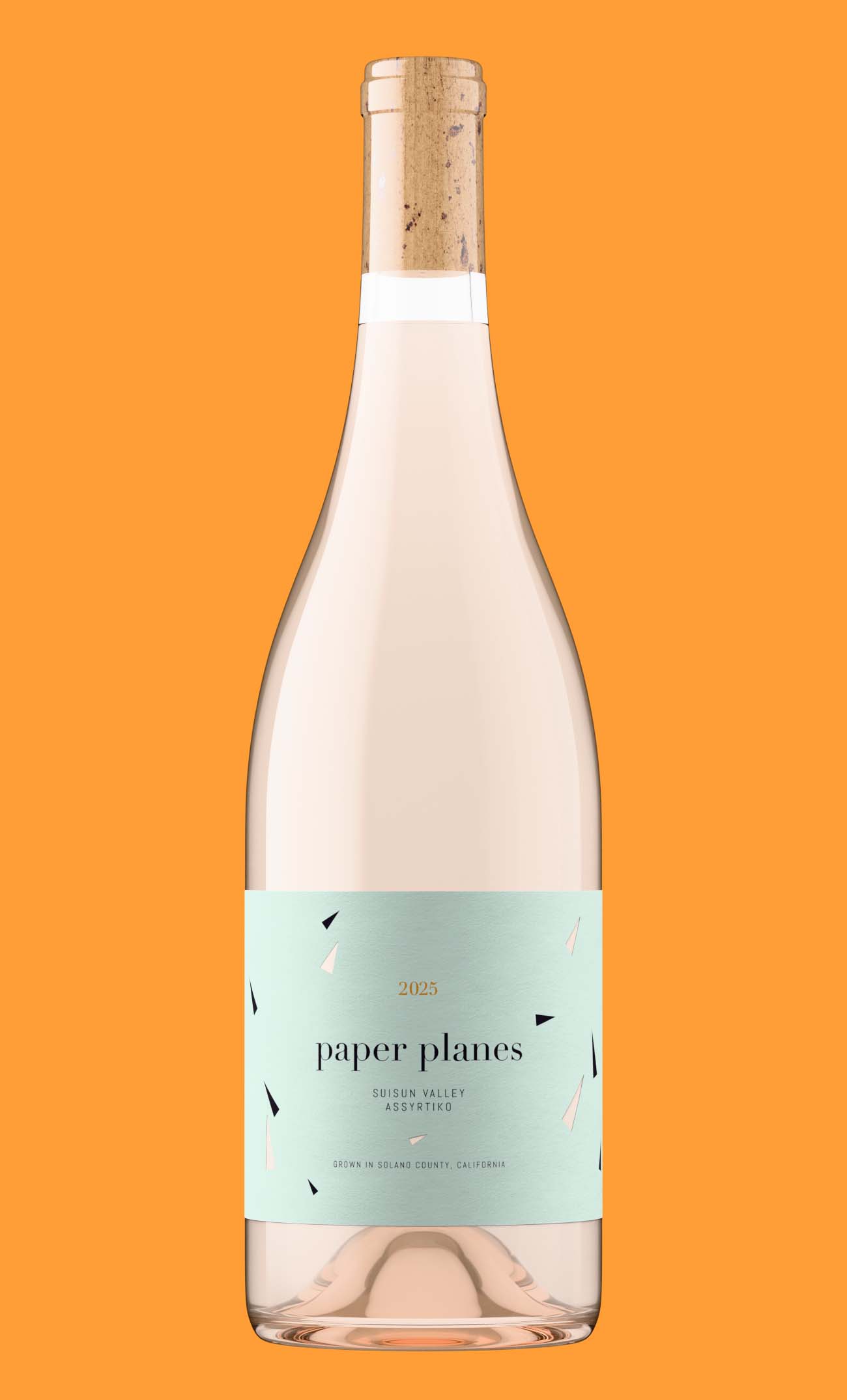
No. A generative AI tool produces an image from a text prompt and redraws the product as it goes, so the bottle and the label drift away from your real packaging. A bottle shot generator assembles a verified 3D model of a real bottle and places your uploaded label file onto it, so nothing about your product is invented.
What label file does a bottle shot generator need?
A high-resolution PNG of your flat label art with a transparent background, cut to the die line. No shadows or lighting baked in and no flattened perspective, because the system applies the curvature itself. Outshinery prepares Lite label files for free at lite.outshinery.com/request-free-label-prep.
What size image does Outshinery Lite deliver?
Every Lite order returns a PNG at 2,160 px on the longest side with a transparent background, at 72 DPI. The size is identical on every order. The bottle sits inset with buffer around it, so the bottle itself measures less than the full canvas.
Can I generate the back label too?
Yes, as a separate $29 order. Use the same bottle configuration and upload the back label file, and the two images match exactly because the camera, lighting, and scale never change between orders.
Which bottle types can I generate in Lite?
Wine, cider, and beer in glass bottles, across 166 live bottle and closure combinations. Wine and cider cover 375ml, 750ml, and magnum, and beer runs 330ml to 750ml. Cans, spirits, and sake are Outshinery Studio work.
Before you open the generator
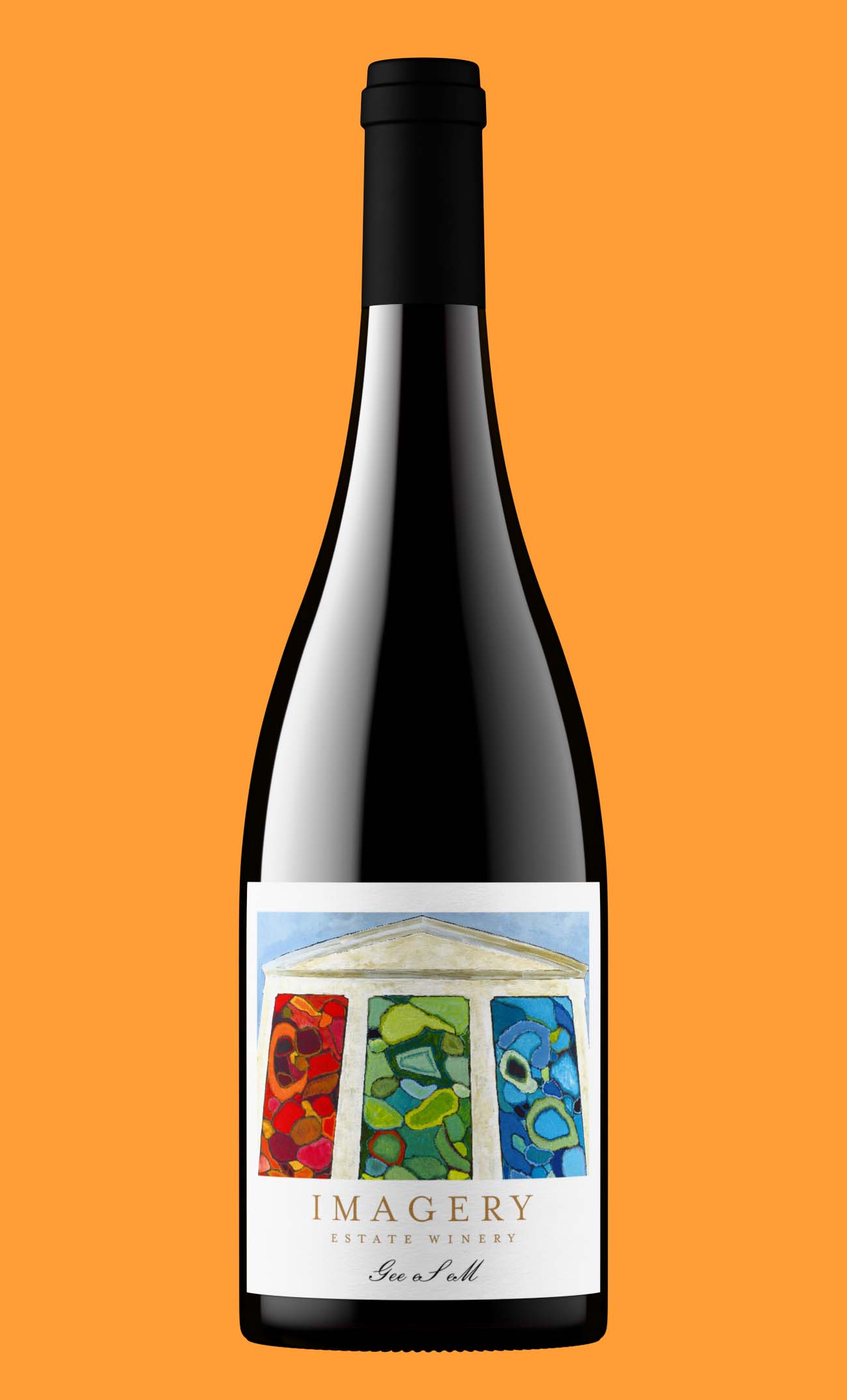
- Label file: high-resolution PNG, transparent background, cut to the die line, no baked-in shadows
- Bottle shape: the family and the size, Bordeaux or Burgundy, 375ml or 750ml or magnum
- Closure: the actual one, natural cork, DIAM, screw cap, wax dip, or sparkling hood
- Glass color: flint, antique green, dead leaf, or whatever your mold really is
- Liquid shade: a reference photo of the wine in the glass, essential for anything pale
- Finishes: if there is foil, embossing, or a neck label, stop and route to Studio
Five minutes of checking beats a $29 order of the wrong bottle.