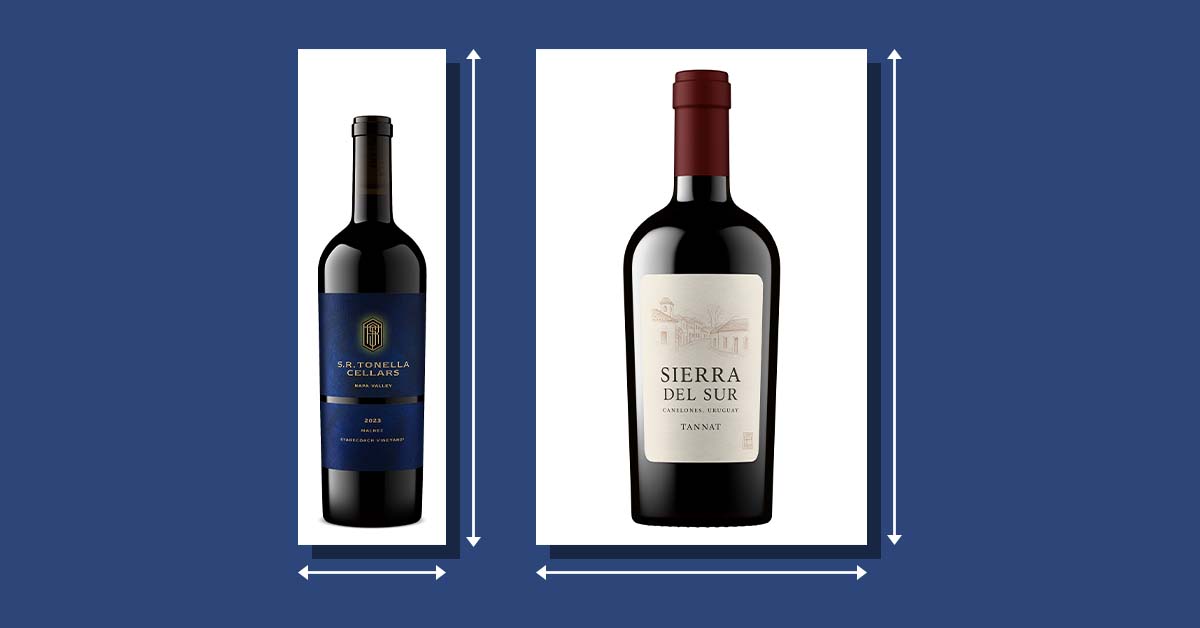
Why your beverage brand needs neutral imagery now
How AI-mediated shopping is turning bottle images into product data


Context
In the last year, product imagery stopped being just a visual asset and started functioning as product data. AI systems now evaluate bottle images for clarity, consistency, and alignment with structured metadata: often before a shopper ever reaches your site. Neutral, standardized imagery reduces ambiguity, builds machine trust, and performs better across AI-driven search, shopping, and recommendation surfaces.
Your bottle is no longer just seen by people
In the rapidly shifting landscape of digital commerce, the way your bottle looks is no longer just about appealing to a shopper browsing a shelf. Increasingly, it’s about being understood by machines.
As shopping experiences migrate into AI-mediated environments such as Google Search and Gemini, product imagery has evolved. It is no longer just a marketing asset. It is a decision input.
For fast-growing wineries, breweries, and distilleries, this shift presents a major opportunity. Neutral, consistent product images consistently outperform stylized or lifestyle-heavy shots because they are easier for AI systems to interpret, compare, and recommend across search, shopping, and generative interfaces.
If you want your brand to remain discoverable in this new era, you need to understand how AI systems “see” your product, and why visual clarity is becoming a competitive advantage.

The new reality of AI-mediated commerce
The digital shelf is changing.
Recent platform-level developments, including Google’s introduction of the Universal Commerce Protocol, signal a shift toward a commerce model where AI agents don’t just surface products: they actively guide discovery, comparison, and even checkout.
The traditional customer journey:
search → click → browse → buy is increasingly compressed into: search → AI agent query → direct purchase
In many cases, this happens without the shopper ever visiting a brand’s website.
In this environment, your bottle imagery is no longer supporting the product detail page. It is the product representation. Images function as structured inputs that feed directly into AI decision-making systems. When that data is inconsistent, ambiguous, or visually noisy, the product is simply less likely to be surfaced.

How AI systems “see” your bottle
AI systems don’t evaluate imagery the way humans do. They don’t appreciate mood or lifestyle cues. They analyze images computationally.
Modern multimodal models and vision APIs extract specific features, including:
- Objects and shapes
Is this a Bordeaux bottle or a Burgundy bottle? A slim can or a standard 330 ml? - Color and contrast
Is the rosé pale salmon or deep pink? Is the glass flint, green, or amber? - Text and symbols
Can optical character recognition (OCR) clearly read the vintage, varietal, or alcohol percentage? - Context and isolation
Is the product clearly defined, or partially obscured by props, shadows, or background elements?
These extracted signals form a product’s multimodal representation: a combined visual and data fingerprint used by AI systems to compare, rank, and recommend products.
When imagery is neutral, consistent, and clear, AI systems can parse it confidently. When it’s cluttered or stylized, confidence drops... and so does visibility.
At Outshinery, we see this shift firsthand. We generate tens of thousands of photorealistic bottle images each year for wineries, breweries, and spirits brands selling across search, marketplaces, and distributor platforms.
In practice, we consistently see neutral, standardized imagery outperform lifestyle-heavy visuals in AI-driven discovery environments. When images are clean, consistent, and precisely aligned with product data, they are more reliably surfaced, matched, and reused across platforms, especially outside the brand’s own website.

Why neutral, consistent imagery wins in AI-first commerce
For beverage brands scaling across markets and platforms, visual consistency is no longer an aesthetic preference. It’s a system requirement.
1. Superior machine interpretability
Neutral imagery removes visual noise. Plain backgrounds and controlled lighting allow AI models to focus exclusively on the product itself.
When bottles are partially hidden by props, heavy shadows, or dramatic environments, AI systems may misread labels, misclassify formats, or fail to extract key attributes altogether. In competitive categories like wine and spirits, even small errors can mean lost placement.
Clean imagery ensures the system understands exactly what you’re selling.
2. Building machine trust
Modern AI systems don’t just identify products: they evaluate how confident they are in that identification.
Consistent, predictable visuals signal high-quality data. This builds what is increasingly referred to as machine trust: the system’s confidence that an image reliably represents the product it’s attached to.
When confidence is low, AI agents may choose not to surface the product at all. Clean, standardized imagery reduces ambiguity and increases the likelihood that your brand appears in AI-generated results and recommendations.

3. Stronger performance in multimodal rankings
AI-driven search results are increasingly visual. Product carousels, answer snapshots, and generative summaries blend text and imagery to represent products quickly and clearly.
When selecting which image to show, AI systems favor assets that are:
- clear at small sizes
- visually consistent with catalog data
- easy to interpret without explanation
In this context, your bottle image becomes a ranking signal, not just a visual. Neutral, professional bottle shots are far more likely to be chosen than inconsistent or lifestyle-heavy alternatives.

4. smooth alignment with global commerce standards
As commerce data moves across platforms, consistency matters.
Protocols like the Universal Commerce Protocol are designed to let product information travel cleanly between search engines, shopping agents, and payment systems. Visual consistency reduces edge cases, minimizes mismatches between imagery and metadata, and ensures smoother integration across channels.
When your imagery is standardized, it scales effortlessly alongside your product data.
Actionable steps for beverage brands
To ensure your products perform well on AI-mediated surfaces:
Use neutral backgrounds
For core catalog imagery, prioritize plain white or transparent backgrounds. This keeps focus on the bottle and label, not the setting.
Standardize angles and lighting
Choose a single, repeatable presentation style across your entire portfolio. Consistency enables reliable comparison across SKUs.

Prioritize label clarity
Ensure labels are crisp, readable, and accurately rendered. Clear text improves attribute extraction and reduces ambiguity.
Align visuals with metadata
If your data describes a deep ruby red wine, the image should match. Visual–data alignment reinforces machine confidence and improves surfacing.
Lite vs. Studio: choosing the right Outshinery solution
Outshinery offers two complementary approaches, both designed for AI-ready commerce:
Lite
- Fast turnaround for rapid launches
- Simplified customization
- Ideal for large catalogs and e-commerce feeds
- Built for consistency, scale, and AI compatibility

Studio
- Fully custom timelines and creative control
- Designed for storytelling, campaigns, and hero visuals
- Best for signature releases and brand moments

Because our imagery is generated in a controlled 3D environment, we're able to test variables like lighting, angle, background, and label contrast in isolation. This makes it clear which visual decisions help machines interpret products more reliably... and which ones introduce friction.
Choose Lite for speed and scale. Choose Studio for narrative impact. Both deliver the clarity modern commerce systems require.
The future is clear
Neutral, consistent imagery performs better in AI-mediated commerce because it is easier to interpret, builds machine trust, and aligns with emerging platform standards.
In a future where a customer may purchase your beverage without ever visiting your website, your imagery becomes your product's voice. It needs to be precise, reliable, and unmistakable.
Our perspective is simple: as commerce becomes increasingly mediated by AI systems, imagery must be designed for interpretation first and decoration second.
At Outshinery, we create bottle imagery designed for this reality: visuals that work for both humans and machines.