Why product image rework slows down beverage brands
Rework loops kill momentum. Here is how to break the cycle and launch faster.


You have just approved label designs for your new vintage. The production timeline is tight. You call your photographer or designer to schedule the shoot.
Three weeks later, the images come back. The label color looks muddy. The lighting does not match your other SKUs. The file size is wrong for your ecommerce platform. You need to reshoot.
This is product image rework, and it is costing beverage brands time, money, and market windows they cannot get back.
Why rework happens
Rework is not a failure of planning. It is a symptom of how traditional product photography works.
First, there is the physical constraint. You need the actual physical product to photograph it. If your label design changes, whether a color shift, a finish upgrade, or a new vintage number, you cannot reshoot without the updated bottles in hand. This often means waiting for production runs.
Second, there is the specification gap. A photographer might deliver images at 72 dpi for web. Your marketplace needs 300 dpi. Your print vendor wants a different aspect ratio. Your social media team wants square crops. Each format request means a new export, a new review cycle, and often a new shoot to get the crop composition right.
Third, there is consistency drift. You photograph Vintage 2021 in studio A with one lighting setup. Vintage 2022 ships to studio B across town. The shadows do not match. The bottle color shifts slightly. Your portfolio starts looking fragmented, and customers notice.
Fourth, there is the process vacuum. Product imagery rarely has a defined owner inside a beverage brand. Marketing assumes production will flag when images are needed. Production assumes marketing placed the order. By the time someone realizes images are missing, the launch window has already compressed.
Most beverage brands absorb these costs as normal. They should not be.

The real cost of rework
Rework costs are not just about reshoot fees. They are about velocity.
Image quality is the top purchase factor for more than 90% of online shoppers, according to Vizit research. Every rework cycle is a week your listings are underperforming.
A single rework cycle typically adds 3 to 4 weeks to a product launch. That matters when you are working backward from a seasonal release window or a retail promotional slot. Missing May means waiting until October. Missing harvest season means a full year lost.
For a producer managing 20 or more SKUs and multiple vintages, rework compounds. One label change ripples across your entire portfolio. You are re-lighting SKU 12 while waiting for SKU 5 revision. Bottlenecks stack.
Budget-wise, a professional reshoot runs $800 to $2,500 per session. If you are reworking 10 SKUs once per year, that is $8,000 to $25,000 in redo costs alone. Add the internal labor and the true cost climbs into five figures for mid-size producers.
Worst of all: missed opportunities. A seasonal campaign window closes. A new marketplace opens but you do not have compliant imagery ready. A distributor calls asking for hi-res images in a format you do not have. You lose the deal or delay it.
How 3D rendering changes the equation
CGI-based 3D product imagery eliminates the physical constraint entirely.
Once a 3D model of your bottle and label is built, label changes become a software change, not a production change. Update the vintage number? Swap the label graphic? Change the liquid color? All of that happens in the render engine without touching physical product or scheduling new shoots.

Format flexibility is native. A single 3D render can output as JPG, PNG with transparency, TIFF, or any dimension ratio your marketplace requires. Square crop for Instagram. Landscape for your website. Portrait for Pinterest. All from the same model, all consistent in lighting and shadow.
Consistency is built in. Every vintage of the same bottle renders with identical lighting, shadow depth, and product positioning. Your portfolio cohesion becomes a technical property, not a hope.
Speed is where the gains compound. A label update that would take 2 to 3 weeks and a reshoot can be delivered in 48 hours. A new marketplace format request takes a day, not a week. You are no longer waiting for studio availability or production runs.
How Outshinery reduces rework
Outshinery Studio builds photorealistic 3D product models and handles all the rendering and format management for you.
Vintage updates are free. Change a year, a batch number, or a label version, and Outshinery re-renders at no extra cost. You are not charged per image. You subscribe to a production capacity and we deliver against it.
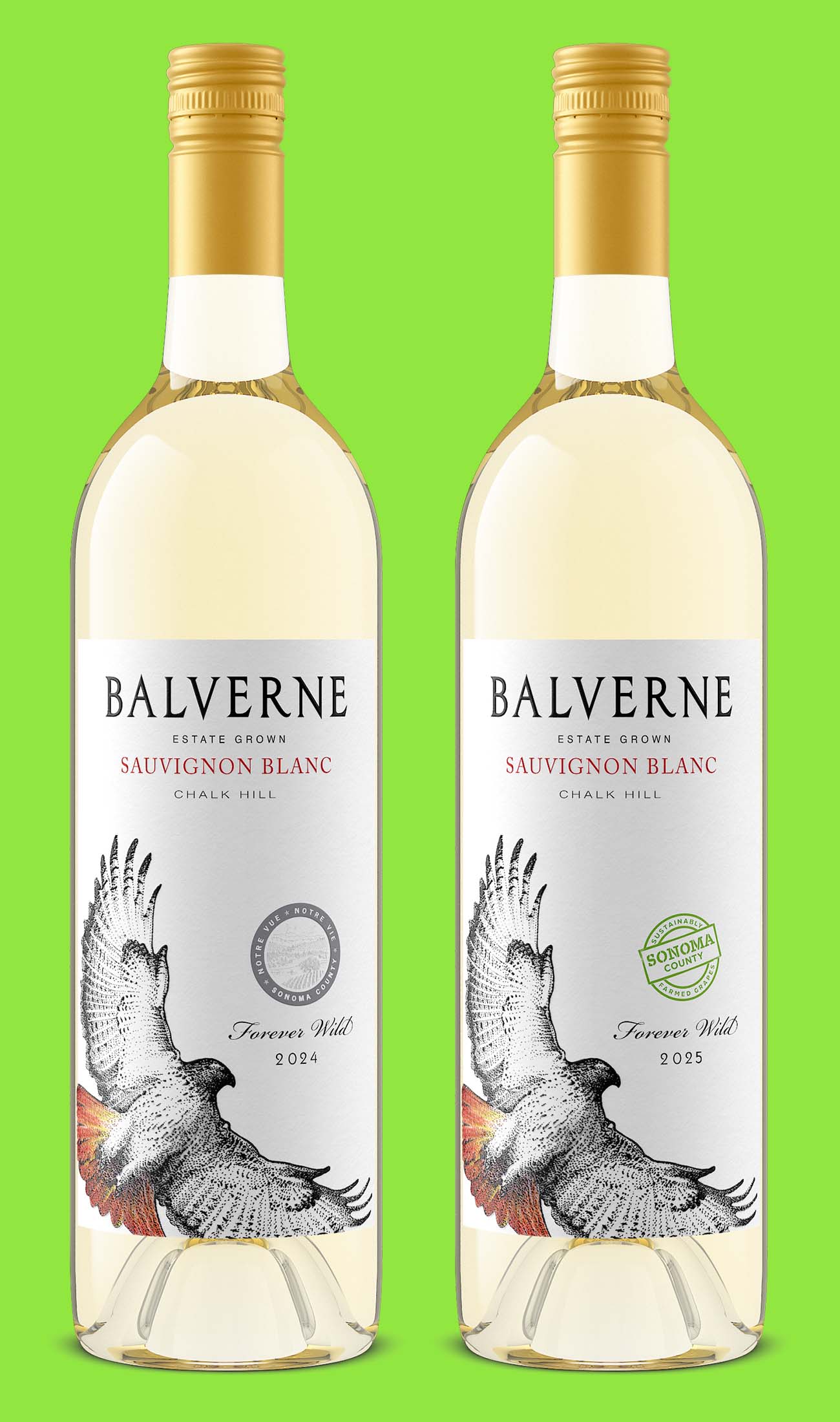
PNG with transparency is standard. That means clean product cutouts for marketplace uploads, overlays on custom backgrounds, and social media flexibility without the awkward white halo.
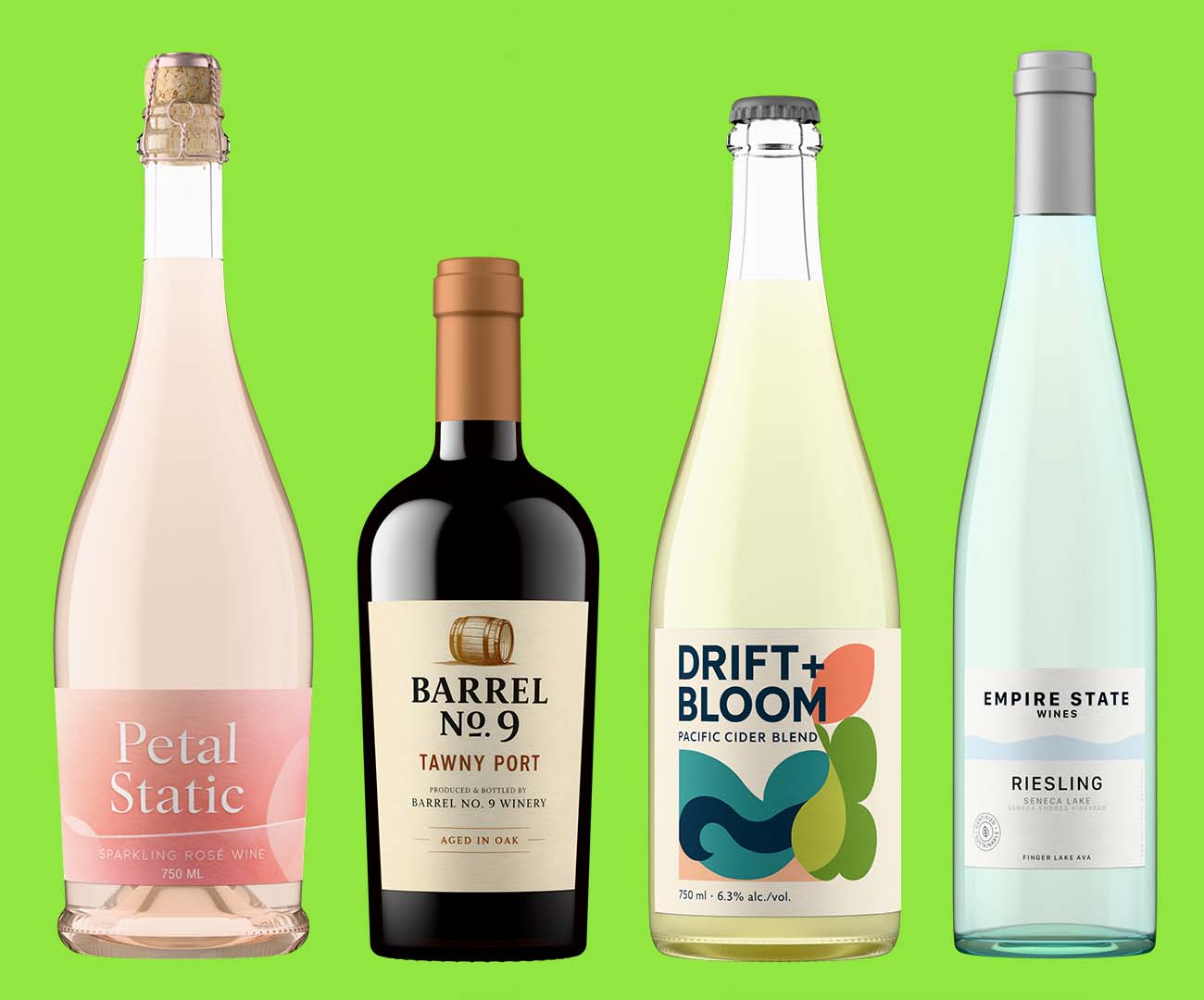
Outshinery Lite is the self-serve option. Upload a label, pick a bottle shape and closure, and get a photorealistic wine bottle shot in about an hour. It is the right fit for testing label designs, exploring format options, or handling SKUs that do not need full Studio treatment.
The container library is the other half of the equation. Outshinery’s library covers 4 million+ verified configurations — 120+ bottle shapes, 12 glass colors, 25 liquid shades, 5 cork types, and 50+ cap finishes. Want to visualize a vintage in a magnum bottle before you commit to production? Render it. Testing an alternative closure? Done. That configuration library means you can explore options without scheduling a shoot.
Practical steps to reduce rework
Whether you move to 3D rendering or not, cut rework now by locking three things early: label spec, image format requirements, and consistency standards.
Finalize label designs before you commission imagery. A mid-production label change is the single biggest rework trigger. Build in one review cycle for label approval, then lock it.
Document your image format requirements upfront. Create a simple spec sheet: dimensions for ecommerce, DPI for print, aspect ratios for each social channel. Share it with your photographer or renderer before the shoot. This prevents the wrong-format-need-to-re-export loop.
Define your consistency standard. If you are managing multiple SKUs, decide on lighting tone, shadow depth, and background style. Enforce it across every shoot. Inconsistency across your portfolio erodes brand trust and drives customer confusion.
For producers managing 10 or more SKUs, shifting to CGI is almost always faster and cheaper than traditional photography by Year 2. The upfront investment pays off in rework savings and accelerated launch timelines.

Rework is a hidden tax on beverage marketing. It compounds across your SKU portfolio, eats your seasonal windows, and bleeds budget without anyone noticing.
3D product rendering solves rework at its root. No physical product. No format surprises. No consistency drift. Vintage updates, format changes, and new SKU variations become fast, low-cost operations.
If you are producing wine, beer, spirits, or RTD with multiple SKUs and annual vintage releases, CGI pays for itself in rework savings alone, usually within the first six months.
Outshinery Studio handles the full model build and rendering pipeline. For smaller SKU portfolios or testing label designs before committing to full renders, Outshinery Lite is a self-serve alternative that delivers photorealistic bottle shots in under an hour. Either way, you will spend less time reworking and more time selling.